
Side effects
Why Does Ozempic Make You Tired? Fatigue Rates by Drug and Dose
Why does Ozempic make you tired? No label names a cause, but fatigue is mainly seen during dose increases and hit 11% on Wegovy 2.4 mg vs 5% on placebo.
Medically reviewed by Farnia Bahari, PharmD
Published 9 min read
Tiredness is a listed side effect of semaglutide, the drug in Ozempic, and in the Wegovy trials 11% of adults on 2.4 mg reported fatigue against 5% on placebo (Wegovy prescribing information, Table 3). No label explains why Ozempic makes you tired, but the UK Wegovy label says fatigue is "Mainly seen in the dose-escalation period" (Wegovy SmPC, section 4.8). Low blood sugar, if you take insulin or a sulfonylurea, and fluid lost to vomiting or diarrhea can add to it (Ozempic Medication Guide; NIDDK).

Key facts
- The US Ozempic label gives no fatigue percentage and lists it only among reactions "with a frequency of >0.4%" (Ozempic prescribing information, section 6.1).
- Zepbound tiredness rose with the dose, from 5% on 5 mg to 7% on 15 mg, against 3% on placebo (Zepbound prescribing information, Table 1).
- Semaglutide peaks 1 to 3 days after an Ozempic shot (Ozempic prescribing information, section 12.3), and tirzepatide a median 24 hours after a Zepbound shot (Zepbound prescribing information, section 12.3).
- With a sulfonylurea, documented symptomatic low blood sugar occurred in 17.3% on Ozempic 0.5 mg and 24.4% on 1 mg (Ozempic prescribing information, section 6.1).
- The NHS says to see a GP after a few weeks of tiredness you cannot explain, and to aim for 6 to 9 hours of sleep (NHS, tiredness and fatigue).
Is tiredness a side effect of Ozempic?
Yes. The US Ozempic label names fatigue, with dizziness and a changed sense of taste, among "Other adverse reactions with a frequency of >0.4%" (Ozempic prescribing information, section 6.1). That wording sets a floor and gives no rate.
The UK Ozempic SmPC puts fatigue in its common band, at least 1 in 100 but fewer than 1 in 10 people (Ozempic SmPC, section 4.8). The NHS page on semaglutide lists "feeling tired" among the common side effects (NHS, semaglutide).
Wegovy is the same drug at higher doses, with fatigue at 11% on 2.4 mg against 5% on placebo (Wegovy prescribing information, Table 3). On Wegovy, check when Wegovy side effects start for the week-by-week timeline up to 7.2 mg.
How common is fatigue on Ozempic, Wegovy, Mounjaro and Zepbound?
The Mounjaro label warns that one drug’s rates "cannot be directly compared to rates in the clinical trials of another drug" (Mounjaro prescribing information, section 6.1). Each row in this GLP‑1 fatigue table comes from section 6.1 of that drug’s US label (Ozempic, Wegovy, Zepbound, Mounjaro, Foundayo, Saxenda).
| Drug and dose | Fatigue on the drug (%) | Fatigue on placebo (%) |
|---|---|---|
| Ozempic, US label | over 0.4, no exact rate | not given |
| Wegovy 2.4 mg | 11 | 5 |
| Zepbound (tirzepatide) 5 mg | 5 | 3 |
| Zepbound 10 mg | 6 | 3 |
| Zepbound 15 mg | 7 | 3 |
| Mounjaro (tirzepatide), heart-outcomes trial | 10 | not given |
| Foundayo 5.5 mg daily | 6 | 4 |
| Foundayo 9 mg daily | 7 | 4 |
| Foundayo 17.2 mg daily | 9 | 4 |
| Saxenda (liraglutide) 3 mg | 7.5 | 4.6 |
Zepbound’s figure includes asthenia (weakness), lethargy and malaise (Zepbound prescribing information, Table 1) and Wegovy’s includes asthenia (Wegovy prescribing information, Table 3). On both Zepbound and Foundayo (orforglipron), taken once daily, the rate climbs with each higher dose (Zepbound prescribing information, Table 1; Foundayo prescribing information, section 6.1).
Mounjaro’s 10% comes from a heart-outcomes trial of 6,647 adults with type 2 diabetes and established cardiovascular disease, and the label gives no comparison rate for it (Mounjaro prescribing information, section 6.1). Fatigue does not appear among the reactions at 5% or more in Mounjaro’s placebo-controlled diabetes trials (Mounjaro prescribing information, Table 1). The UK Mounjaro SmPC rates fatigue very common, at least 1 in 10, in that heart trial, SURPASS-CVOT, and common in the diabetes and weight-management trials (Mounjaro SmPC, section 4.8).
What makes you tired on Ozempic or Mounjaro?
Labels give no mechanism, but semaglutide sources and NIDDK link fatigue to four things: the dose climb (Wegovy SmPC, section 4.8), stomach side effects (EMA assessment report for Wegovy), fluid loss and, with insulin or a sulfonylurea, low blood sugar (Ozempic Medication Guide).
In the Wegovy trials, people on 2.4 mg who reported fatigue "also reported more gastrointestinal AEs" (adverse events) than those who did not (EMA assessment report for Wegovy). EMA records the maker’s hypothesis that fatigue "may be a secondary effect" of those events (EMA assessment report for Wegovy). For liraglutide, the Saxenda label says fatigue was "often co-reported with gastrointestinal events such as nausea, vomiting, and diarrhea" (Saxenda prescribing information, section 6.1).
The same EMA report found more fatigue at the higher dose when semaglutide 1.0 mg and 2.4 mg were compared in STEP 2 (EMA assessment report for Wegovy). The extra fatigue over placebo also grew with age, largest at 75 years or older and lowest under 65, and was larger in people who weighed under 90 kg at the start (EMA assessment report for Wegovy).
Kidney injury reported since Ozempic’s approval was mostly in people whose nausea, vomiting or diarrhea left them dehydrated (Ozempic prescribing information, section 5.6). NIDDK lists "feeling tired, dizzy, or lightheaded" among the symptoms of dehydration (NIDDK, symptoms and causes of diarrhea).
The 2025 joint nutrition advisory raises a separate concern about eating too little. GLP‑1 drugs cut energy intake by 16 to 39% compared with placebo, and intakes under 1,200 kcal a day for women or 1,800 kcal for men raise the risk of vitamin and mineral shortfalls (Nutritional priorities to support GLP‑1 therapy for obesity). The advisory lists "fatigue beyond expected levels" among the signs of a clear nutrient deficiency (Nutritional priorities to support GLP‑1 therapy for obesity).
When does Ozempic tiredness start, and does it go away?
Fatigue on semaglutide is mainly seen while the dose climbs, says the UK Wegovy SmPC (Wegovy SmPC, section 4.8), and EMA’s review of Ozempic found it was generally short-lived (EMA assessment report for Ozempic). Ozempic climbs from 0.25 mg for 4 weeks to 0.5 mg, then to 1 mg and 2 mg after at least 4 weeks on each dose (Ozempic prescribing information, section 2.2). Each new dose takes 4 to 5 weeks of weekly shots to reach steady state (Ozempic prescribing information, section 12.3).
EMA judged fatigue on Ozempic likely related to semaglutide and "mild or moderate in severity" (EMA assessment report for Ozempic). For liraglutide, the Saxenda label says these events were "mainly reported within the first 12 weeks of treatment" (Saxenda prescribing information, section 6.1). None of these sources says in weeks how long semaglutide tiredness lasts, and the tirzepatide labels give rates but nothing on how long Mounjaro fatigue lasts (Mounjaro prescribing information, section 6.1).
Why am I tired the day after my injection?
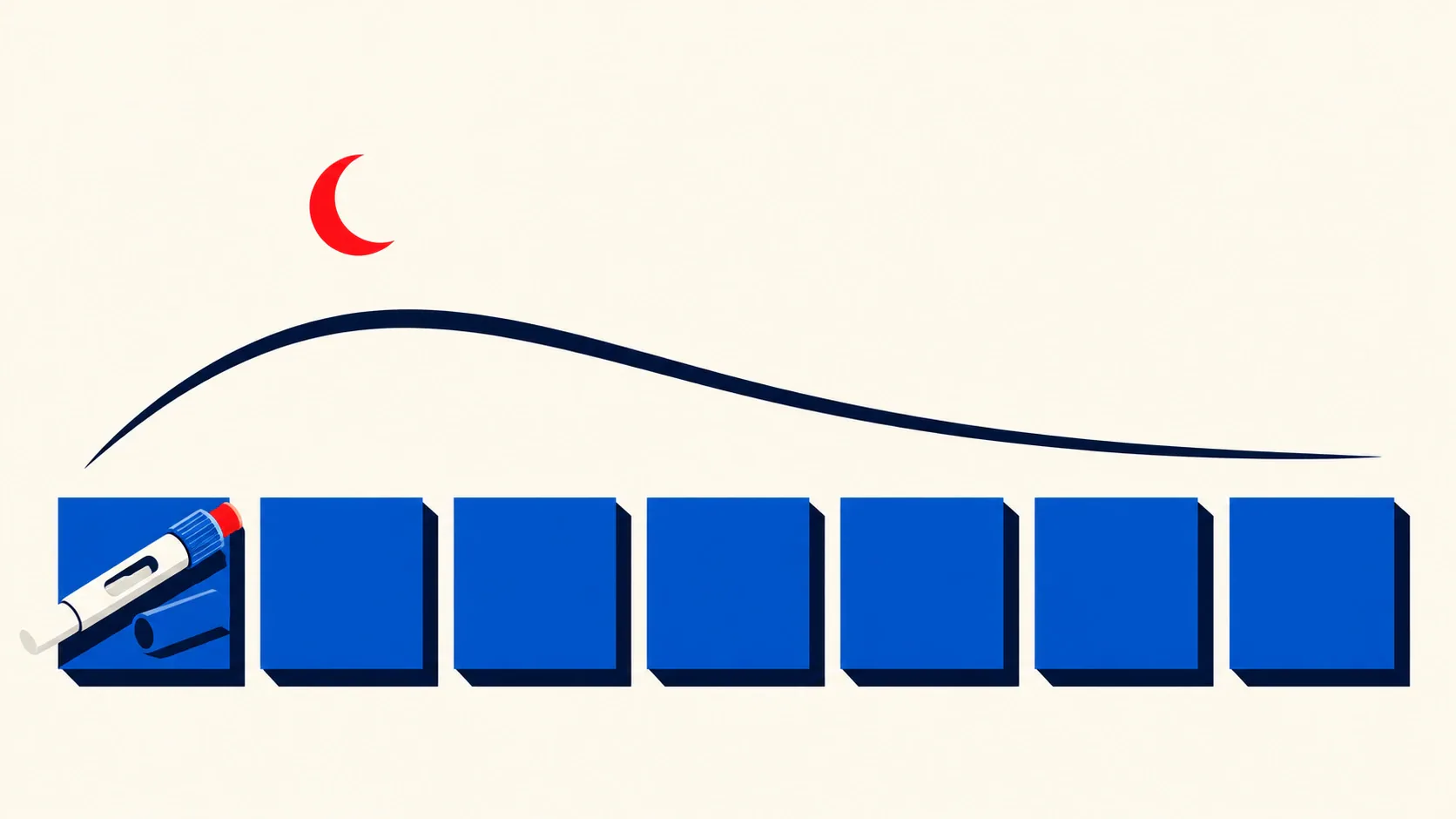
No label explains tiredness the day after a shot or ties it to the drug’s peak, so the peak timing is only a pattern to check. Semaglutide peaks 1 to 3 days after an Ozempic shot (Ozempic prescribing information, section 12.3), and tirzepatide, the drug in Mounjaro and Zepbound, peaks a median 24 hours after a Zepbound shot, anywhere from 8 to 72 hours (Zepbound prescribing information, section 12.3).
To see the day your own level peaks, enter your dose dates in the GLP‑1 dosage plotter, which draws an estimated semaglutide or tirzepatide level.
Whether your tired days land on the same day after each shot shows up once you log fatigue or energy in Pensday on its quick severity scale. The symptom patterns view lines up each day’s worst score with the day of your last logged shot, under the estimated medication-level curve. Your food, protein and water logs sit in the same app, so a tired day after a day of little protein or fluid is visible.
Can low blood sugar on Ozempic make you tired?
Yes, mainly if you also take insulin or a sulfonylurea. The Ozempic label warns that these combinations may raise the risk of low blood sugar, including severe episodes, and that a lower dose of the other drug may reduce it (Ozempic prescribing information, section 5.5). Its Medication Guide lists "confusion or drowsiness" and "weakness" among the signs, with "shakiness", "hunger" and "headache" (Ozempic Medication Guide).
The label’s trial rates of documented symptomatic low blood sugar show how much the other medicine matters (Ozempic prescribing information, section 6.1 and Table 2).
| Ozempic taken | On 0.5 mg (%) | On 1 mg (%) |
|---|---|---|
| With a sulfonylurea | 17.3 | 24.4 |
| With basal insulin | 16.7 | 29.8 |
| On its own | 1.6 | 3.8 |
In the insulin trial, 15.2% on placebo also had documented symptomatic episodes, against 0% on placebo in the trial of Ozempic alone (Ozempic prescribing information, Table 2). Severe episodes with a sulfonylurea affected 0.8% on 0.5 mg and 1.2% on 1 mg (Ozempic prescribing information, section 6.1).
What helps tiredness on Ozempic or Mounjaro?
On Ozempic or Mounjaro, start with fluids and 6 to 9 hours of sleep (Ozempic Medication Guide; NHS, tiredness and fatigue). The Ozempic Medication Guide says "It is important for you to drink fluids to help reduce your chance of dehydration" (Ozempic Medication Guide), and the GLP‑1 water intake calculator turns that into a daily target.
With a small appetite, the GLP‑1 protein calculator gives a daily protein range from your weight. On days when food will not go down, try the foods in what to eat with GLP‑1 nausea.
If a new Ozempic dose leaves you wiped out, ask your prescriber about holding the next step, as you would for the other side effects after an Ozempic dose increase. The US Wegovy label says prescribers should consider delaying the next step by 4 weeks when a dose is not tolerated (Wegovy prescribing information, section 2.2), and the Ozempic label sets at least 4 weeks per step (Ozempic prescribing information, section 2.2).
When is tiredness on a GLP‑1 a reason to get help?
If you feel tired all the time, the NHS says to see a GP when it lasts a few weeks with no clear cause, affects your daily life or comes with symptoms like mood changes (NHS, tiredness and fatigue). It lists sleep apnea, iron deficiency anemia, diabetes and an overactive thyroid among other causes, and a GP may arrange blood tests for anemia, diabetes or an overactive thyroid (NHS, tiredness and fatigue).
Tell your prescriber right away about nausea, vomiting or diarrhea that does not go away, as the Ozempic Medication Guide asks. Extreme thirst or a dry mouth, urinating less than usual and dark-colored urine are dehydration signs that NIDDK lists alongside "feeling tired, dizzy, or lightheaded".
Drowsiness, shakiness or confusion while you take insulin or a sulfonylurea can be low blood sugar (Ozempic Medication Guide). Tiredness beyond what you expected, with heavy hair loss, muscle weakness, poor wound healing or easy bruising, is the pattern the nutrition advisory lists for a nutrient deficiency (Nutritional priorities to support GLP‑1 therapy for obesity).
For semaglutide side effects that bother you or do not go away, the NHS points you to a pharmacist or doctor and adds "Keep taking your medicine unless you’re advised to stop" (NHS, semaglutide).
Questions
Frequently asked questions
Does Mounjaro make you more tired than Ozempic?
The labels cannot settle it. Mounjaro’s 10% comes from a heart-outcomes trial with no comparison rate, and its label warns that rates "cannot be directly compared" across drugs (Mounjaro prescribing information, section 6.1). Ozempic’s US label gives no rate (Ozempic prescribing information, section 6.1).
Why does Ozempic make me tired and dizzy?
Fatigue and dizziness sit together in the Ozempic label’s list of reactions above 0.4% (Ozempic prescribing information, section 6.1), and in the Wegovy trials dizziness affected 8% on 2.4 mg against 4% on placebo (Wegovy prescribing information, Table 3). Both also appear in the NIDDK list of dehydration symptoms (NIDDK, symptoms and causes of diarrhea). Dizziness and drowsiness are also low blood sugar signs in the Ozempic Medication Guide, a risk mainly with insulin or a sulfonylurea.
Is weakness on Mounjaro or Zepbound counted as fatigue?
Yes. Zepbound folds fatigue, asthenia (weakness), lethargy and malaise into one figure of 5 to 7% across doses, against 3% on placebo (Zepbound prescribing information, Table 1), and the UK Mounjaro SmPC groups the same four terms (Mounjaro SmPC, section 4.8). Feeling weak is also a low blood sugar sign on the NHS tirzepatide page, more likely with other diabetes medicines (NHS, tirzepatide).
Do Ozempic tablets or the Wegovy pill make you tired?
The US label shared by Ozempic tablets and Rybelsus does not list fatigue among its adverse reactions (Rybelsus and Ozempic tablets prescribing information, section 6.1). The UK Rybelsus SmPC lists fatigue as common, at least 1 in 100 but fewer than 1 in 10 people (Rybelsus SmPC, section 4.8). For Wegovy 25 mg tablets, the label says common reactions "were similar to those listed in Table 3", the injection table where fatigue was 11% (Wegovy prescribing information, section 6.1).
Sources
- Ozempic prescribing information and Medication Guide. Novo Nordisk, 2026.
- Wegovy prescribing information. Novo Nordisk, 2026.
- Zepbound prescribing information. Eli Lilly and Company, 2026.
- Mounjaro prescribing information. Eli Lilly and Company, 2026.
- Foundayo prescribing information. Eli Lilly and Company, 2026.
- Saxenda prescribing information. Novo Nordisk, 2026.
- Rybelsus and Ozempic tablets prescribing information. Novo Nordisk, 2026.
- Ozempic SmPC. Novo Nordisk, 2026.
- Wegovy SmPC. Novo Nordisk, 2026.
- Mounjaro KwikPen SmPC. Eli Lilly and Company, 2026.
- Rybelsus SmPC. Novo Nordisk, 2026.
- Wegovy, assessment report. European Medicines Agency, 2021.
- Ozempic, assessment report. European Medicines Agency, 2017.
- Nutritional priorities to support GLP‑1 therapy for obesity. American Journal of Clinical Nutrition, 2025.
- Semaglutide. NHS, 2026.
- Tirzepatide. NHS, 2026.
- Tiredness and fatigue. NHS, 2023.
- Symptoms and causes of diarrhea. NIDDK, 2024.