
Side effects
Ozempic Acid Reflux and Heartburn by Dose, With Mounjaro and Wegovy
Ozempic acid reflux affected 1.9% on 0.5 mg vs 0% on placebo in trials, and 5% on Wegovy 2.4 mg vs 3%. It is often worse after meals and lying down.
Medically reviewed by Farnia Bahari, PharmD
Published 9 min read
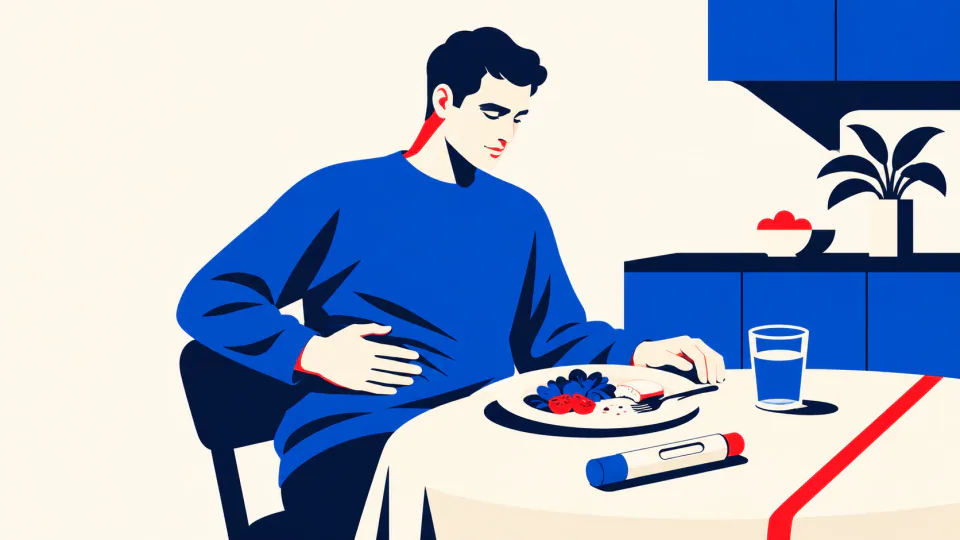
Yes, Ozempic can cause acid reflux, reported by 1.9% on 0.5 mg and 1.5% on 1 mg in its type 2 diabetes trials, against 0% on placebo (Ozempic label, section 6.1). At the Wegovy 2.4 mg dose, the same drug brought reflux to 5% (vs 3%) and indigestion to 9% (vs 3%) in obesity trials (Wegovy label, section 6.1). Semaglutide slows stomach emptying (Ozempic label, section 7.2), and reflux is often worse after eating and when lying down (NHS heartburn advice).
Key facts
- In obesity trials, Zepbound acid reflux affected 4% on 5 mg and 10 mg and 5% on 15 mg versus 2% on placebo, and indigestion 9 to 10% versus 4% (Zepbound label, section 6.1).
- In type 2 diabetes trials, Mounjaro acid reflux ran 1.7 to 2.5% and Mounjaro indigestion 5 to 8%, versus 0.4% and 3% on placebo (Mounjaro label, section 6.1).
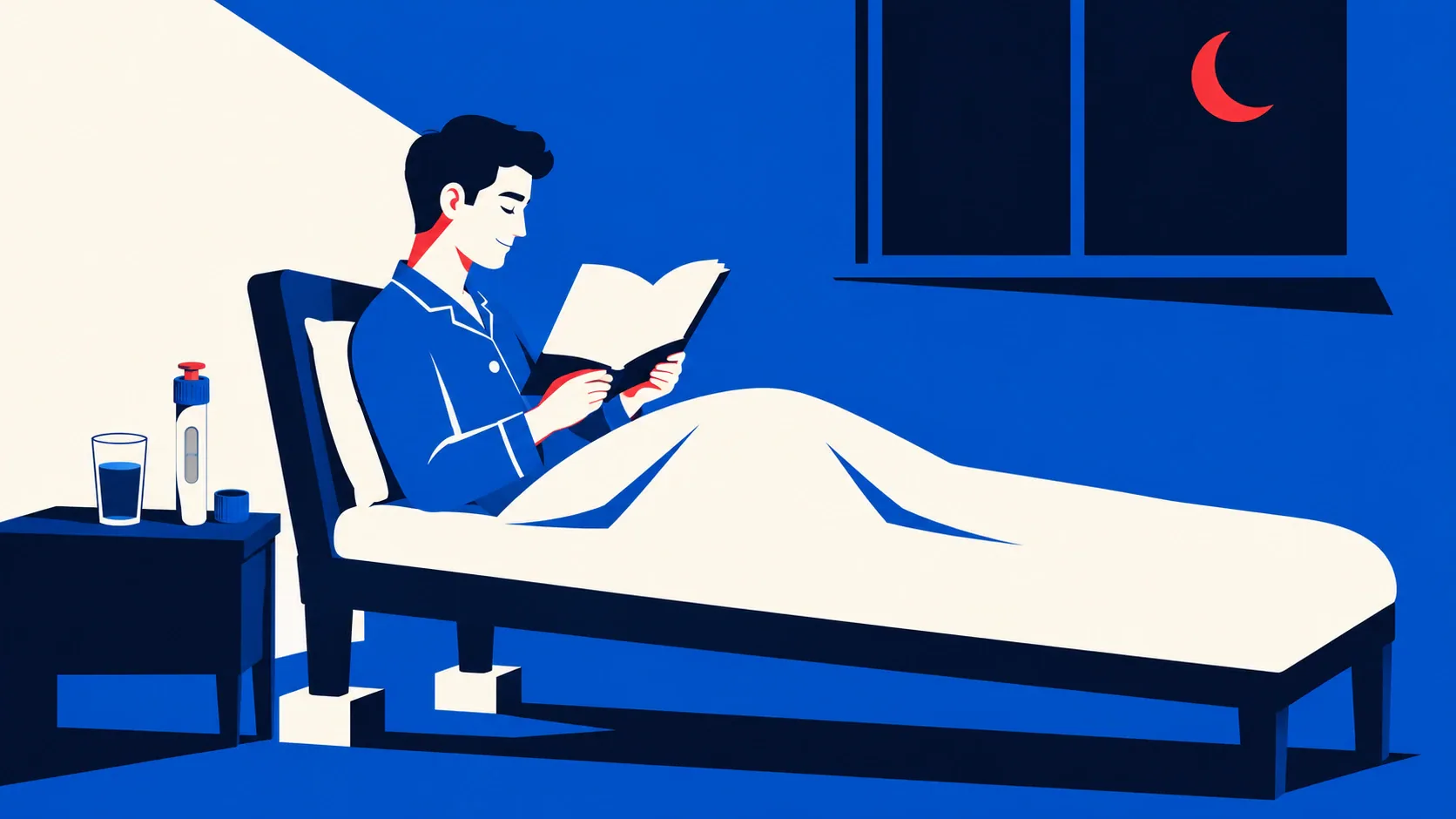
- Stop eating 3 or 4 hours before bed, and raise the head of the bed by around 10 to 20 cm instead of adding pillows (NHS heartburn advice).
- Take antacids or alginates such as Gaviscon with food or soon after eating, short term, and a GP may prescribe a PPI such as omeprazole, usually for 4 or 8 weeks (NHS heartburn advice).
- Sudden chest pain that feels like burning or indigestion but does not go away, or comes with sweating or breathlessness, is a 999 or 911 call (NHS chest pain advice, CDC heart attack symptoms).
How common is Ozempic acid reflux compared with Wegovy, Mounjaro and Zepbound?
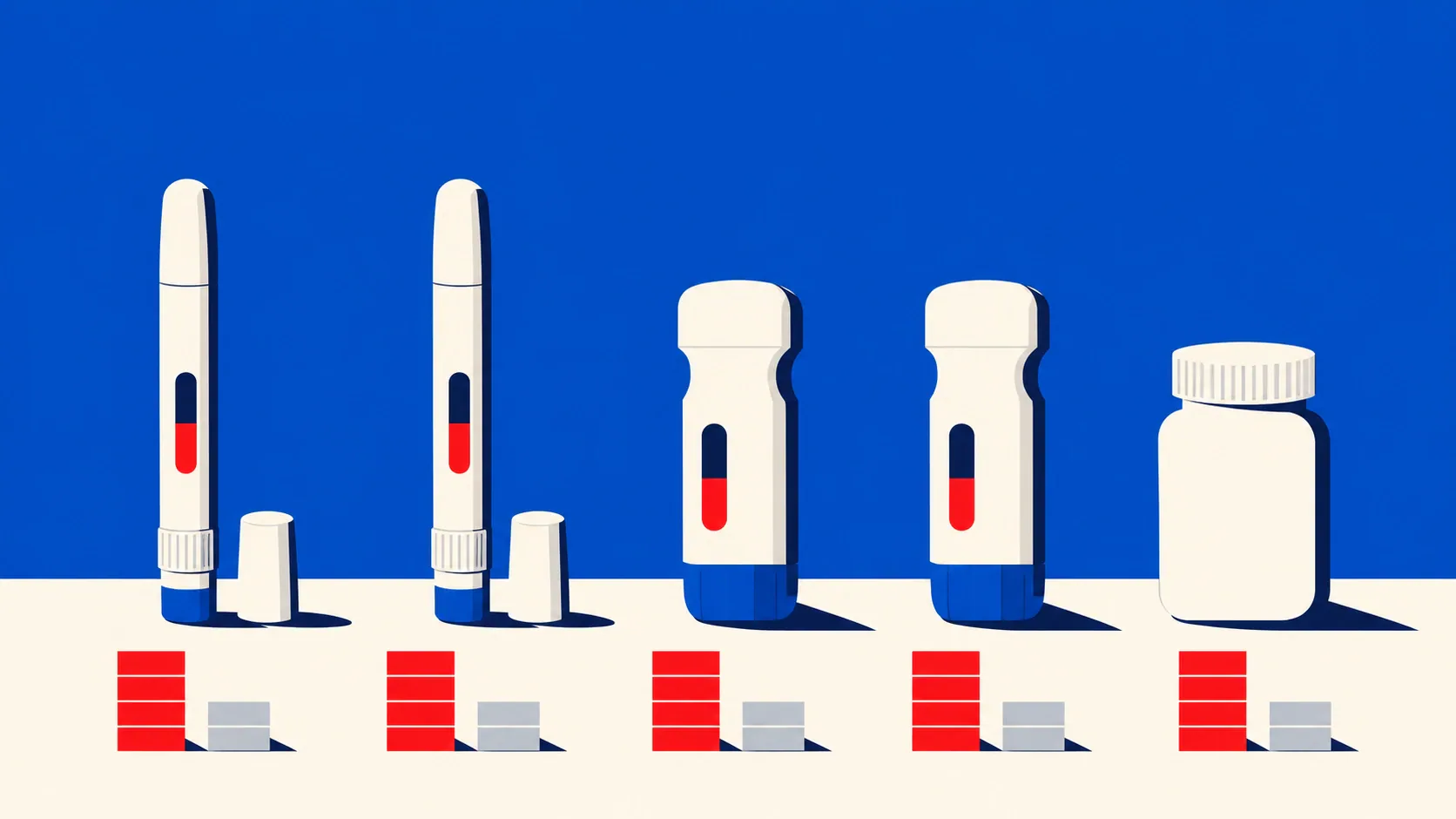
Reflux ran 1.5 to 2.5% on Ozempic and Mounjaro in type 2 diabetes trials, against 0 to 0.4% on placebo. In obesity trials it ran 4 to 7% on Wegovy, Zepbound and Foundayo (orforglipron), against 2 to 3% on placebo.
| Drug and dose (mg), trial population | Reflux or heartburn (%), drug vs placebo | Indigestion (%), drug vs placebo |
|---|---|---|
| Ozempic 0.5, type 2 diabetes | 1.9 vs 0 | 3.5 vs 1.9 |
| Ozempic 1, type 2 diabetes | 1.5 vs 0 | 2.7 vs 1.9 |
| Wegovy 2.4, obesity or overweight | 5 vs 3 | 9 vs 3 |
| Mounjaro 5, type 2 diabetes | 1.7 vs 0.4 | 8 vs 3 |
| Mounjaro 10, type 2 diabetes | 2.5 vs 0.4 | 8 vs 3 |
| Mounjaro 15, type 2 diabetes | 1.7 vs 0.4 | 5 vs 3 |
| Zepbound 5, obesity or overweight | 4 vs 2 | 9 vs 4 |
| Zepbound 10, obesity or overweight | 4 vs 2 | 9 vs 4 |
| Zepbound 15, obesity or overweight | 5 vs 2 | 10 vs 4 |
| Foundayo 5.5, obesity or overweight | 6 vs 2 | 12 vs 4 |
| Foundayo 9, obesity or overweight | 6 vs 2 | 16 vs 4 |
| Foundayo 17.2, obesity or overweight | 7 vs 2 | 13 vs 4 |
The populations differ, and the Ozempic label says rates from different drugs' trials "cannot be directly compared" (Ozempic label, section 6.1). If you take Mounjaro for weight loss, the Zepbound rows (same drug, obesity trials) are the closer match.
The Ozempic label has no reflux figure for the 2 mg dose. In a 40-week trial of 959 patients, stomach and gut side effects of any kind affected 34% on 2 mg and 30.8% on 1 mg (Ozempic label, section 6.1). The Wegovy 7.2 mg table lists side effects reported by at least 2% and more often than on 2.4 mg and placebo, and reflux and indigestion are not on it (Wegovy label, section 6.1).
Labels call reflux gastroesophageal reflux disease (GERD) and indigestion dyspepsia (Ozempic label, section 6.1), while the Wegovy and Zepbound Medication Guides say heartburn. In the UK, recurrent reflux is called GORD (NHS heartburn advice).
The UK SmPCs for Ozempic, Wegovy and Mounjaro call reflux and indigestion common, meaning at least 1 in 100 and fewer than 1 in 10 people. The Foundayo SmPC calls indigestion very common, at least 1 in 10.
Why does Ozempic cause heartburn?
Ozempic (semaglutide) and Mounjaro (tirzepatide) both delay gastric emptying, so food leaves your stomach more slowly (Ozempic label, section 7.2, Mounjaro label, section 7.2). If the burning could be nausea or plain fullness instead, start by telling nausea, reflux and fullness apart.
A 2025 study of UK GP records compared adults with type 2 diabetes who started a GLP‑1 drug (24,708) or an SGLT-2 inhibitor (89,096) (Annals study, 2025). Over a median 3.0 years, GLP‑1 starters had 1.27 times the risk of a GERD diagnosis, or 0.7 extra diagnoses per 100 patients (Annals study, 2025).
The study had no data on diet or lifestyle, so it cannot show that GLP‑1 drugs caused the reflux (Annals study, 2025).
Why is acid reflux worse at night on Ozempic or Mounjaro?
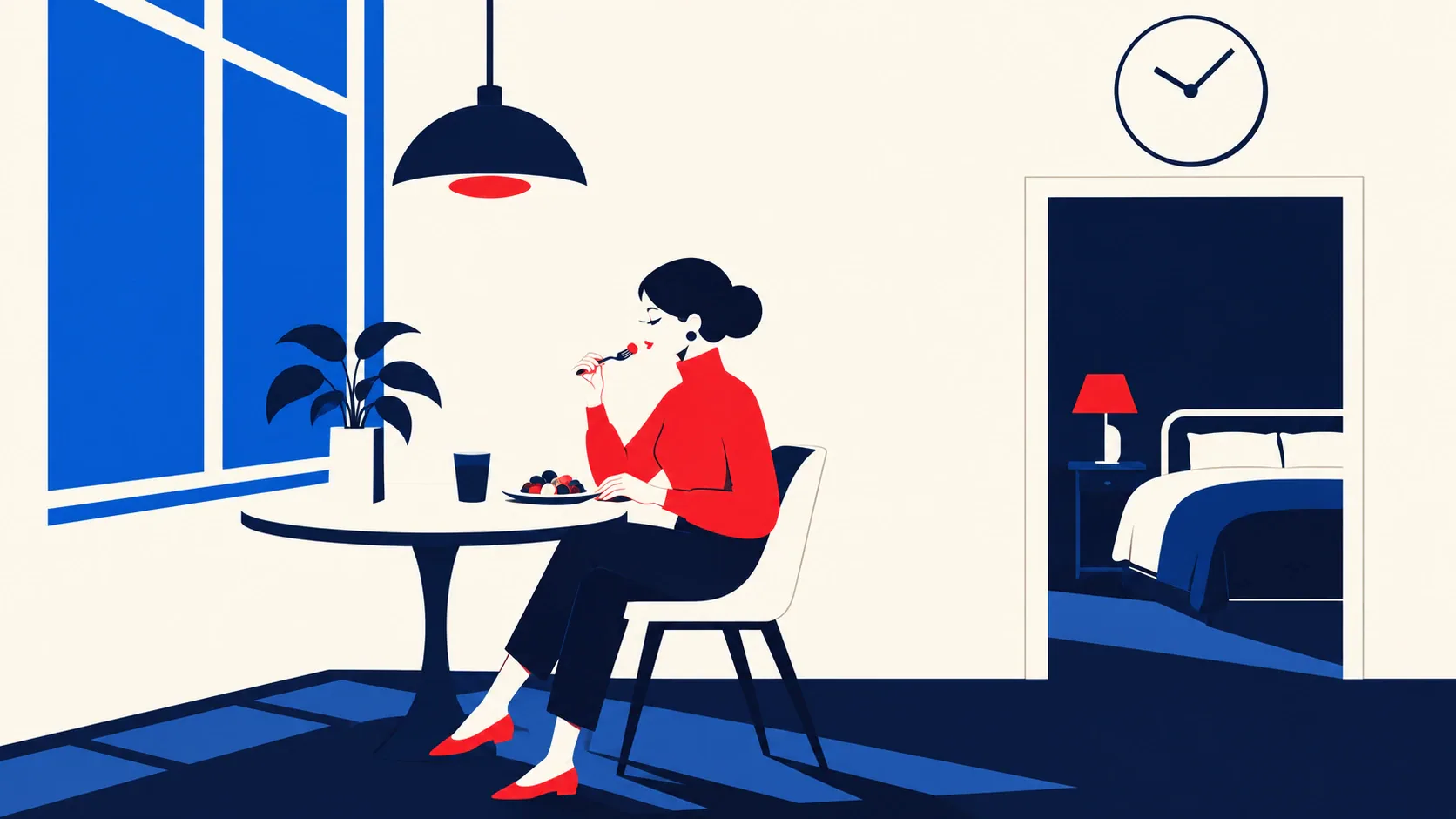
Ozempic or Mounjaro heartburn can feel worse in bed because lying down often makes reflux symptoms worse (NHS heartburn advice). If you are trying to stop acid reflux on Mounjaro or Ozempic, eat smaller, more frequent meals and avoid food within 3 or 4 hours before bed (NHS heartburn advice). After a large late meal, follow the steps for overeating on Ozempic.
Raise the head of your bed by around 10 to 20 cm with wood, bricks or books, so your chest and head sit above your waist (NHS heartburn advice). Extra pillows can increase pressure on your belly and make symptoms worse (NHS heartburn advice).
Avoid food or drink that triggers your symptoms, such as coffee, tomatoes, chocolate, alcohol, or fatty and spicy foods (NHS heartburn advice). The NHS also advises against tight waistbands and smoking (NHS heartburn advice).
Does heartburn on Ozempic or Mounjaro go away?
Heartburn flares are most likely around dose increases, since in the Wegovy trials, stomach side effects including indigestion, belching and reflux were "most frequently reported during dosage escalation" (Wegovy label, section 6.1).
The Ozempic SmPC reports no clinically relevant effect on the rate of gastric emptying after 20 weeks of semaglutide 2.4 mg, the Wegovy dose, "probably due to a tolerance effect" (Ozempic SmPC, section 4.5). The delay from tirzepatide, the drug in Mounjaro and Zepbound, "diminishes over time" (Mounjaro SmPC, section 5.1), and Foundayo’s is largest after the first dose (Foundayo SmPC).
Those results measure stomach emptying, not how long heartburn lasts. Use the titration planner to find the earliest date the label allows your next step up, and plan smaller, earlier dinners around it. Around a step up, check what changes when your Ozempic dose goes up, and on Zepbound, when Zepbound side effects are worst.
Can you take omeprazole, Prilosec, Gaviscon or Tums with Ozempic or Mounjaro?
The UK Mounjaro SmPC’s interaction section names no antacid, alginate such as Gaviscon, or PPI such as omeprazole (Mounjaro SmPC, section 4.5). None of the US labels for Ozempic, Wegovy, Mounjaro, Zepbound, Foundayo and Rybelsus mentions antacids, alginates or H2 blockers, and none warns against PPIs. Their cautions are about slower absorption of tablets. Ozempic’s label says it "did not affect the absorption of orally administered medications to any clinically relevant degree" but that "caution should be exercised" (Ozempic label, section 7.2).
Antacids such as Tums and alginates such as Gaviscon are best taken "with food or soon after eating" and "should not be taken regularly for long periods", the NHS says (NHS heartburn advice). A GP may prescribe a PPI such as omeprazole (Prilosec), usually for 4 or 8 weeks, or an H2 receptor antagonist such as famotidine (Pepcid) if a PPI does not help (NHS heartburn advice).
For semaglutide tablets, the Wegovy label reports "No clinically significant differences in semaglutide pharmacokinetics" with omeprazole (Wegovy label, section 12.3). Esomeprazole 40 mg once daily had "No effect" on Foundayo (orforglipron) levels (Foundayo prescribing information). Take a Wegovy tablet first, on an empty stomach, then wait at least 30 minutes before omeprazole, any other tablet, food or drink (Wegovy prescribing information), the order the Wegovy pill morning routine follows.
The UK Mounjaro SmPC expects "no dose adjustments" for most oral medicines but says to monitor warfarin, digoxin and other narrow-therapeutic-index medicines "especially at initiation" and "following dose increase" (Mounjaro SmPC, section 4.5). It also flags medicines "for which a rapid onset of effect is of importance" (Mounjaro SmPC, section 4.5).
For oral hormonal contraception, the Mounjaro label advises a non-oral or added barrier method for 4 weeks after starting and after each dose increase (Mounjaro label, section 7.2).
When is chest burning on a GLP‑1 a reason to get help?
Sudden chest pain or discomfort that does not go away is a 999 call in the UK, even when it feels like "burning or indigestion" (NHS chest pain advice). In the US, the CDC says to call 911 immediately for heart attack symptoms, including chest discomfort and shortness of breath (CDC heart attack symptoms).
Also call 999 for chest pain that spreads to your arm, neck, jaw, stomach or back, or that comes with sweating, feeling sick, lightheadedness or shortness of breath (NHS chest pain advice). The NHS links chest pain to heartburn or indigestion when it starts after eating, with food or bitter fluid coming up and a full, bloated feeling (NHS chest pain advice).
See a GP, or your own doctor in the US, if you have heartburn most days or lifestyle changes and pharmacy medicines are not helping (NHS heartburn advice). Food getting stuck in your throat, being sick often or losing weight for no reason are also reasons to go (NHS heartburn advice).
Severe stomach pain that will not go away, with or without vomiting, can be a sign of pancreatitis, and the pain may reach your back (Ozempic Medication Guide). The guide says to stop Ozempic and call your healthcare provider right away (Ozempic Medication Guide). It also lists upper stomach pain, fever, yellow skin or eyes and clay-colored stools as possible gallbladder problems to report right away (Ozempic Medication Guide).
How do you see whether reflux follows your dose day?
Whether your heartburn follows the dose day or a late dinner shows up in Pensday, where Heartburn is a default row in the side-effect log with a severity slider. The patterns view lines up each day’s worst score under the estimated medication-level curve and marks your last logged shot. Log dinner in the free food log too, then check meal times on the nights the score ran high.
Questions
Frequently asked questions
Is acid reflux worse on Mounjaro or Ozempic?
In type 2 diabetes trials, reflux affected 1.7 to 2.5% on Mounjaro versus 0.4% on placebo, and 1.5 to 1.9% on Ozempic versus 0% (Mounjaro label, section 6.1, Ozempic label, section 6.1). The Ozempic label says rates from different drugs' trials "cannot be directly compared", so these figures cannot settle which drug is worse (Ozempic label, section 6.1).
Do GLP‑1 pills like the Wegovy pill or Foundayo cause heartburn?
Wegovy 25 mg tablets had common side effects similar in type and frequency to the 2.4 mg injection, where Wegovy GERD affected 5% versus 3% on placebo (Wegovy label, section 6.1). In obesity trials, Foundayo reflux affected 6% on 5.5 mg and 9 mg and 7% on 17.2 mg, versus 2% on placebo (Foundayo prescribing information). In type 2 diabetes trials, Rybelsus reflux affected 2% on 7 mg and 14 mg, versus 0.3% on placebo (Rybelsus prescribing information).
Can I take Gaviscon with Mounjaro?
The UK Mounjaro SmPC’s interaction section names no antacid or alginate such as Gaviscon (Mounjaro SmPC, section 4.5). Its cautions cover warfarin, digoxin and other narrow-therapeutic-index medicines, and medicines that need a rapid effect (Mounjaro SmPC, section 4.5). The NHS says to take alginates with food or soon after eating, and not regularly for long periods (NHS heartburn advice).
Should I stop Ozempic if I get heartburn?
The NHS heartburn advice is "do not stop taking any prescribed medicine without speaking to a doctor first" (NHS heartburn advice). In Ozempic’s trials, 3.1% on 0.5 mg and 3.8% on 1 mg stopped because of stomach or gut side effects of any kind, versus 0.4% on placebo (Ozempic label, section 6.1). The exception is severe stomach pain that will not go away, when the Ozempic Medication Guide says to stop Ozempic and call your healthcare provider right away (Ozempic Medication Guide).
Sources
- Ozempic (semaglutide) prescribing information, revised June 2026. Novo Nordisk, 2026.
- Wegovy (semaglutide) prescribing information, revised June 2026. Novo Nordisk, 2026.
- Mounjaro (tirzepatide) prescribing information, revised August 2026. Eli Lilly and Company, 2026.
- Zepbound (tirzepatide) prescribing information, revised August 2026. Eli Lilly and Company, 2026.
- Foundayo (orforglipron) prescribing information, revised July 2026. Eli Lilly and Company, 2026.
- Rybelsus (semaglutide) prescribing information, revised January 2026. Novo Nordisk, 2026.
- Ozempic SmPC, revised July 2026. Novo Nordisk, 2026.
- Wegovy FlexTouch SmPC, revised September 2026. Novo Nordisk, 2026.
- Mounjaro KwikPen SmPC, revised August 2026. Eli Lilly and Company, 2026.
- Foundayo SmPC, revised August 2026. Eli Lilly and Company, 2026.
- Heartburn and acid reflux. NHS, 2023.
- Chest pain. NHS, 2023.
- About Heart Attack Symptoms, Risk, and Recovery. CDC, 2024.
- GLP‑1 Receptor Agonists and Risk for Gastroesophageal Reflux Disease in Patients With Type 2 Diabetes. Annals of Internal Medicine, 2025.