
Side effects
When Do Wegovy Side Effects Start, and How Long Do They Last?
Wegovy side effects mostly start during the 16-week dose climb. Levels peak 1 to 3 days after each shot; first-time cases level off after about 20 weeks.
Medically reviewed by Farnia Bahari, PharmD
Published 8 min read
Wegovy (semaglutide) stomach side effects are reported most often during the 16-week dose climb, starting with your first 0.25 mg shot; semaglutide levels peak 1 to 3 days after injection (US prescribing information, sections 2.2, 6.1 and 12.3). In pooled STEP trials, nausea lasted a median of 8 days and first stomach events leveled off about 20 weeks into treatment (Wharton and colleagues). If a dose is not tolerated, the US label says to consider delaying the next step by 4 weeks (section 2.2).

Key facts
- In the Wegovy 2.4 mg trials, stomach side effects occurred in 73% of patients versus 47% on placebo (US prescribing information, section 6.1).
- Median episode lengths with semaglutide 2.4 mg were 8 days for nausea, 3 for diarrhea, 2 for vomiting and 47 for constipation in pooled STEP data.
- If a dose is not tolerated, the US label says to consider delaying escalation for 4 weeks (section 2.2).
- Semaglutide levels peak 1 to 3 days after each injection (US prescribing information, section 12.3).
- Skin-sensation symptoms occurred in 22% on Wegovy 7.2 mg versus 6% on 2.4 mg, with recurrence in 45% of those re-escalated (US prescribing information, section 6.1, Dysesthesia).
- Semaglutide remains in circulation for about 5 to 7 weeks after the last 2.4 mg or 7.2 mg injection, according to section 12.3.
When do Wegovy side effects start?
Wegovy stomach reactions are most frequently reported during dose escalation, beginning with the 0.25 mg weekly starting dose (US prescribing information, sections 2.2 and 6.1).
Semaglutide reaches its maximum blood concentration 1 to 3 days after a shot (section 12.3).
The US label’s Table 3 shows how common stomach symptoms were across the 2.4 mg trials.
| Reported reaction | Wegovy 2.4 mg (%) | Placebo (%) |
|---|---|---|
| Nausea | 44 | 16 |
| Diarrhea | 30 | 16 |
| Vomiting | 24 | 6 |
| Constipation | 24 | 11 |
| Abdominal pain | 20 | 10 |
Severe stomach side effects occurred in 4.1% on Wegovy versus 0.9% on placebo (section 6.1).
If you are comparing with tirzepatide, Zepbound’s first week has its own guide.
What does the Wegovy side-effect timeline look like week by week?
Wegovy reaches its recommended 2.4 mg maintenance dose after 16 weeks of step-ups, with gastrointestinal events clustering during escalation (US prescribing information, sections 2.2 and 6.1).
This table follows the label’s week numbering and dose schedule, alongside the approximate symptom landmarks from pooled STEP data.
| Treatment weeks | Weekly dose (mg) | What the evidence shows |
|---|---|---|
| 1 to 4 | 0.25 | First shots during the climb when stomach side effects are most frequently reported |
| 5 to 8 | 0.5 | Still climbing; stomach side effects are reported most during the climb |
| 9 to 12 | 1 | Constipation prevalence leveled off about 10 weeks into treatment |
| 13 to 16 | 1.7 | Last escalation step before recommended maintenance |
| 17 to 20 | 2.4 recommended | Nausea, diarrhea and vomiting were most common about 20 weeks into treatment |
| 21 at the earliest | 7.2 if indicated | After at least 4 weeks tolerating 2.4 mg with altered skin sensations more common at this dose |
The optional 7.2 mg step is for adults losing weight, when more weight reduction is clinically indicated (section 2.2); in the UK it is for weight management in patients with obesity (SmPC, section 4.2).
The share reporting a first stomach side effect leveled off about 20 weeks into treatment in the 2.4 mg trials (Wharton and colleagues). Nausea, diarrhea and vomiting became less common after that point (the pooled analysis). These symptom landmarks describe the 2.4 mg trials, rather than the course after increasing to 7.2 mg.
Use the dose titration planner to map your own step-up dates. If an increase is delayed, your calendar will differ from the uninterrupted schedule.
What day after the shot are Wegovy side effects worst?

Neither the Wegovy label nor the pooled STEP analysis breaks symptoms down by day after the shot. If your side effects follow a weekly rhythm, though, days 1 to 3 after the injection are the likely worst stretch, because that is when semaglutide peaks (section 12.3). The label also says dysesthesia rose with dose and with drug levels in the blood (section 6.1).
Semaglutide’s half-life is about 1 week, so medication remains in your body between weekly injections (section 12.3). The medication curve rises and falls without returning to zero before each scheduled shot (section 12.3).
Constipation episodes lasted a median of 47 days on Wegovy 2.4 mg, spanning several weekly shots (pooled STEP analysis).
How long do Wegovy side effects last?
For Wegovy 2.4 mg, nausea episodes lasted a median of 8 days and constipation episodes a median of 47 days (pooled STEP analysis).
These are median durations of individual events, rather than a countdown from your first injection (Wharton and colleagues).
| Symptom | Median duration on semaglutide 2.4 mg (days) | Placebo comparison |
|---|---|---|
| Nausea | 8 | Similar duration |
| Diarrhea | 3 | Similar duration |
| Vomiting | 2 | Similar duration |
| Constipation | 47 | 35 days |
A median does not mean every episode ends by that point.
In the same analysis, 98.1% of gastrointestinal events were mild or moderate, but some required treatment changes (Wharton and colleagues). Gastrointestinal events led to dose reduction or temporary interruption in 12.5% of semaglutide patients (the pooled analysis).
If you take Ozempic, use the guide to side effects after an Ozempic dose increase.
When do Wegovy side effects go away?
On Wegovy 2.4 mg, nausea, diarrhea and vomiting became less common after about 20 weeks into treatment (pooled STEP analysis). The cumulative proportion experiencing their first gastrointestinal event also leveled off after that point (Wharton and colleagues).
Constipation followed a different course, with prevalence leveling off around 10 weeks into treatment rather than following the later nausea peak (Wharton and colleagues). The UK SmPC describes most stomach events as mild to moderate and short in duration, while constipation lasted longer (section 4.8).
In STEP 4, almost all permanent discontinuations for gastrointestinal events occurred during the initial run-in, affecting 4.9% of enrolled participants (the study analysis). Stomach side effects that started after week 20 occurred in 41.9% of people who stayed on 2.4 mg versus 26.1% switched to placebo (study analysis). Nausea, diarrhea and constipation became less common over time among those who stayed on it (Wharton and colleagues).
In pooled STEP 1 to 3 data, stomach side effects accounted for less than 1 percentage point of the extra weight loss versus placebo (the mediation analysis).
What are the side effects of Wegovy 7.2 mg?
Wegovy 7.2 mg caused gastrointestinal symptoms and more altered skin sensations than 2.4 mg in the US label’s higher-dose trials. The US single-dose pen is named WEGOVY HD (section 3).
On placebo in the same trials, nausea was 13% and vomiting 6%; placebo dysesthesia was 0.3% in the label text, rounded to 0% in Table 4 (section 6.1).
| Reported reaction | Wegovy 7.2 mg (%) | Wegovy 2.4 mg (%) |
|---|---|---|
| Nausea | 39 | 35 |
| Vomiting | 22 | 16 |
| Dysesthesia | 22 | 6 |
| Constipation | 20 | 19 |
| Abdominal pain | 12 | 9 |
| Fatigue | 11 | 9 |
| Headache | 9 | 8 |
| Dizziness | 6 | 5 |
| Hair loss | 6 | 3 |
| Flatulence | 4 | 2 |
The higher-dose trials and the pooled 2.4 mg trials involved different participant groups (section 6.1, Tables 3 and 4).
Dysesthesia covers burning skin, pins and needles (the label’s term is paresthesia), skin pain and sensitive skin; its incidence increased with dose and blood levels (section 6.1). The UK SmPC uses the spelling dysaesthesia and describes most higher-dose events as mild to moderate, with recovery during treatment (section 4.8).
Among affected 7.2 mg patients, 2% stopped permanently, 8% paused treatment and 23% reduced their dose (US prescribing information, section 6.1, Dysesthesia). Events resolved faster when treatment action was taken, but 18% did not report recovery during the trial (section 6.1).
Of 38 patients who increased back to 7.2 mg, 17, or 45%, reported recurrence (section 6.1).
Hair loss on 7.2 mg was reported in 8.4% of women and 0.2% of men (section 6.1). For dosing eligibility, use Wegovy 7.2 mg and the full dose ladder.
When are Wegovy pill side effects the worst?
The label does not time Wegovy pill side effects to a day; it says the types and frequency of common adverse reactions were similar to those in the 2.4 mg injection pool (section 6.1). Wegovy tablets start at 1.5 mg daily and reach 25 mg on day 91 after 30-day steps (US prescribing information, section 2.3). Tablet levels peak 1 hour after each daily dose, rather than 1 to 3 days after a weekly shot (section 12.3).
In OASIS 4, stomach side effects occurred in 74.0% on oral semaglutide 25 mg versus 42.2% on placebo (trial report). Gastrointestinal discontinuations occurred in 3.4% versus 2% on placebo; dysesthesia occurred in 5% versus 0% (US prescribing information, section 6.1). For administration instructions, use how to take the Wegovy pill.
What helps Wegovy side effects?

If a Wegovy injection dose is not tolerated, the US label tells prescribers to “consider delaying dosage escalation for 4 weeks” (section 2.2). For significant stomach symptoms, the UK SmPC says to “consider delaying dose escalation or lowering to the previous dose until symptoms have improved” (section 4.2).
Vomiting or diarrhea that leads to dehydration can cause acute kidney injury (section 5.5). The label advises monitoring kidney function, especially when Wegovy is started or increased (section 5.5).
For skin symptoms on 7.2 mg, trial events resolved faster when the dose was reduced, paused or stopped (section 6.1).
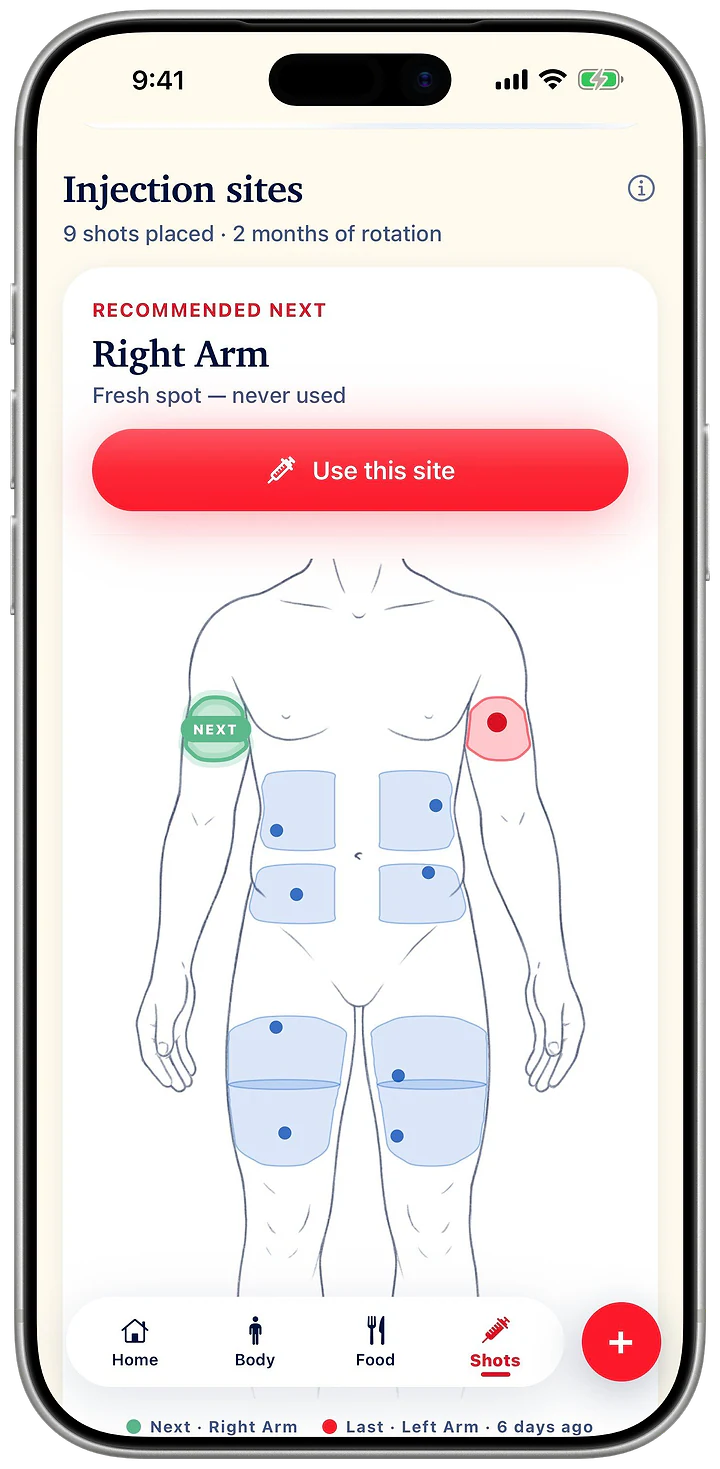
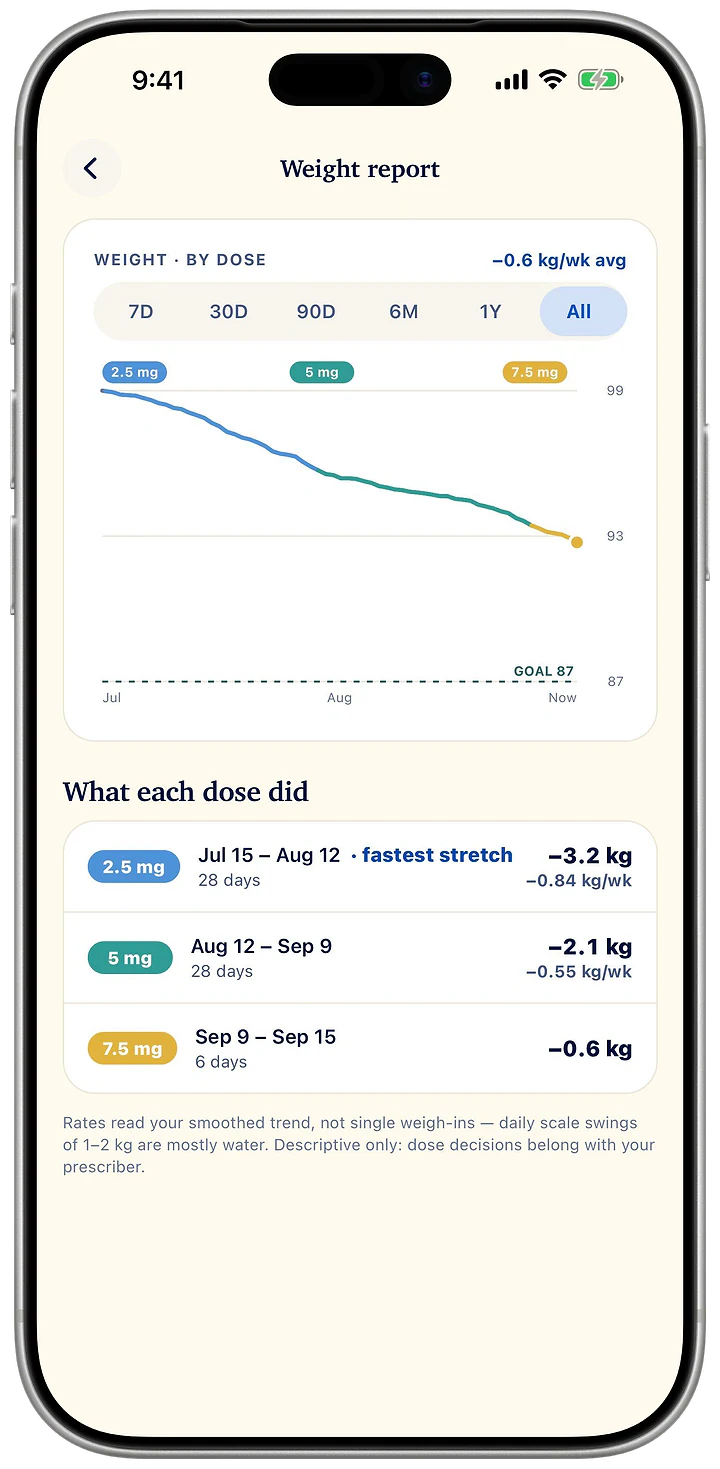
You can compare a nausea entry with the dose it happened on and the curve’s peak in Pensday. Symptom logging records nausea, constipation, fatigue, headache and more by dose on a quick severity scale. The shots log shows an estimated semaglutide medication-level curve by day since injection. Dose reminders and a next-shot countdown keep the weekly schedule in view.
Which Wegovy side effects need a doctor the same day?
Wegovy symptoms needing urgent assessment include persistent or severe abdominal pain, sometimes spreading into your back, because these can signal pancreatitis (US prescribing information, section 5.2). The label directs stopping Wegovy if pancreatitis is suspected (section 5.2).
Other symptoms that need prompt assessment include:
- Pain in your upper stomach, fever, yellowing of your skin or eyes, or clay-colored stools, which the Medication Guide lists as gallbladder warning signs.
- Vomiting or diarrhea with dehydration, because fluid loss has caused acute kidney injury.
- Severe constipation, since postmarketing reports include fecal impaction and intestinal obstruction.
For UK readers, persistent severe stomach or back pain can signal pancreatitis; the NHS says to call NHS 111 if you think you are having serious side effects (NHS semaglutide guidance).
The trial’s median symptom durations are not waiting periods for these warning signs.
Questions
Frequently asked questions
How long do Wegovy side effects last after stopping?
Semaglutide stays in the blood for about 5 to 7 weeks after the last Wegovy 2.4 mg or 7.2 mg injection or 25 mg tablet (US prescribing information, section 12.3). That is how long the drug stays in circulation, not a date by which every side effect ends.
Do side effects come back if I restart Wegovy after missed doses?
Restarting Wegovy can bring gastrointestinal reactions, which is why the US label directs restarting escalation at a lower dose after 2 or more consecutive missed injections (section 2.4). Use the guide to missed Wegovy doses for the dosing rules.
Is tiredness a side effect of Wegovy?
Fatigue occurred in 11% on Wegovy 2.4 mg versus 5% on placebo in the pooled injection trials (US prescribing information, Table 3). In the higher-dose trials, rates were 11% on 7.2 mg, 9% on 2.4 mg and 5% on placebo (Table 4). The UK SmPC lists fatigue as very common, meaning at least 1 in 10 people (section 4.8).
Does skin sensitivity happen on Wegovy 2.4 mg too?
Yes, dysesthesia occurred in 2% on Wegovy 2.4 mg versus 1% on placebo in the US pooled trials. The UK SmPC reports altered skin sensations in 2.1% versus 1.2% on placebo (section 4.8). The separate higher-dose trials reported 6% in their 2.4 mg arm (US label, Table 4).
Sources
- Wegovy prescribing information. Novo Nordisk (DailyMed), 2026.
- Gastrointestinal tolerability of once-weekly semaglutide 2.4 mg in adults with overweight or obesity, and the relationship between gastrointestinal adverse events and weight loss. Diabetes, Obesity and Metabolism, 2022.
- Wegovy FlexTouch summary of product characteristics. electronic Medicines Compendium, 2026.
- Oral semaglutide at a dose of 25 mg in adults with overweight or obesity (OASIS 4). The New England Journal of Medicine, 2025.
- Semaglutide. NHS, 2026.