
Coming off · Dosing and titration
How Long Does Mounjaro Stay in Your System After the Last Dose?
Mounjaro’s half-life is about 5 days, so it stays in your system for weeks, with about 5% of your usual pre-shot level left 4 weeks after the last shot.
Medically reviewed by Farnia Bahari, PharmD
Published 9 min read
Mounjaro (tirzepatide) stays in your system for weeks because its half-life is about 5 days (Mounjaro SmPC, section 5.2). After at least 4 weeks on the same dose, a model built on that half-life leaves about 5% of your usual pre-shot level 4 weeks after your last shot. The UK label asks you to stop at least 1 month before a planned pregnancy for this reason (section 4.6).
Key facts
- Your last shot keeps the level rising for a while, since tirzepatide peaks 8 to 72 hours after an injection (Mounjaro SmPC, section 5.2).
- After at least 4 weeks on the same dose, your level on day 7 after the last shot is still your usual weekly low, and it halves every 5 days from there (Mounjaro SmPC, section 5.2).
- Stopping on 15 mg rather than 2.5 mg adds about 13 days before the modelled level is down to the 2.5 mg weekly low (Mounjaro SmPC, section 5.2).
- Kidney and liver impairment did not change tirzepatide levels in single 5 mg dose studies (Mounjaro SmPC, section 5.2).
- The US Zepbound label gives tirzepatide a half-life of about 5 to 6 days (Zepbound prescribing information, section 12.3).
How long does Mounjaro stay in your system after your last dose?
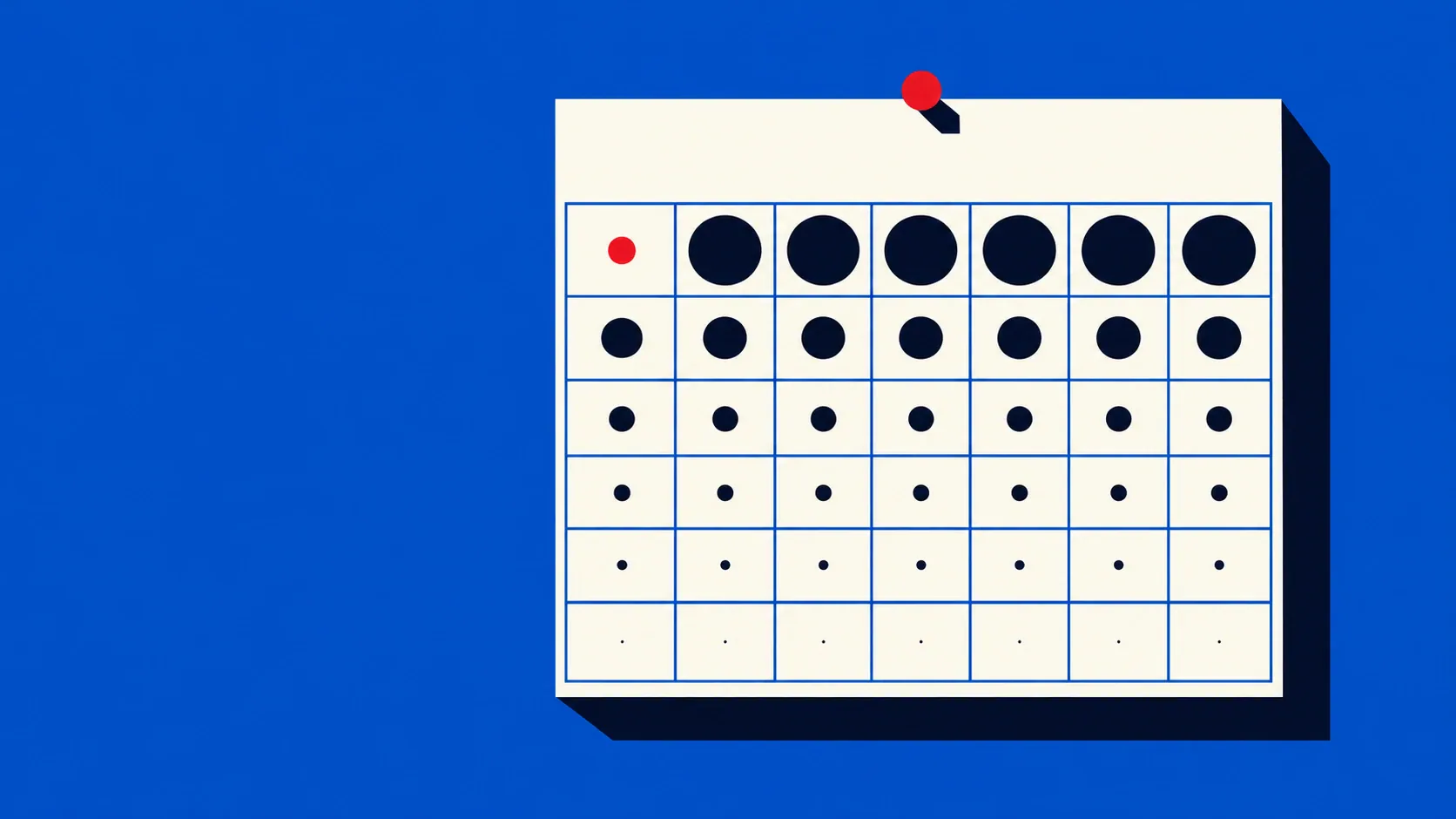
Using the 5-day half-life in the Mounjaro SmPC, section 5.2, a simple half-life model leaves about 5% of your usual pre-shot level 4 weeks after your last shot and under 1% by day 42. These are estimates, not measured blood levels.
The first week after your last injection follows the usual pattern, with a peak 8 to 72 hours after the shot (section 5.2). If you have been on the same dose for at least 4 weeks, the model puts you back at your usual weekly low on day 7, when your next injection would have been due. From day 7 onwards, the level falls below anything you had in a normal week on that dose.
Your usual pre-shot low is the level on your shot day just before you inject. It includes medicine left from your earlier weekly shots, which is why the level takes 4 weeks of doses to reach steady state (section 5.2).
This table shows how long tirzepatide stays in your system after that point, as the share of your usual pre-shot low left on each day after your last shot (Mounjaro SmPC, section 5.2).
| Days after your last shot | Level left as a share of your usual pre-shot low (%) |
|---|---|
| 7 | 100 |
| 12 | 50 |
| 17 | 25 |
| 22 | 12.5 |
| 27 | About 6 |
| 32 | About 3 |
| 37 | About 1.6 |
To work out any other day, divide the number of days since day 7 by 5, raise 0.5 to that power and multiply by 100. Every 5 days halves what is left.
The table starts at day 7 because your shot day is a point in the week you already know, and the level then is the lowest of a normal week. Its percentages describe medicine left in your body, not how strongly it still curbs your appetite.
The GLP‑1 plotter measures the same decline against a single shot’s peak instead, so its percentages start from a different point. If you are stopping to change medicines, plan the gap using switching from Mounjaro to Wegovy.
You can follow the estimated decline from your own injection dates in Pensday. Its free medication-level curve uses your logged shots, a 5-day half-life and a peak about 24 hours after each injection. After the peak that follows your last logged shot, the curve keeps falling, with a dashed projection for the days ahead. It is an estimate from your log, not a blood test.
Does a higher Mounjaro dose stay in your system longer?
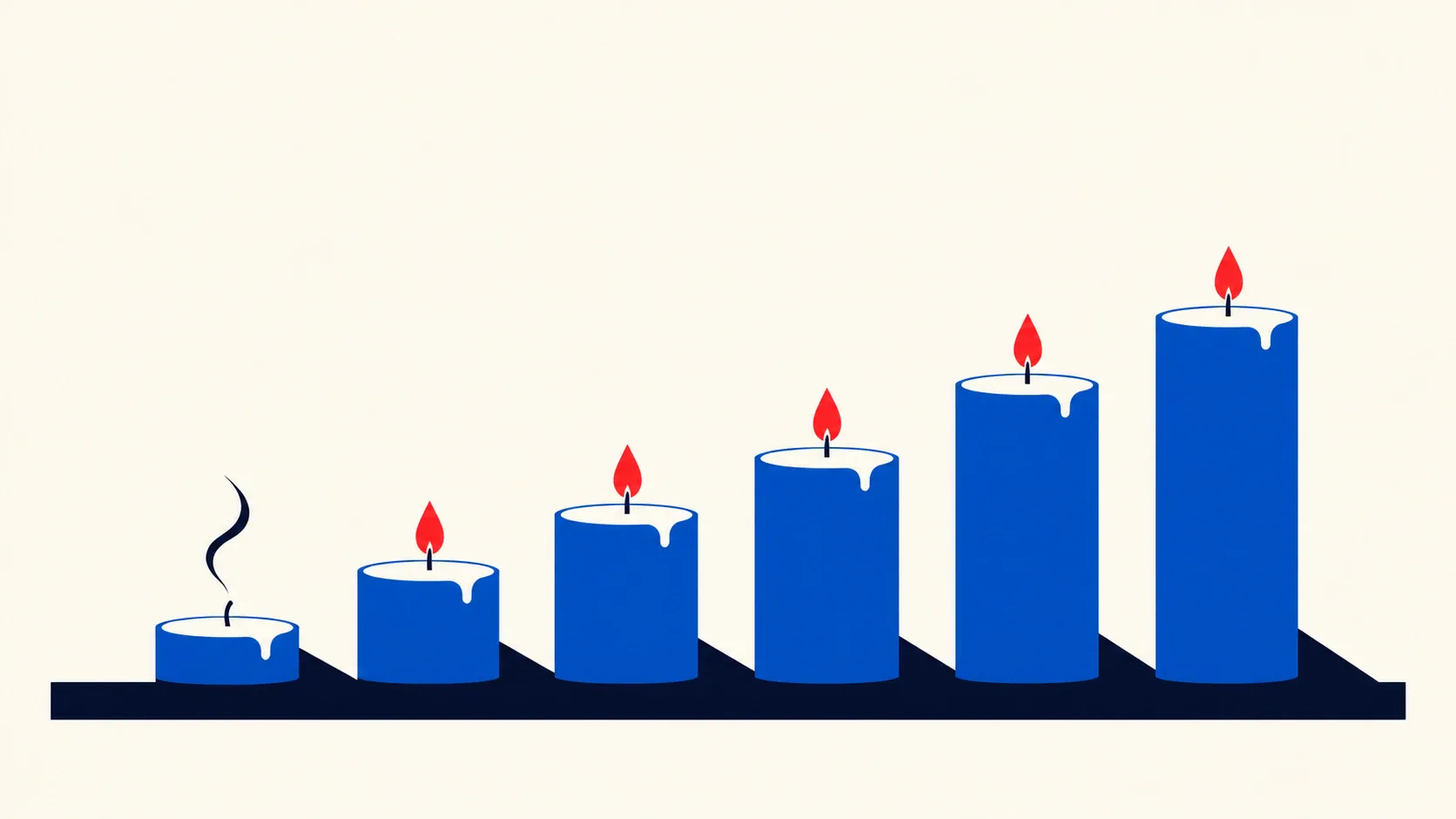
Yes, by about 5 days for each doubling of the dose you stop on (Mounjaro SmPC, section 5.2). Exposure rises in proportion to the dose, so a higher dose starts from a higher level but still halves every 5 days. A last 15 mg shot therefore takes about 13 days longer than a last 2.5 mg shot to fall to the same level.
This model table takes each step of the Mounjaro dose ladder, from 2.5 mg to 15 mg (section 4.2), and compares the level after your last shot with the weekly low on 2.5 mg. It assumes at least 4 weeks on your last dose.
| Last dose (mg) | Approximate day the level is down to the 2.5 mg weekly low | Level at 4 weeks as a share of the 2.5 mg weekly low (%) |
|---|---|---|
| 2.5 | 7 | About 5 |
| 5 | 12 | About 11 |
| 7.5 | 15 | About 16 |
| 10 | 17 | About 22 |
| 12.5 | 19 | About 27 |
| 15 | 20 | About 33 |
Count from your last injection, not from the shot you skipped. The last column compares what is left with the starting-dose low, not with your own usual low.
On day 7 after a last 15 mg shot, the level is 6 times the 2.5 mg weekly low. Bringing it down to that low takes about 2.6 half-lives, which adds about 13 days and lands around day 20. Even 4 weeks after a last 15 mg shot, the level is about a third of the 2.5 mg weekly low.
Falling below the 2.5 mg weekly low is a comparison between modelled levels, not a measured point at which Mounjaro stops working.
What is the half-life of Mounjaro?
About 5 days, in both the UK Mounjaro SmPC, section 5.2 and the US Mounjaro label, section 12.3. The US Zepbound label, section 12.3 gives about 5 to 6 days in adults with overweight or obesity.
Tirzepatide carries a C20 fatty diacid that binds it to albumin, a blood protein, which prolongs its half-life, and 99% of it is bound that way (Mounjaro SmPC, section 5.2). The body clears it by breaking it down through metabolism rather than passing it out whole (section 5.2).
People clear tirzepatide at different speeds. The Zepbound label puts the variation in clearance between people at a coefficient of variation of about 20% (section 12.3), so your own decline may run a little faster or slower than the tables.
A plotter set to 6 days draws a slower decline than one set to 5, one of the reasons GLP‑1 plotters disagree about the same shots.
Which Mounjaro rules depend on its half-life?
Two rules in the UK Mounjaro SmPC name the long half-life as their reason, the gap before a planned pregnancy and the longer watch after an overdose (sections 4.6 and 4.9). These are the time rules that matter when you stop or pause:
- Stop at least 1 month before a planned pregnancy, because of the long half-life (SmPC, section 4.6); the NHS says at least 4 weeks before trying (NHS medicines information).
- After an overdose there is no specific antidote, and observation and treatment may need to go on for longer (SmPC, section 4.9).
- Before general anaesthesia or deep sedation, the SmPC sets no stopping interval but says leftover stomach contents should be considered, so the anaesthetist needs the date of your last shot (SmPC, section 4.4).
- A missed dose can go in within 4 days after it was due; after that, skip it and keep your usual day (SmPC, section 4.2).
- To move your injection day, leave at least 3 days between two doses (SmPC, section 4.2).
Stopping at least 1 month before trying meets both the SmPC and the NHS advice. By day 28, the model puts the level at about 5% of your usual pre-shot low, a model figure rather than a safety threshold.
If you use oral contraception, the Mounjaro SmPC advises switching to a non-oral method or adding barrier protection for 4 weeks after starting and after each dose increase (section 4.5). That rule is about slower stomach emptying after a new dose, not clearance (Zepbound label, section 8.3). For stopping before a pregnancy and for contraception during treatment, use Mounjaro side effects in women, the pill and pregnancy.
For a late shot rather than a stop, the missed dose guide works out the 4-day window after your missed dose was due.
How long after stopping Mounjaro does appetite come back?
We found no trial that timed when appetite comes back after the last tirzepatide dose, and the Mounjaro SmPC, section 5.1 describes the appetite effect without saying how long it lasts once you stop. Its wording is that "tirzepatide reduces energy intake and appetite by increasing feelings of satiety (fullness), decreasing feelings of hunger, and decreasing food cravings" (section 5.1). A percentage left in the model cannot tell you when you will notice a change.
In SURMOUNT-4, people switched to placebo after 36 weeks on tirzepatide regained a substantial share of the weight they had lost (Mounjaro SmPC, section 5.1). To see how much came back in that trial and the semaglutide ones, use weight regain after stopping; for cravings after stopping, use food noise coming back.
If you have type 2 diabetes, the NHS says to agree any stop with your doctor rather than stopping suddenly, because it could affect your blood sugar (NHS medicines information).
How long does Zepbound stay in your system?
For Zepbound, a model using the label’s upper half-life of 6 days leaves about 3% of your usual pre-shot low on day 37 after your last injection (US Zepbound label, section 12.3). The same section gives a half-life of about 5 to 6 days and a median peak 24 hours after a shot, with a range of 8 to 72 hours (section 12.3). The US Mounjaro label, written for type 2 diabetes, gives about 5 days (section 12.3).
Counting from the same day-7 low, each halving takes 6 days instead of 5. The model leaves 50% of your usual pre-shot low on day 13, 25% on day 19 and 12.5% on day 25, then about 6% on day 31 and about 3% on day 37. After a last 15 mg dose, it reaches the 2.5 mg weekly low around day 23 rather than day 20, both counted from your last shot.
The US Zepbound label gives no interval before a planned pregnancy, saying to stop when a pregnancy is recognised, and it runs a pregnancy exposure registry (section 8.1). Its pill advice matches the UK’s 4 weeks after starting and after each dose increase (section 8.3).
A missed Zepbound dose can still go in within 4 days (96 hours), and two doses should be at least 3 days (72 hours) apart (section 2.3 and Medication Guide).
Questions
Frequently asked questions
Is Mounjaro out of your system after 2 weeks?
No. On day 14 after your last Mounjaro injection, about 38% of your usual pre-shot low is still there, going by the 5-day half-life in the Mounjaro SmPC, section 5.2. That assumes at least 4 weeks on the same dose before you stopped.
How long does Mounjaro stay in your system after one dose?
Once a single Mounjaro shot has been absorbed, its level halves every 5 days, so about 5% of its day-7 level is left 4 weeks after that injection (Mounjaro SmPC, section 5.2). One shot leaves less to clear than weekly treatment, which takes 4 weeks to build to steady state (section 5.2).
Can you flush Mounjaro out of your system faster?
Not by any method in the label. Tirzepatide is broken down by metabolism, and intact tirzepatide is not observed in urine (Mounjaro SmPC, section 5.2). There is no specific antidote, and after an overdose the SmPC allows for prolonged observation because the half-life is about 5 days (section 4.9).
Do kidney or liver problems make Mounjaro stay in your system longer?
No. Kidney impairment, including end-stage kidney disease, and liver impairment did not change tirzepatide levels in single 5 mg dose studies (Mounjaro SmPC, section 5.2). Age, sex and body weight have no clinically relevant effect either (section 5.2).
Does Mounjaro show up in a urine test?
Intact tirzepatide does not appear in urine, according to the Mounjaro SmPC; it leaves your body as broken-down metabolites in urine and faeces (section 5.2). That does not tell you whether a particular test looks for its metabolites.
Sources
- Mounjaro KwikPen, Summary of Product Characteristics, revised 29 August 2026. Eli Lilly and Company, 2026.
- Tirzepatide, NHS medicines information. NHS, 2026.
- Mounjaro (tirzepatide) injection, prescribing information, revised August 2026. Eli Lilly and Company, 2026.
- Zepbound (tirzepatide) injection, prescribing information, revised August 2026. Eli Lilly and Company, 2026.