
Dosing and titration · Side effects
What to Expect When Increasing Your Mounjaro Dose, Step by Step
Nausea after a Mounjaro dose increase usually eases. In trials it hit 24.6% on 5 mg, 29.0% on 10 mg and 28.0% on 15 mg, against 8.5% on placebo.
Medically reviewed by Farnia Bahari, PharmD
Published 10 min read
Expect stomach side effects to flare after each Mounjaro increase, then settle. In the trials behind the UK label, nausea affected 24.6% on 5 mg, 29.0% on 10 mg and 28.0% on 15 mg, against 8.5% on placebo, and was highest while doses were rising (Mounjaro SmPC, section 4.8). In a wider European review, new stomach side effects were most likely to start in the first 4 weeks on 2.5 mg and less likely after 4 weeks on the maintenance dose (EMA assessment report).
Key facts
- Any stomach or bowel side effect stayed level across maintenance doses, at 55.6%, 55.8% and 55.6% on 5, 10 and 15 mg, against 29.7% on placebo (Mounjaro SmPC, section 4.8).
- Stopping for good because of a stomach or bowel side effect rose from 1.9% on 5 mg to 3.3% on 10 mg and 4.3% on 15 mg, against 0.5% on placebo (Mounjaro SmPC, section 4.8).
- The first step, 2.5 mg to 5 mg, doubles your weekly dose, and the last, 12.5 mg to 15 mg, adds a fifth, with drug exposure rising in proportion (Mounjaro SmPC, section 5.2).
- Each new strength takes 4 weeks of weekly injections to reach a steady level, and the SmPC asks for at least 4 weeks on each dose before the next (Mounjaro SmPC, sections 4.2 and 5.2).
- In SURMOUNT-1 and SURMOUNT-2, the dose was lowered for 6.9% of people on the 15 mg plan, and stomach side effects were behind 92.7% of all reductions (FDA clinical review).
- Severe stomach pain that does not go away, with or without feeling or being sick, can be pancreatitis and needs a doctor immediately (Mounjaro PIL).
What happens when you increase your Mounjaro dose?
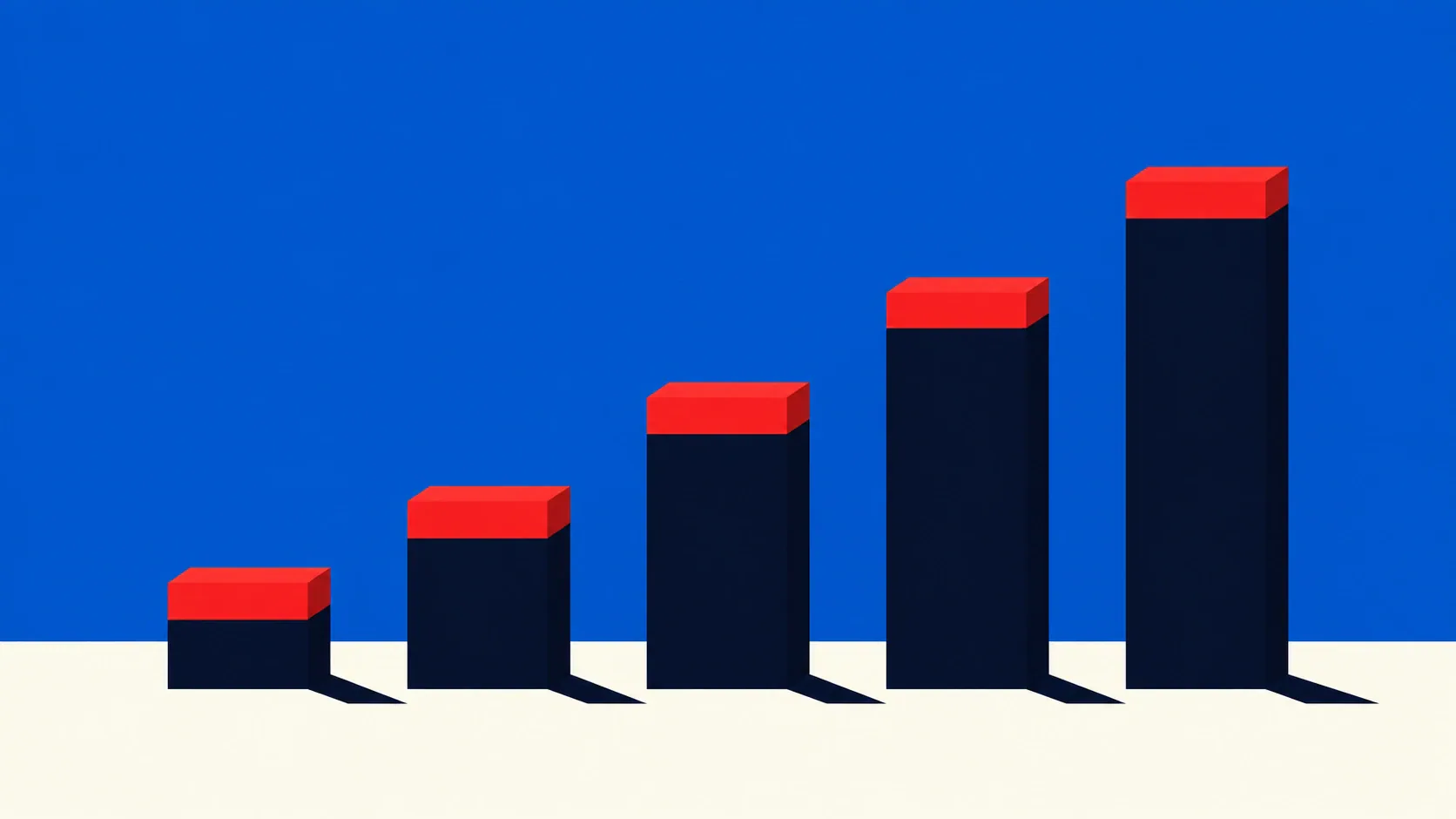
Each Mounjaro increase adds 2.5 mg to your weekly dose (Mounjaro SmPC, section 4.2). Tirzepatide exposure rises in proportion to the dose, so the first step doubles it and each later step adds a smaller share (Mounjaro SmPC, section 5.2).
The table shows how much each step raises your weekly dose and what the new strength is under the UK dosing rules.
| Step (mg) | Rise in your weekly dose | The new strength |
|---|---|---|
| 2.5 to 5 | Doubles, a 100% rise | First maintenance dose |
| 5 to 7.5 | Half as much again, a 50% rise | In-between strength |
| 7.5 to 10 | A third more | Maintenance dose |
| 10 to 12.5 | A quarter more, a 25% rise | In-between strength |
| 12.5 to 15 | A fifth more, a 20% rise | Maintenance dose and the maximum |
The SmPC’s side-effect rates group people by their assigned dose, not by step, so this table shows the size of each change, not a forecast of how it will feel (Mounjaro SmPC, section 4.8).
The European Medicines Agency pooled SURMOUNT-1 with the tirzepatide trials in type 2 diabetes and found new stomach side effects most likely to start in the first 4 weeks on 2.5 mg (EMA assessment report). They became less likely after 4 weeks on the maintenance dose (EMA assessment report).
Do Mounjaro side effects get worse with a higher dose?
A higher Mounjaro dose did not raise the share with any stomach or bowel side effect, but nausea, diarrhoea and stopping for good were all more common on 10 mg and 15 mg than on 5 mg (Mounjaro SmPC, section 4.8).
The table shows, by assigned dose, how many had any stomach or bowel side effect and how many stopped for good because of one (Mounjaro SmPC, section 4.8).
| Assigned dose | Any stomach or bowel side effect (%) | Stopped for good because of one (%) |
|---|---|---|
| Placebo | 29.7 | 0.5 |
| 5 mg | 55.6 | 1.9 |
| 10 mg | 55.8 | 3.3 |
| 15 mg | 55.6 | 4.3 |
Nausea affected 24.6%, 29.0% and 28.0% of people on 5, 10 and 15 mg, against 8.5% on placebo, and diarrhoea 18.7%, 20.8% and 22.5%, against 7.8% (Mounjaro SmPC, section 4.8). Most of these stomach side effects were mild (61.0%) or moderate (34.4%) (Mounjaro SmPC, section 4.8).
The European pooled analysis found the chance of new nausea and diarrhoea similar on 10 mg and 15 mg, and higher than on 5 mg (EMA assessment report). In that analysis, at most 1.6% of people at any dose rated their worst bout of nausea, vomiting or diarrhoea as severe (EMA assessment report).
The US Zepbound label, also tirzepatide, splits out vomiting and constipation from SURMOUNT-1 and SURMOUNT-2 (Zepbound prescribing information, Table 1). Vomiting rose with dose, at 8%, 11% and 13% on 5, 10 and 15 mg, against 2% on placebo, while constipation fell, at 17%, 14% and 11%, against 5% (Zepbound prescribing information, Table 1). If constipation is your main problem, start with relief for Mounjaro constipation.
SURMOUNT-1 assigned people to 5 mg, 10 mg, 15 mg or placebo (SURMOUNT-1). Everyone on tirzepatide climbed 2.5 mg every 4 weeks, so the 10 mg and 15 mg figures include weeks on 7.5 mg and 12.5 mg without separating them (Mounjaro SmPC, section 5.1).
How long do side effects last after a Mounjaro dose increase?
In the UK label’s trials, nausea, vomiting and diarrhoea were "higher during the dose escalation period and decreased over time" (Mounjaro SmPC, section 4.8). In the European pooled analysis, new stomach side effects became less likely after 4 weeks on the maintenance dose (EMA assessment report). These sources report when side effects started and how common they were, not how many days a single bout lasted (Mounjaro SmPC, section 4.8).
Within each week, tirzepatide reaches its highest level 8 to 72 hours after the injection (Mounjaro SmPC, section 5.2).
Across the weeks, the level from the new strength steadies after 4 weekly injections, and tirzepatide’s slowing of stomach emptying "diminishes over time" (Mounjaro SmPC, sections 5.1 and 5.2). The GLP‑1 Plotter shows that climb for your own doses.
The FDA reviewer found that new nausea, vomiting or diarrhoea had the "highest onset during the first 24 weeks of tirzepatide treatment" (FDA clinical review).
What does a higher Mounjaro dose add in weight loss?
At week 72 in SURMOUNT-1, mean weight change was -15.0% on 5 mg, -19.5% on 10 mg and -20.9% on 15 mg, against -3.1% on placebo (SURMOUNT-1). The move from 5 mg to 10 mg added more than the move from 10 mg to 15 mg (SURMOUNT-1).
Weight loss across SURMOUNT-1 to -4 was similar with or without nausea, so a rough week after a step does not mean more weight loss, any more than side effects in the first week do (Rubino et al., 2025).
How soon can you increase your Mounjaro dose in the UK?
In the UK, Mounjaro starts at 2.5 mg once a week for 4 weeks, then moves to 5 mg (Mounjaro SmPC, section 4.2). After that, the SmPC wording is: "If needed, dose increases can be made in 2.5 mg increments after a minimum of 4 weeks on the current dose" (Mounjaro SmPC, section 4.2).
At that minimum pace, 5 mg starts in week 5, 10 mg in week 13 and 15 mg in week 21, after 20 weeks of steps, the same climb SURMOUNT-1 used (Mounjaro SmPC, sections 4.2 and 5.1). The dose titration planner gives the earliest date for each step from your start date.
You do not have to increase your Mounjaro dose every 4 weeks, because the leaflet says your doctor may raise it "if you need it" (Mounjaro PIL). The recommended maintenance doses are 5, 10 and 15 mg (Mounjaro SmPC, section 4.2). Before you order the next KwikPen strength, go over your Mounjaro weight loss by month and your side effects since the last step with the pharmacist or doctor who prescribes it.
The SmPC’s 6-month progress check starts once you stop increasing, at your highest tolerated dose, whichever strength that is (Mounjaro SmPC, section 4.2). NICE sets the same check for NHS treatment, with a decision on continuing if less than 5% of your starting weight has gone after 6 months on that dose (NICE TA1026, recommendation 1.2).
What if you can’t tolerate the new Mounjaro dose?
If side effects after a Mounjaro increase bother you or do not go away, the NHS says to speak to a pharmacist or doctor, and to keep taking it unless told to stop (NHS tirzepatide page).
The UK rule sets 4 weeks on each dose as a minimum, so you can wait longer before the next step (Mounjaro SmPC, section 4.2). The SmPC gives no schedule for lowering the dose (Mounjaro SmPC, section 4.2).
In SURMOUNT-1 and SURMOUNT-2, someone with persistent stomach symptoms who had taken the previous three weekly doses could pause one dose and then resume it (FDA clinical review). If intolerable symptoms persisted, they could restart one maintenance dose lower, once only (FDA clinical review).
The dose was lowered for 2.2% of people on the 5 mg plan, 4.6% on 10 mg and 6.9% on 15 mg, against 0.1% on placebo (FDA clinical review). Stomach side effects were behind 115 of the 124 reductions (FDA clinical review).
Across SURMOUNT-1 to -3, 13.8% to 27.5% of people on tirzepatide used an anti-sickness medicine, against 5.8% to 6.7% on placebo (Rubino et al., 2025). Ask your pharmacist whether one would suit you, and plan meals with the GLP‑1 nausea food guide.
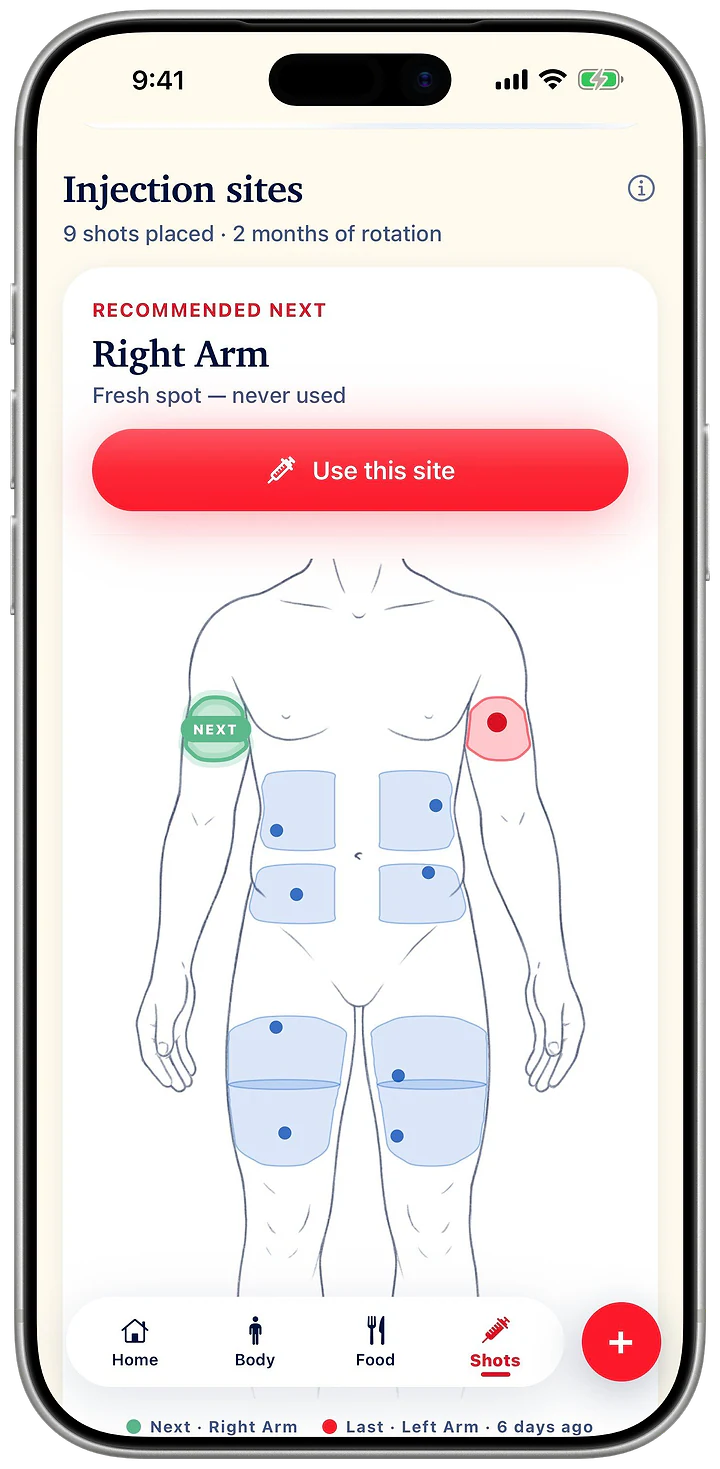
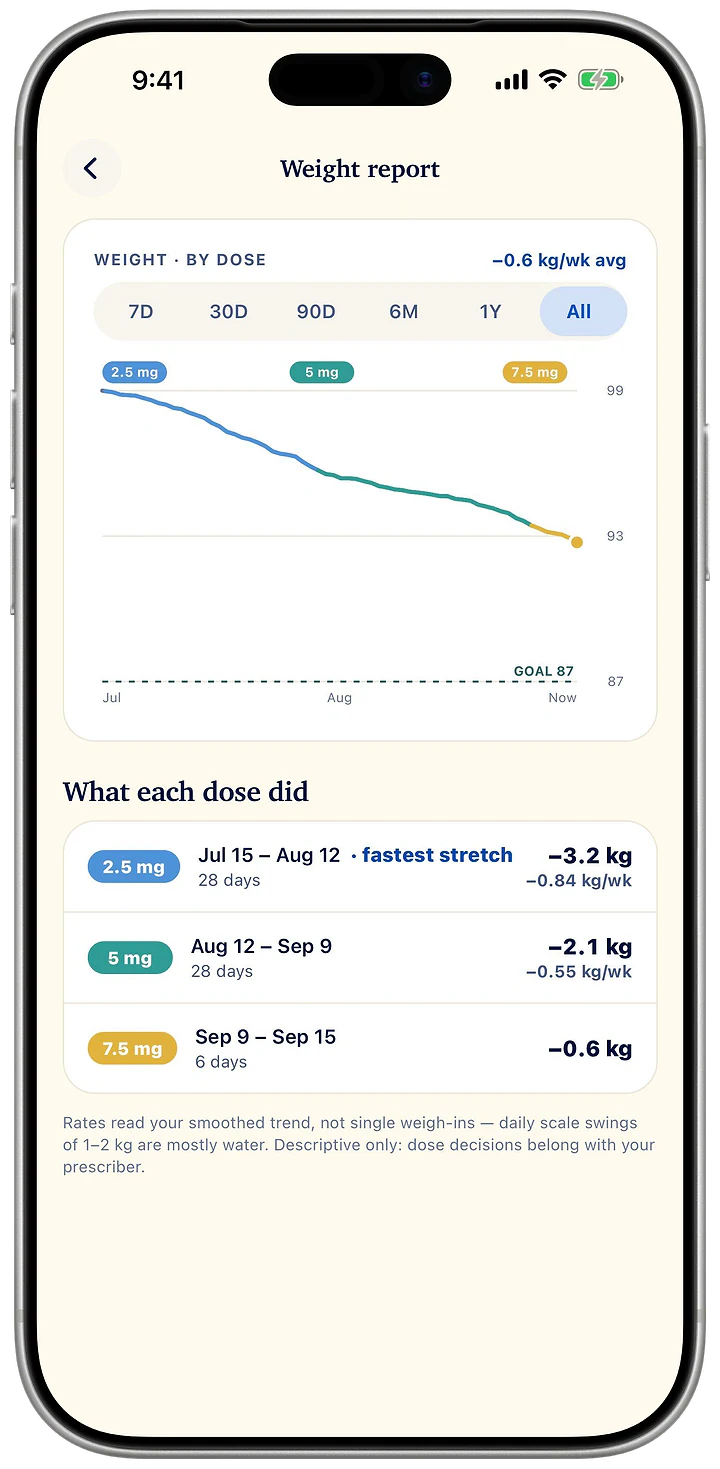
A dated note of each bad day, counted from the shot, helps that conversation. Pensday logs side effects and shows their pattern by day of the dose week, and logs your shots with an estimated medication-level curve. Its weight report is coloured by dose, with progress for each dose level, and it sends dose reminders.
What else changes when your Mounjaro dose goes up?
If you take the pill, add a barrier method such as a condom, or switch to a non-oral method, for 4 weeks after each dose increase, as in your first 4 weeks of Mounjaro with the pill (Mounjaro PIL).
Tirzepatide slows stomach emptying, so it can change how fast tablets are absorbed (Mounjaro SmPC, section 4.5). If you take a medicine with a narrow therapeutic index, such as warfarin or digoxin, the SmPC asks for monitoring after a dose increase (Mounjaro SmPC, section 4.5).
When Mounjaro is added to a sulphonylurea or insulin, the SmPC says lowering that medicine may be considered to cut the risk of hypoglycaemia, with blood glucose self-monitoring (Mounjaro SmPC, section 4.2).
Being sick or having diarrhoea can dehydrate you, which the leaflet says may reduce kidney function, so drink plenty of fluids (Mounjaro PIL). The NHS says alcohol can make feeling or being sick worse (NHS tirzepatide page). The water intake calculator gives a daily target from your weight.
Which symptoms after a Mounjaro increase need help the same day?
Severe stomach pain that does not go away, with or without feeling or being sick, can be acute pancreatitis and needs a doctor immediately (Mounjaro PIL). The NHS adds back pain that does not go away, and severe tummy pain from gallstones or an inflamed gallbladder (NHS tirzepatide page).
Signs of a severe allergic reaction include breathing problems, rapid swelling of the lips, tongue or throat with trouble swallowing, and a fast heartbeat, and they need immediate medical help (Mounjaro PIL).
If you also take other diabetes medicines, low blood sugar is more likely, and it can cause headaches, vision problems, feeling dizzy, weak or confused, a fast heartbeat or sweating (NHS tirzepatide page).
If you feel sick or have been sick, start with small sips and build up, and ask a pharmacist about oral rehydration solutions (NHS dehydration page). Ask for an urgent GP appointment or call NHS 111 if you feel dizzy on standing and it does not pass, or your pee is dark yellow or less frequent (NHS dehydration page). The same applies if you feel unusually tired, breathe quickly or have a fast heart rate (NHS dehydration page).
Call 999 or go to A&E if dehydration comes with blue, grey, pale or blotchy skin or lips, cold skin, difficulty breathing, confusion, or being sleepier than normal or hard to wake (NHS dehydration page). For low blood sugar, gallbladder pain or anything else you think is a serious side effect, call NHS 111 (NHS tirzepatide page).
Questions
Frequently asked questions
Can you increase your Mounjaro dose after 3 weeks?
No. The UK SmPC asks for at least 4 weeks on your current Mounjaro dose before the next step, so 3 weeks is 1 week short (Mounjaro SmPC, section 4.2). Increasing too quickly would also mean stepping up before your current dose reaches a steady level, which takes 4 weeks of weekly injections (Mounjaro SmPC, section 5.2).
Are side effects worse going from Mounjaro 5 mg to 7.5 mg?
SURMOUNT-1 had no 7.5 mg group, so its results give no separate rate for that strength (SURMOUNT-1). The step adds half as much again to your weekly dose, and nausea affected 24.6% on 5 mg and 29.0% on 10 mg (Mounjaro SmPC, section 4.8). Weigh the move itself with the Mounjaro 5 mg food noise guide.
Is Mounjaro 12.5 mg harder to tolerate than 10 mg?
No SURMOUNT-1 group stayed on 12.5 mg, so the trial gives no separate rate for that strength (SURMOUNT-1). The step adds a quarter to your weekly dose, and nausea was close on the doses either side, at 29.0% on 10 mg and 28.0% on 15 mg (Mounjaro SmPC, section 4.8).
Is it normal to feel tired after a Mounjaro dose increase?
Yes, the Mounjaro leaflet lists tiredness as common in weight management, meaning it may affect up to 1 in 10 people, and lists dizziness and low blood pressure as common too (Mounjaro PIL). In the US Zepbound label, fatigue affected 5%, 6% and 7% on 5, 10 and 15 mg, against 3% on placebo (Zepbound prescribing information, Table 1). If you are being sick or have diarrhoea and feel unusually tired, ask for an urgent GP appointment or call NHS 111 (NHS dehydration page).
Sources
- Mounjaro KwikPen SmPC. Eli Lilly and Company Limited, 2026.
- Mounjaro KwikPen patient leaflet. Eli Lilly and Company Limited, 2026.
- Mounjaro assessment report, EMA/539700/2023. European Medicines Agency, 2023.
- Clinical review of Zepbound, NDA 217806. US Food and Drug Administration, 2023.
- Zepbound prescribing information. Eli Lilly and Company, 2026.
- Tirzepatide once weekly for obesity (SURMOUNT-1). New England Journal of Medicine, 2022.
- Gastrointestinal tolerability of tirzepatide in SURMOUNT-1 to -4. Diabetes, Obesity and Metabolism, 2025.
- Tirzepatide for managing overweight and obesity, TA1026. NICE, 2025.
- Tirzepatide, NHS medicines information. NHS, 2026.
- Dehydration. NHS, 2026.