
Weight and plateaus
Exercise on Ozempic or Working Out on Mounjaro, How Much and What Kind
Aim for 150 minutes of exercise on Ozempic or Mounjaro a week, plus strength work. Liraglutide plus exercise cut body fat 3.9 points more than placebo.
Medically reviewed by Farnia Bahari, PharmD
Published 11 min read
Yes, you can exercise on Ozempic or Mounjaro, and every patient in the Zepbound weight-loss trials of tirzepatide, the drug in Mounjaro, was counseled toward at least 150 minutes a week (Zepbound label, clinical studies). In S-LiTE, a randomized trial, the older GLP‑1 liraglutide plus structured exercise cut body fat 3.9 percentage points more than placebo, about twice as much as either alone (Lundgren et al., NEJM 2021). Add strength training at least 3 times a week, as a 2025 GLP‑1 joint advisory asks (Mozaffarian et al., 2025).
Key facts
- Wegovy’s weight-loss trials paired a deficit of about 500 kcal/day with counseling toward at least 150 minutes a week, except STEP 3, which had its own diet and 100 rising to 200 minutes (Wegovy label).
- In S-LiTE, a trial of liraglutide and exercise, people assigned to exercise trained a median 2.65 sessions and 116 minutes a week, at 79% of maximum heart rate (Jensen et al., Sports Medicine 2026).
- Liraglutide alone did not improve physical fitness in S-LiTE, and compared with it, liraglutide plus exercise cut stair-climb time by 1.2 seconds (8.6%) (Jensen et al., Sports Medicine 2026).
- Adults need 150 minutes of moderate activity a week plus at least 2 days of muscle-strengthening work, according to the CDC adult activity guidelines.
- With insulin or a sulfonylurea, Ozempic and Mounjaro may raise the risk of hypoglycemia, including severe hypoglycemia, so plan those doses for training days with your prescriber (Ozempic prescribing information; Mounjaro prescribing information).
- Resting heart rate ran a mean 1 to 4 beats per minute higher on Wegovy than on placebo, and 1 to 3 beats per minute higher on Zepbound (Wegovy prescribing information, warnings; Zepbound label).
Can you exercise on Ozempic or work out on Mounjaro?
Exercise is written into the labels, since Ozempic is approved "as an adjunct to diet and exercise to improve glycemic control in adults with type 2 diabetes mellitus" (Ozempic prescribing information). US Mounjaro carries the same adjunct wording for type 2 diabetes (Mounjaro prescribing information).
For weight loss, Zepbound (tirzepatide) is indicated "in combination with a reduced-calorie diet and increased physical activity" (Zepbound prescribing information), and Wegovy (semaglutide) carries the same pairing (Wegovy prescribing information). In the UK, Mounjaro is also licensed for weight management "as an adjunct to a reduced-calorie diet and increased physical activity" (Mounjaro SmPC). That license covers adults with a BMI of 30 kg/m2 or more, or 27 to under 30 kg/m2 with a weight-related condition (Mounjaro SmPC).
In US wearable data from the All of Us program, people starting semaglutide did not move more, and the 581 users' daily steps stayed below where they started (Butensky et al., Obesity Surgery 2026). In the S-LiTE trial, people taking the older GLP‑1 liraglutide trained as much as people on placebo, with no significant difference between the two groups (Jensen et al., Sports Medicine 2026).
How much exercise did people do in the Wegovy and Zepbound trials?
The labels give the activity patients were counseled toward, at least 150 minutes a week, except in STEP 3, where the target started at 100 minutes and rose to 200 (Wegovy label; Zepbound label). The table shows the weekly activity target and diet each trial set (Wegovy label, clinical studies; Zepbound label, clinical studies).
| Trial, as the US label numbers it | Activity asked for (minutes a week) | Daily diet (kcal) |
|---|---|---|
| Wegovy Studies 2, 3, 5, 7, 8 and 9 | At least 150 | About 500 below needs |
| Wegovy Study 4 (STEP 3) | 100, rising to 200 | 1,000 to 1,200 for 8 weeks, then 1,200 to 1,800 |
| Zepbound Studies 1 and 2 | At least 150 | About 500 below needs |
| Zepbound trial with a 12-week lead-in | At least 150 | About 1,200 for women or 1,500 for men |
The weight losses on the Wegovy and Zepbound labels came with this counseling built in (Wegovy label; Zepbound label). STEP 3 added intensive behavioral therapy, 30 counseling visits over 68 weeks, for its 611 adults (Wadden et al., JAMA 2021).
STEP 1 and SURMOUNT-4 both recommended 150 minutes of exercise a week during treatment, yet most participants had notable weight regain after stopping the drug (Mozaffarian et al., 2025).
Does exercise add anything to a GLP‑1?
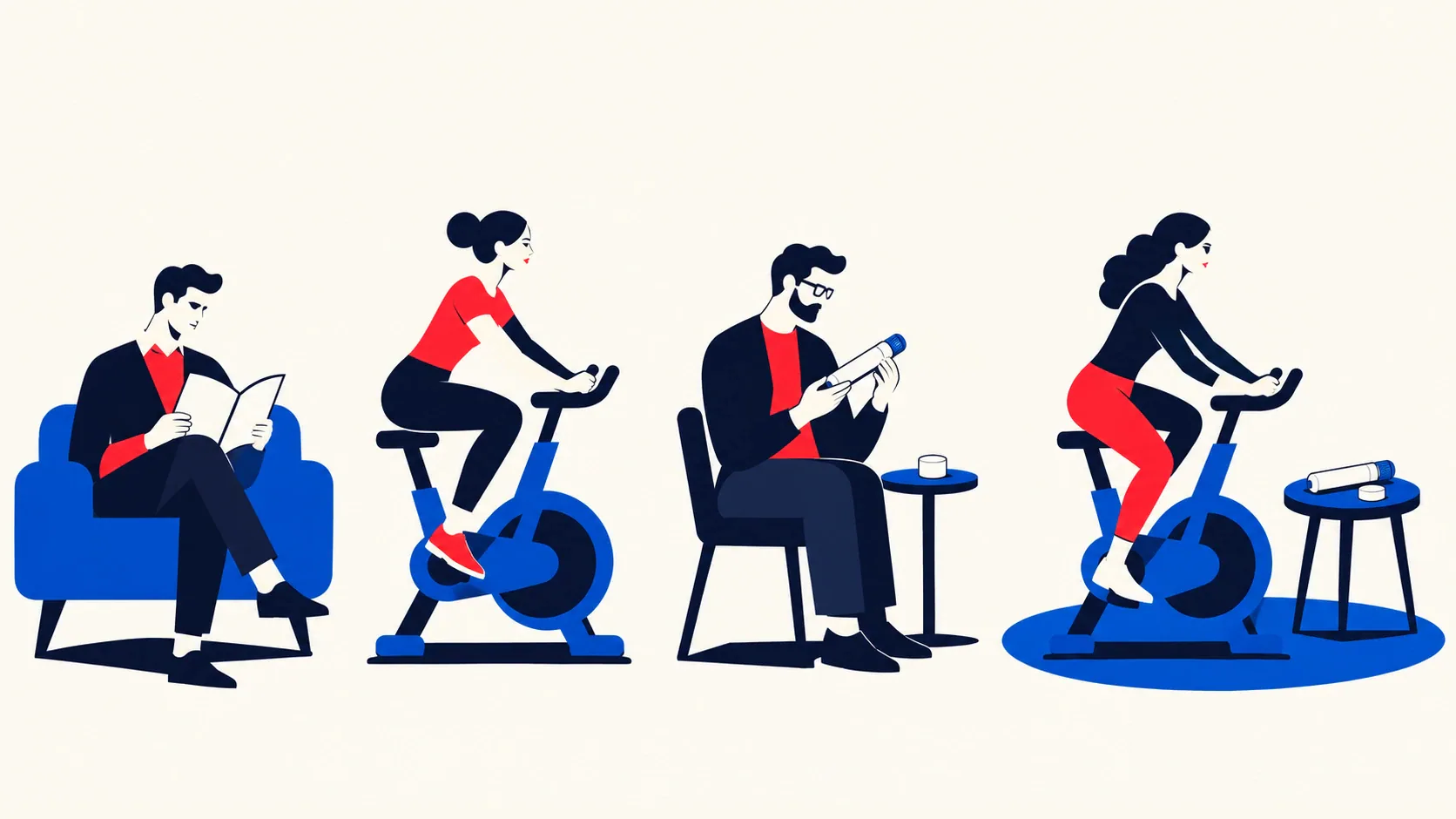
It did in S-LiTE, a randomized trial built to test exactly that, though the drug was liraglutide 3.0 mg, an older daily GLP‑1, not Ozempic or Mounjaro (Lundgren et al., NEJM 2021). The trial’s 195 adults, all with obesity and without diabetes, first lost a mean 13.1 kg on an 8-week low-calorie diet (Lundgren et al., NEJM 2021). They then spent 1 year on exercise plus placebo, liraglutide with usual activity, both together, or placebo alone (Lundgren et al., NEJM 2021).
The exercise program mixed group sessions of interval-based indoor cycling followed by circuit training with solo sessions, at moderate-to-vigorous intensity, and was designed to meet World Health Organization recommendations (Jensen et al., Sports Medicine 2026). People assigned to exercise, with placebo or liraglutide, did a median 2.65 sessions and 116 minutes a week, at 79% of their maximum heart rate (Jensen et al., Sports Medicine 2026).
The table shows each strategy’s difference from placebo after 1 year, in weight and in body-fat percentage (Lundgren et al., NEJM 2021).
| Strategy in S-LiTE | Weight vs placebo at 1 year (kg) | Body fat vs placebo (percentage points) |
|---|---|---|
| Exercise plus placebo | 4.1 lower | 1.7 lower |
| Liraglutide with usual activity | 6.8 lower | 1.9 lower |
| Exercise plus liraglutide | 9.5 lower | 3.9 lower |
The combination lost 5.4 kg more than exercise alone, while its 2.7 kg edge over liraglutide alone was not statistically significant (Lundgren et al., NEJM 2021). In the main NEJM report, only exercise plus liraglutide improved HbA1c, insulin sensitivity and cardiorespiratory fitness (Lundgren et al., NEJM 2021). A raised heart rate and gallstones showed up more often with liraglutide alone than with both together (Lundgren et al., NEJM 2021).
A 2026 analysis of the same trial measured physical fitness, including stair-climb time and peak oxygen uptake, and found exercise improved it with or without liraglutide, unlike liraglutide alone (Jensen et al., Sports Medicine 2026). Compared with liraglutide alone, the combination cut stair-climb time by 1.2 seconds (8.6%) and raised peak oxygen uptake by 3.0 mL/min per kg of fat-free mass (Jensen et al., Sports Medicine 2026).
Relative to body weight, strength fell 7.8% on placebo and 0.4% with exercise, and rose 1.0% with liraglutide and 3.3% with both, because weight dropped while absolute strength held (Jensen et al., Sports Medicine 2026).
Liraglutide alone lowered bone mineral density at the hip and spine compared with exercise alone, while with the combination hip and spine density did not differ from placebo (Jensen et al., JAMA Network Open 2024).
In the year after treatment, stopping liraglutide brought 6.0 kg more regain than stopping exercise, and measured from randomization, the combination group ended 5.1 kg lighter than the liraglutide-only group (Jensen et al., eClinicalMedicine 2024).
How much exercise should you do on a GLP‑1?
Aim for the standard adult target of 150 minutes of moderate activity a week, or 75 minutes of vigorous activity, plus muscle-strengthening work on at least 2 days (CDC adult activity guidelines). The NHS sets the same amounts and asks that strengthening work all the major muscle groups: legs, hips, back, abdomen, chest, shoulders and arms (NHS physical activity guidelines). It also suggests spreading activity over 4 to 5 days a week or every day (NHS physical activity guidelines).
For people on a GLP‑1, a 2025 joint advisory from four obesity and nutrition societies asks for more strength work (Mozaffarian et al., 2025). It says GLP‑1s "should be prescribed together with a structured exercise program", aiming for strength training at least 3 times a week plus at least 150 minutes of moderate aerobic exercise (Mozaffarian et al., 2025).
A weekly exercise plan on Mounjaro or Zepbound can be three strength sessions plus 150 minutes of moderate aerobic activity, spread over 4 to 5 days (Mozaffarian et al., 2025; NHS physical activity guidelines). The S-LiTE exercise groups trained a median 116 minutes a week at moderate-to-vigorous intensity, 79% of maximum heart rate, and improved their fitness while liraglutide alone did not (Jensen et al., Sports Medicine 2026).
Is strength training or cardio better on Mounjaro?
Do both, and make strength training on Mounjaro or Ozempic part of every week, because a 2025 joint advisory says aerobic work alone protects less lean mass during fast weight loss (Mozaffarian et al., 2025). It adds that more protein alone is likely not enough to preserve muscle without structured resistance training (Mozaffarian et al., 2025).
In trials, 25 to 39% of the loss is lean mass, from about 25% in tirzepatide’s SURMOUNT-1 to 39% in semaglutide’s STEP 1, where 5.3 of the 13.6 kg lost was lean body mass.
The best exercise on Mounjaro is therefore a mix of the two, as in the liraglutide trial S-LiTE, whose group sessions paired interval cycling with circuit training (Jensen et al., Sports Medicine 2026). For the protein side of weight training on Mounjaro, the GLP‑1 protein calculator gives a daily target in grams for your weight.
When in your weekly dose cycle should you work out?
Plan hard sessions around dose increases rather than a weekday, because the UK Mounjaro SmPC says nausea, diarrhea and vomiting occurred mainly during dose escalation and eased over time (Mounjaro SmPC). The UK Wegovy SmPC says dizziness comes mainly in the dose escalation period (Wegovy SmPC).
Semaglutide reaches its maximum concentration 1 to 3 days after the dose (Wegovy prescribing information, pharmacokinetics). Tirzepatide peaks a median 24 hours after the shot, within a range of 8 to 72 hours (Zepbound prescribing information, pharmacokinetics).
After each step-up, keep sessions easier and weights lighter when working out on Ozempic or Mounjaro, until your log shows any nausea has settled. If nausea returns after an Ozempic dose increase, move that week’s hard session to a day your log shows none. The GLP‑1 level plotter shows where your semaglutide or tirzepatide level sits on each day of the week.
You get a workout choice that follows your own dose log. Pensday offers short strength sessions and a 28-day plan built for people on a GLP‑1, and a check-in before each session reads your dose log and the symptoms you logged today. Nausea or heartburn pre-selects a gentle session, fatigue or a recent dose step-up pre-selects an easy one, and you can still choose the full session. The app also draws your estimated medication level by day since the shot, and Pensday Plus adds a 3D body scan with a fat and muscle split, processed on your phone.
What should you watch for when you work out on a GLP‑1?
Low blood sugar is the risk to plan for if you also take insulin or a sulfonylurea (Ozempic prescribing information). The Ozempic label warns that use "with an insulin secretagogue or insulin may increase the risk of hypoglycemia, including severe hypoglycemia", and says those doses may need to be reduced (Ozempic prescribing information). The Mounjaro label gives the same warning (Mounjaro prescribing information), so agree with your prescriber how to handle those doses on training days.
Your watch may show a slightly higher resting heart rate. Wegovy raised resting heart rate by a mean 1 to 4 beats per minute over placebo (Wegovy prescribing information, warnings), and Zepbound by a mean 1 to 3 beats per minute (Zepbound prescribing information). The Wegovy label asks prescribers to check heart rate at regular intervals and says "If patients experience a sustained increase in resting heart rate, discontinue WEGOVY" (Wegovy prescribing information, warnings). If your watch shows a resting rate that stays up, tell your prescriber.
Dizziness and fatigue are both on the Wegovy label’s list of common reactions, each with an incidence of 5% or more (Wegovy prescribing information, adverse reactions). Because the UK Wegovy SmPC places dizziness mainly in the dose escalation period (Wegovy SmPC), save intense exercise on Wegovy for weeks without a step-up. For intense exercise on Ozempic, also semaglutide, let your own log of dizziness after a step-up decide the timing.
Skip the hard session on a day with nausea, vomiting or diarrhea, and after a sweaty session use the water intake calculator to set a daily fluid target.
Questions
Frequently asked questions
Can you lose weight on Ozempic without exercise?
Yes. In the S-LiTE trial, people on liraglutide, an older daily GLP‑1, kept 6.8 kg more off than placebo after 1 year with usual activity, and 9.5 kg with exercise added (Lundgren et al., NEJM 2021). That 2.7 kg gap was not statistically significant, but only the groups that exercised improved their fitness (Lundgren et al., NEJM 2021; Jensen et al., Sports Medicine 2026).
Can I work out on the day of my Mounjaro injection?
Yes, if you feel well. Tirzepatide, the drug in Mounjaro, peaks a median 24 hours after the shot, within a range of 8 to 72 hours (Zepbound prescribing information, pharmacokinetics). If your own log shows nausea in the days after a shot, move the hard session later in the week.
Why is my heart rate higher during workouts on Wegovy?
The Wegovy label measured resting heart rate, which ran a mean 1 to 4 beats per minute higher than on placebo in the weight-loss trials (Wegovy prescribing information, warnings). The label says to stop Wegovy after a sustained rise in resting heart rate, so tell your prescriber if yours stays up (Wegovy prescribing information, warnings).
Does Wegovy make you dizzy when you exercise?
It can, mostly while the dose is still climbing. Dizziness is a common Wegovy reaction with an incidence of 5% or more (Wegovy prescribing information, adverse reactions), and the UK SmPC says it comes mainly during the dose escalation period (Wegovy SmPC).
Should I eat before exercising on Ozempic if I also take insulin?
Plan it with your prescriber, because Ozempic taken with insulin or an insulin secretagogue such as a sulfonylurea may increase the risk of hypoglycemia, including severe hypoglycemia (Ozempic prescribing information, warnings). The label says the insulin or secretagogue dose may need to be reduced, so ask how to handle that dose and food on training days (Ozempic prescribing information, warnings).
Sources
- Zepbound (tirzepatide) injection, prescribing information. Eli Lilly and Company, 2026.
- Wegovy (semaglutide) injection and tablets, prescribing information. Novo Nordisk, 2026.
- Ozempic (semaglutide) injection, prescribing information. Novo Nordisk, 2025.
- Mounjaro (tirzepatide) injection, prescribing information. Eli Lilly and Company, 2026.
- Mounjaro KwikPen, Summary of Product Characteristics. Eli Lilly and Company, 2026.
- Wegovy FlexTouch, Summary of Product Characteristics. Novo Nordisk Limited, 2026.
- Healthy Weight Loss Maintenance with Exercise, Liraglutide, or Both Combined. New England Journal of Medicine, 2021.
- Physical Fitness with Exercise and GLP‑1 Receptor Agonist Treatment Alone or Combined After Diet-Induced Weight Loss. Sports Medicine, 2026.
- Bone Health After Exercise Alone, GLP‑1 Receptor Agonist Treatment, or Combination Treatment. JAMA Network Open, 2024.
- Healthy weight loss maintenance with exercise, GLP‑1 receptor agonist, or both combined followed by one year without treatment. eClinicalMedicine, 2024.
- Effect of Subcutaneous Semaglutide vs Placebo as an Adjunct to Intensive Behavioral Therapy on Body Weight (STEP 3). JAMA, 2021.
- Real-world Physical Activity and Sedentary Time Trends in Patients Undergoing Obesity Treatment. Obesity Surgery, 2026.
- Adult Activity: An Overview. Centers for Disease Control and Prevention, 2023.
- Physical activity guidelines for adults aged 19 to 64. NHS, 2024.
- Nutritional priorities to support GLP‑1 therapy for obesity, a joint advisory. Obesity Pillars, 2025.
- Body composition changes during weight reduction with tirzepatide in the SURMOUNT-1 study. Diabetes, Obesity and Metabolism, 2025.