
Drug comparisons
Zepbound vs Wegovy Muscle Loss: Lean Mass and How to Protect It
We found no trial of Zepbound vs Wegovy muscle loss side by side. Separate studies put lean mass at 26% and 39% of the weight lost, similar in kilograms.
Medically reviewed by Farnia Bahari, PharmD
Published 7 min read
We found no trial scanning Zepbound and Wegovy users side by side. DXA scans put lean mass at 26% of the loss on tirzepatide (Look et al., 2025) and 39%, or 5.3 of 13.6 kg, on semaglutide (joint advisory). Zepbound takes off more, 20.2% against 13.7% in SURMOUNT-5, so the lean kilograms come out about equal (Aronne et al., 2025).
Key facts
- From a 110 kg start, each drug’s own lean share gives about 5.8 kg of lean mass lost on Zepbound and 5.9 kg on Wegovy (22.2 × 0.26; 15.1 × 0.39).
- Muscle makes up about half of DXA lean mass, putting muscle at about 20% of STEP 1’s weight loss (Mozaffarian et al., 2025).
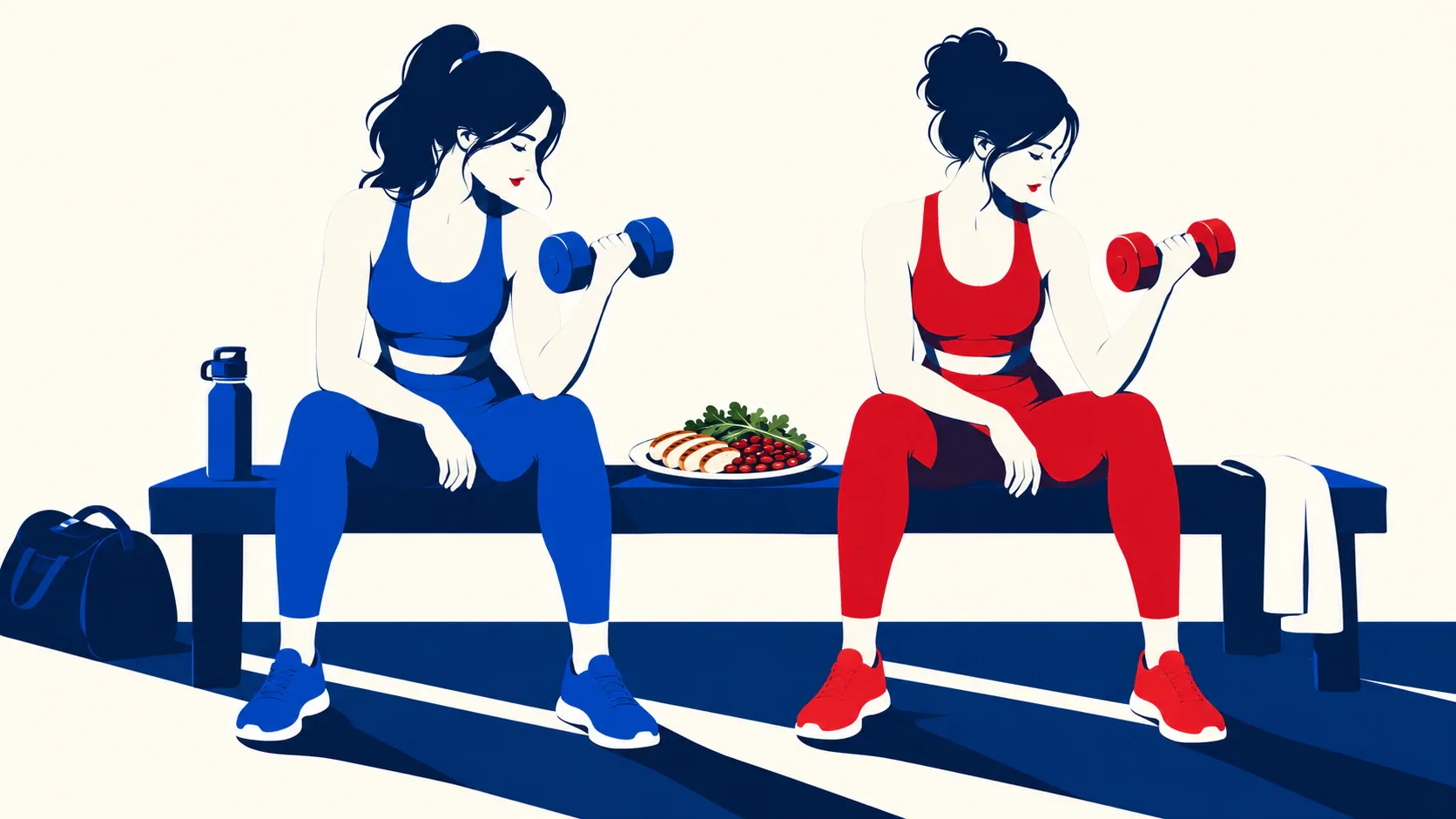
- To keep muscle, the joint advisory recommends strength sessions 3 or more times a week, with 150 or more minutes a week of moderate aerobic exercise (Mozaffarian et al., 2025).
- On MRI, thigh muscle volume on tirzepatide fell about as much as population data predict for the weight lost (Sattar et al., 2025).
How much of the weight lost is lean mass?
Evidence on semaglutide vs tirzepatide muscle loss comes from DXA scan sub-studies of two separate trials. In them, 25 to 39% of the loss is lean mass (Look et al., 2025; Wilding et al., 2021; Mozaffarian et al., 2025).
| Drug and dose | Lean share of loss (%) | Scan sub-study |
|---|---|---|
| Tirzepatide 5, 10 or 15 mg | 26 | SURMOUNT-1, 72 weeks, 160 scanned |
| Placebo | 25 | SURMOUNT-1, same sub-study |
| Semaglutide 2.4 mg | 39 | STEP 1, 68 weeks, 140 scanned |
For STEP 1, the joint advisory reports 5.3 kg of lean mass in an average loss of 13.6 kg and prints the share as 38% (Mozaffarian et al., 2025). Divided out, 5.3 ÷ 13.6 is 0.39, the figure in the table.
In SURMOUNT-1, the placebo group lost weight through diet and exercise, and 25% of that loss was lean mass, close to the 26% on tirzepatide (Look et al., 2025). The Zepbound and Wegovy labels each report greater loss of fat mass than of lean mass (Zepbound label, section 12.2; Wegovy label, section 12.2).
On a DXA scan, lean mass is everything that is not fat or bone, so it counts organs and body water as well as muscle (Look et al., 2025; Neeland et al., 2024). By the joint advisory’s estimate, muscle is about half of lean mass, so muscle was around a fifth of the STEP 1 weight loss (Mozaffarian et al., 2025).
Percentage versus kilograms
For a 110 kg starting weight, multiplying the SURMOUNT-5 averages by the scan-study shares gives these kilograms of loss (Aronne et al., NEJM 2025).
| Scenario | Wegovy (kg) | Zepbound (kg) |
|---|---|---|
| Weight lost at 72 weeks | 15.1 | 22.2 |
| Lean mass lost at a 26% share | 3.9 | 5.8 |
| Lean mass lost at each drug’s own sub-study share | 5.9 | 5.8 |
The sums are 110 × 13.7% = 15.1 kg and 110 × 20.2% = 22.2 kg. At the same 26% share, Zepbound’s larger loss would carry about 2 kg more lean mass (5.8 against 3.9 kg). At each drug’s own share, the lean totals come out almost level, 5.9 kg on Wegovy against 5.8 kg on Zepbound.
For a rough estimate from the trial averages, multiply the weight you have lost by 0.26 on tirzepatide or 0.39 on semaglutide.
What SURMOUNT-5 compared
SURMOUNT-5 compared the highest weekly doses each person tolerated, tirzepatide 10 or 15 mg against semaglutide 1.7 or 2.4 mg, in 751 adults with obesity over 72 weeks (Aronne et al., NEJM 2025).
| Result at week 72 | Zepbound (tirzepatide) | Wegovy (semaglutide) |
|---|---|---|
| Weight lost (%) | 20.2 | 13.7 |
| Waist reduction (cm) | 18.4 | 13.0 |
Switching from semaglutide to tirzepatide restarts the new drug at 2.5 mg (Zepbound label, section 2.1). In the UK, tirzepatide is prescribed as Mounjaro, and the UK comparison of Mounjaro and Wegovy muscle loss rests on the same two scan studies.
What MRI scans of muscle add
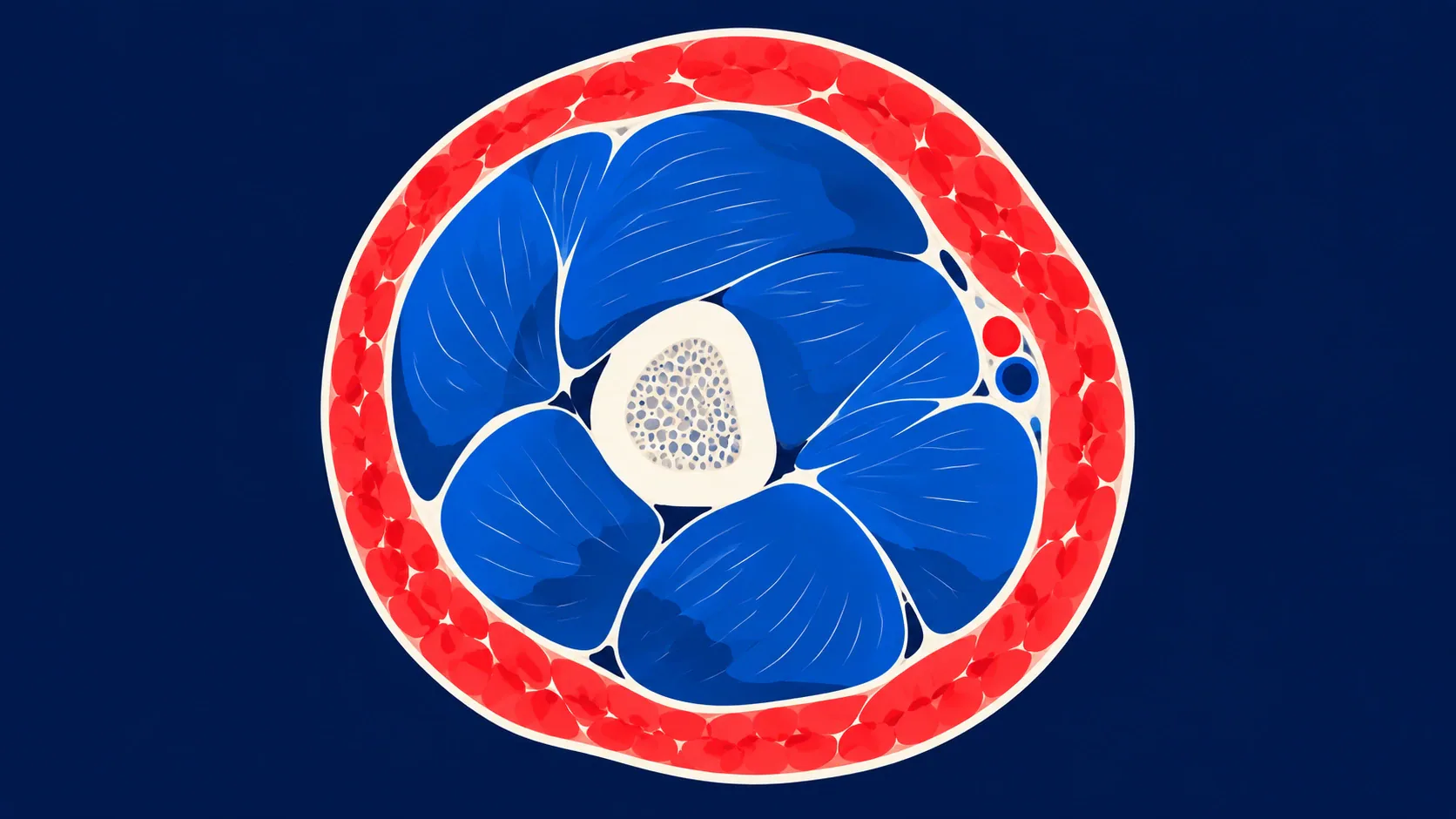
DXA counts muscle together with organs and water, while MRI measures muscle itself. In the SURPASS-3 MRI sub-study, 246 adults with type 2 diabetes had their thighs scanned before and after 52 weeks on tirzepatide or insulin degludec (Sattar et al., Lancet Diabetes Endocrinol 2025).
On tirzepatide, thigh muscle volume fell by about as much as UK Biobank data predict for the weight lost, and fat inside the muscle fell more than predicted. The one exception came at 15 mg. There, a score that compares muscle volume with what is expected for a person’s sex, height and weight fell more than predicted (Sattar et al., 2025).
A 2024 review, drawing on the MRI studies, judges that muscle changes on these drugs appear to be adaptive. Muscle volume falls about as much as age, illness and the weight lost would predict, and muscle quality likely improves (Neeland et al., 2024). It adds that older age and more severe disease may affect who is a suitable candidate, because of the risk of sarcopenia.
How to prevent muscle loss on Zepbound or Wegovy
Structured strength training is "well established to help preserve lean mass during weight reduction", according to the 2025 joint advisory on GLP‑1 nutrition (Mozaffarian et al., 2025). It asks for strength training at least 3 times a week, alongside at least 150 minutes of moderate aerobic exercise, and calls more protein alone "likely inadequate" without it.
For protein, the advisory cites proposed targets of 1.2 to 1.6 g/kg a day during weight loss, above the general allowance of 0.8 g/kg (Mozaffarian et al., 2025). Your own range in grams comes from the GLP‑1 protein calculator. You may see higher numbers elsewhere, because other protein ranges were set for other situations.
Most nausea, vomiting and diarrhea on Zepbound come in the dose-escalation weeks (Zepbound label, section 6.1), which can make protein hardest to eat after a dose increase. For weeks when appetite is low, the advisory suggests small, frequent meals and foods such as cottage cheese, soups and protein drinks (Mozaffarian et al., 2025).
Where to measure your body to track weight loss
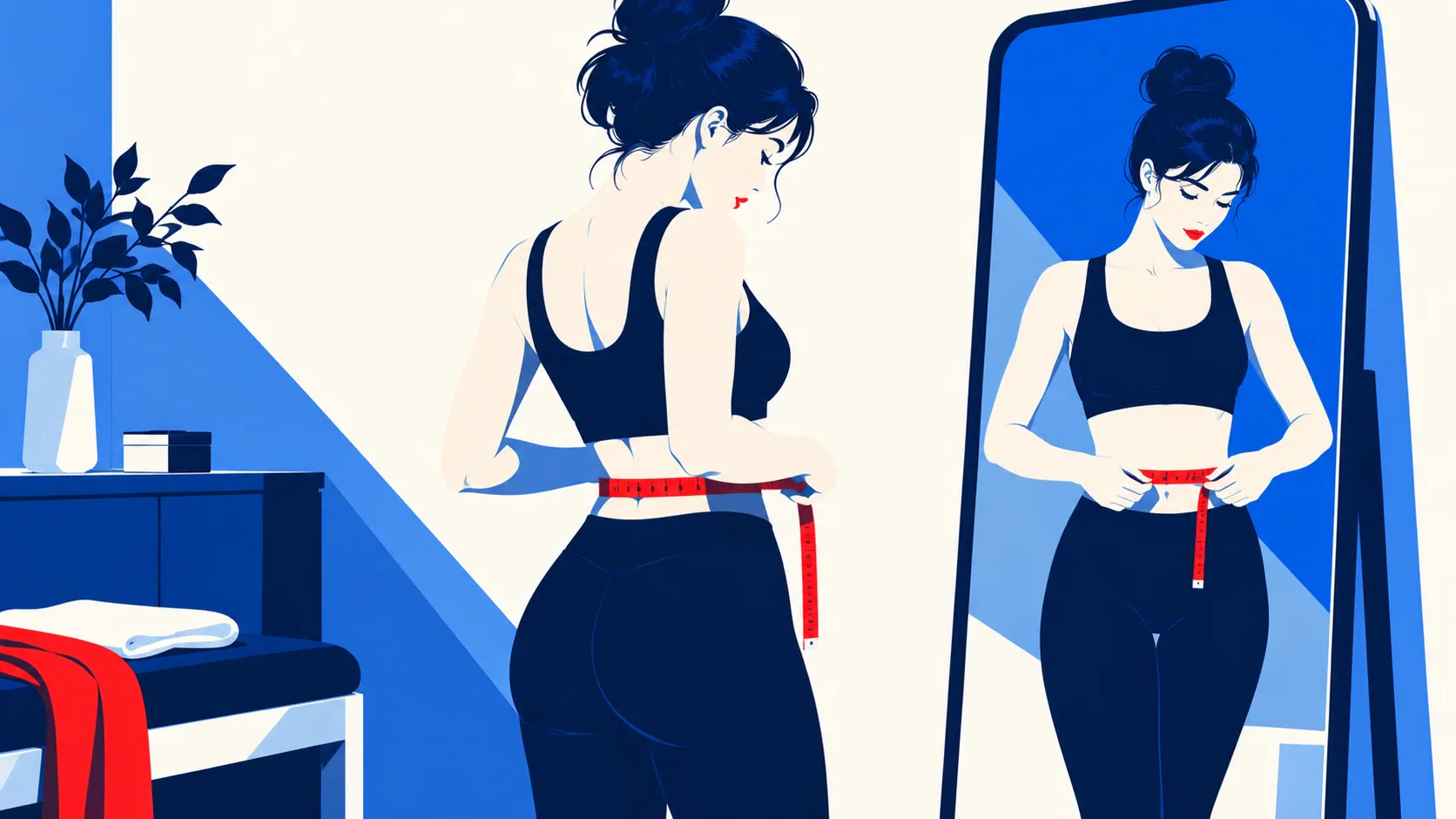
Weight alone does not show whether fat or muscle is going, so pair the scale with a tape measure:
- Weigh yourself at least weekly, at the same time of day.
- On those days, measure your waist at the navel.
- Once a month, add your hips at the widest point, mid-thigh and mid upper arm, and take photos from the front, side and back in the same light.
- Read any body-fat figure from a home device as a trend over months, from the same device each time.
- If your clinic offers a DXA scan, it measures fat and lean mass directly, as the trial sub-studies did.
A falling waist on a flat scale does not count as a stall under the 4-week plateau test. For what the trial body scans show about where the loss comes from, see where you lose weight first on Ozempic.
Where each drug stands
Zepbound (tirzepatide) took off more weight in SURMOUNT-5 (Aronne et al., NEJM 2025), and its scan study put the lean share close to placebo’s (Look et al., 2025). Wegovy (semaglutide) had a higher lean share in the STEP 1 scan study (Mozaffarian et al., 2025), and its US label adds a 7.2 mg dose for weight, which SURMOUNT-5 did not test (Wegovy label, section 2.2).
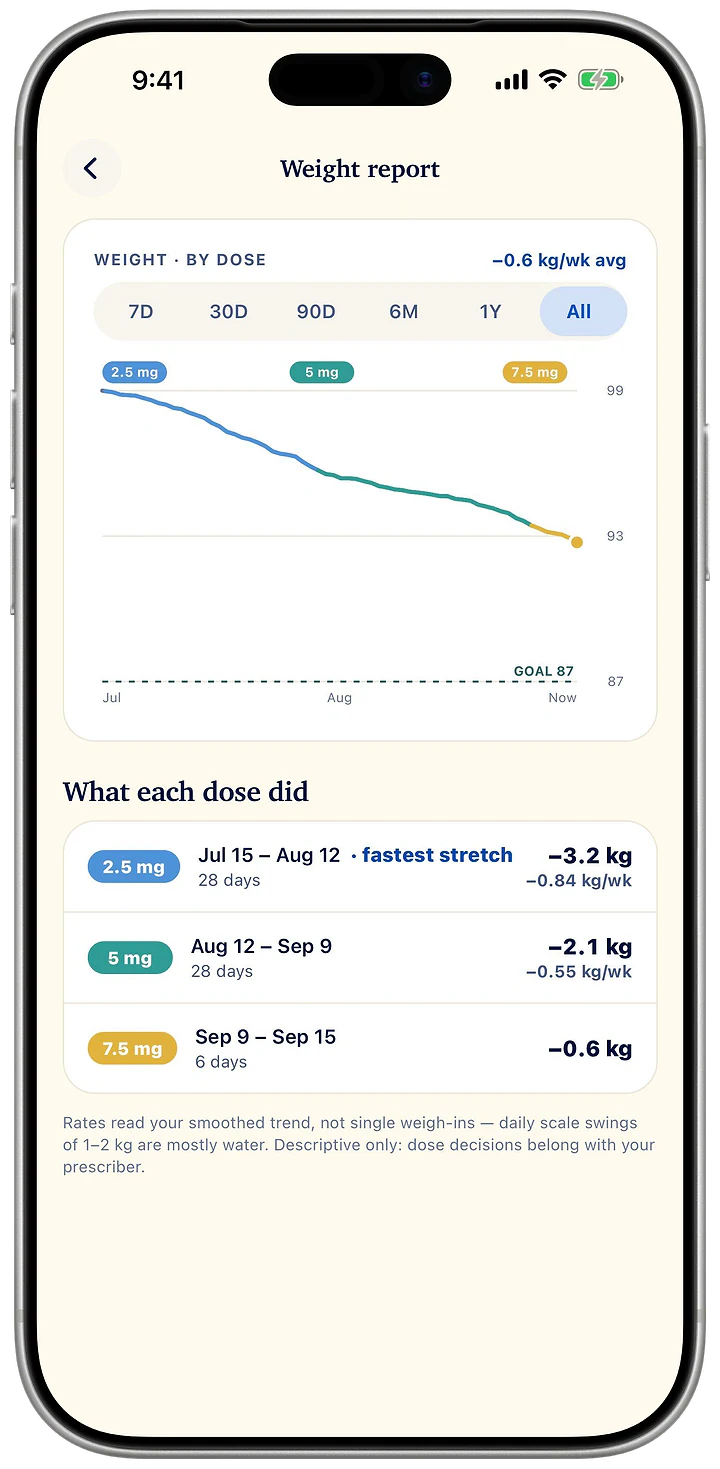
Whichever drug you take, weekly weigh-ins logged in Pensday go on a weight report split by dose, so a stall shows up against the dose you were on.
Questions
Frequently asked questions
Does Zepbound cause more muscle loss than Wegovy?
Not in kilograms, on the trial averages. Zepbound’s bigger loss is offset by its lower lean share (Aronne et al., NEJM 2025; Look et al., 2025). For a 110 kg person, that works out to a little under 6 kg of lean mass on either drug.
Is muscle loss on a GLP‑1 permanent?
The SURMOUNT-1 and STEP 1 scans ended with treatment, at 72 and 68 weeks (Look et al., 2025; Wilding et al., 2021). We found no study that scanned lean mass after people stopped a GLP‑1. During treatment, the joint advisory recommends strength training to preserve muscle and bone mass (Mozaffarian et al., 2025).
Does the 7.2 mg Wegovy dose change the comparison?
SURMOUNT-5 tested semaglutide up to 2.4 mg, so it says nothing about the Wegovy 7.2 mg step, and the US label reports no body-composition data for that dose (Wegovy label, section 14.2).
How do I know if I am losing fat or muscle on Zepbound?
Only a body-composition scan such as DXA separates them; the SURMOUNT-1 scan study used DXA on 160 people over 72 weeks (Look et al., 2025). Without a scan, weight and waist measured on the same days show the trend.
Sources
- Body composition changes during weight reduction with tirzepatide in the SURMOUNT-1 study of adults with obesity or overweight. Diabetes, Obesity and Metabolism, 2025.
- Nutritional priorities to support GLP‑1 therapy for obesity: a joint advisory from the American College of Lifestyle Medicine, the American Society for Nutrition, the Obesity Medicine Association and The Obesity Society. Obesity Pillars, 2025.
- Tirzepatide as Compared with Semaglutide for the Treatment of Obesity (SURMOUNT-5). New England Journal of Medicine, 2025.
- Tirzepatide and muscle composition changes in people with type 2 diabetes (SURPASS-3 MRI). The Lancet Diabetes and Endocrinology, 2025.
- Impact of Semaglutide on Body Composition in Adults With Overweight or Obesity: Exploratory Analysis of the STEP 1 Study. Journal of the Endocrine Society, 2021.
- Zepbound (tirzepatide) injection, prescribing information. Eli Lilly and Company, 2026.
- Wegovy (semaglutide) injection and tablets, prescribing information. Novo Nordisk, 2026.
- Changes in lean body mass with glucagon-like peptide-1-based therapies and mitigation strategies. Diabetes, Obesity and Metabolism, 2024.