
Weight and plateaus · Side effects
Mounjaro After Gastric Sleeve or Bypass and What the Trials Show
No Mounjaro trial after gastric sleeve has reported. In BARI-STEP, 1+ year after surgery, semaglutide 2.4 mg changed weight by -18.0% vs +0.4% on placebo.
Medically reviewed by Farnia Bahari, PharmD
Published 12 min read
People do take Mounjaro (tirzepatide) after a gastric sleeve, but no tirzepatide trial in sleeve patients has reported results yet. In BARI-STEP, published in May 2026, semaglutide 2.4 mg changed weight by -18.0% versus +0.4% on placebo at 68 weeks, in 70 people at least 1 year after surgery. Neither the Mounjaro label nor the Zepbound label mentions bariatric surgery, but the Wegovy label (section 6.1) calls past bariatric surgery "a risk factor for hypoglycemia".

Key facts
- On semaglutide in BARI-STEP, 85.3% of people lost 10% or more of their weight, against 6.9% on placebo (BARI-STEP, Nature Medicine).
- 55 of the 70 people in BARI-STEP had a sleeve, and its exploratory analysis found no significant difference in weight loss by type of surgery (BARI-STEP, Nature Medicine).
- In a retrospective study of 115 people treated for regain after a sleeve, weight fell 15.5% on tirzepatide and 10.3% on semaglutide at 6 months (Obesity Surgery, 2024).
- The US Wegovy label reports serious low blood sugar in 2.3% (2/87) of people with past bariatric surgery on Wegovy versus 0% (0/97) on placebo (Wegovy label, section 6.1).
- The BARI-STEP, BARI-OPTIMISE, Australian and NYU placebo-controlled trials all enrolled people at least 12 months after surgery.
- A 70-person placebo-controlled tirzepatide trial after a sleeve or bypass, TirBaS (NCT07829198), was not yet recruiting on 9 November 2026, with a planned start in January 2027 (TirBaS record).
What do trials show for GLP‑1 drugs after a gastric sleeve or bypass?
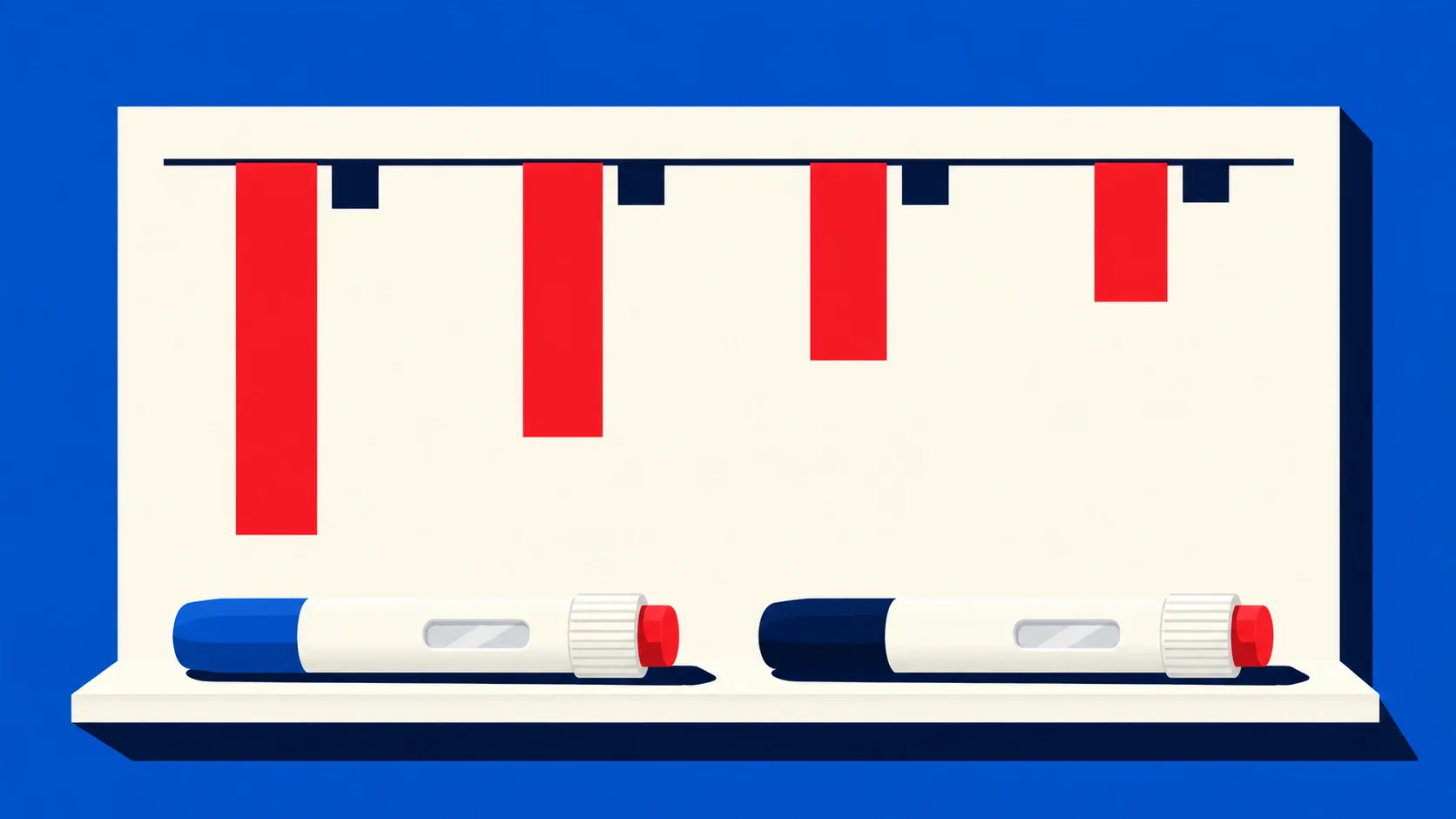
Four placebo-controlled trials of a GLP‑1 after bariatric surgery found more weight loss on the drug than on placebo, as the table shows (BARI-STEP, BARI-OPTIMISE, Australian trial, NYU trial).
| Trial, drug and people | Weight change, drug vs placebo | Measured at |
|---|---|---|
| BARI-STEP, semaglutide 2.4 mg weekly, 70 people after a sleeve or bypass | -18.0% vs +0.4% | 68 weeks |
| BARI-OPTIMISE, liraglutide 3.0 mg daily, 70 people after a bypass or sleeve | -8.82% vs -0.54% | 24 weeks |
| Australian trial, daily liraglutide, 48 people after a band, sleeve or bypass | -5.7 kg vs +1.4 kg | 12 months |
| NYU trial, liraglutide 3.0 mg daily, 132 people regaining after a bypass | -8.8% vs +1.1% | 56 weeks |
BARI-STEP, the newest (Nature Medicine, 22 May 2026), tested semaglutide, the drug in Wegovy and Ozempic, after a gastric sleeve or bypass. Among the 34 people analyzed on semaglutide, 85.3% lost 10% or more of their weight, 61.8% lost 15% or more and 47.1% lost 20% or more (BARI-STEP). On placebo, the same shares were 6.9%, 6.9% and 3.4%. For tirzepatide without surgery, compare how much weight people lose on Mounjaro by month.
Most BARI-STEP participants had a sleeve, 55 of 70, with 15 after a gastric bypass. They joined a mean of 83.9 months, about 7 years, after surgery, with a mean BMI of 41.5 (BARI-STEP). BARI-STEP’s exploratory analysis found no significant difference in weight loss on semaglutide by surgery type, time since surgery, or whether people had regained or lost too little at first.
In the NYU liraglutide trial, 76% on liraglutide lost at least 5% versus 17% on placebo, and 21% went below their lowest weight after surgery. Only 65% and 53.4% of the liraglutide and placebo groups finished the trial.
Is there a Mounjaro or Zepbound trial after a gastric sleeve?
Controlled trials of Mounjaro or Zepbound (tirzepatide) after a sleeve or bypass are registered, but none has reported results yet (TirBaS, Rush and GRABS records). Until then, tirzepatide figures come from observational studies, such as a retrospective study of 115 people treated for regain after a sleeve (Obesity Surgery, 2024). Weight fell 15.5% in the 45 on tirzepatide and 10.3% in the 70 on semaglutide at 6 months, with no severe adverse events reported.
A 2025 meta-analysis pooled eight retrospective studies with 964 patients regaining weight after bariatric surgery and found total weight changes of -13.63% on tirzepatide and -10.97% on semaglutide. An Italian cohort of 34 people regaining after bariatric or endoscopic procedures lost 18.1% at 24 weeks on tirzepatide 2.5 to 10 mg weekly (Obesity Surgery, 2026). Nobody stopped because of side effects.
These studies were not randomized, and people given tirzepatide may differ from those given semaglutide. So they cannot show that tirzepatide caused the loss or works better than semaglutide.
The placebo-controlled TirBaS trial (NCT07829198) plans to enroll 70 adults at least 12 months after a bypass or sleeve with under 25% weight loss. Over 52 weeks, the tirzepatide dose starts at 2.5 mg and rises in 2.5 mg steps every 4 weeks up to 15 mg. On 9 November 2026 it was not yet recruiting, with a planned start in January 2027 and primary completion in December 2028.
A smaller Rush University trial (NCT06734273) randomizes 42 people having a first sleeve to the sleeve alone or the sleeve plus tirzepatide. Tirzepatide starts at 2.5 mg weekly 6 months after surgery, and primary completion is due in September 2027. Vanderbilt’s GRABS pilot (NCT06162715) compares tirzepatide with standard care in 30 people after a first gastric bypass, with primary completion due in January 2027.
What do the Mounjaro, Zepbound and Wegovy labels say about bariatric surgery?
The US Mounjaro and Zepbound labels never mention bariatric surgery. The US Wegovy label (section 6.1) carries one line calling past bariatric surgery a risk factor for low blood sugar. Both tirzepatide labels were revised in August 2026, and neither sets a waiting time, a different dose or a ban after a sleeve or bypass. The UK Mounjaro summary of product characteristics, revised 29 August 2026, does not mention bariatric surgery either (Mounjaro SmPC).
Section 6.1 of the US Wegovy label describes a heart outcomes trial in adults without type 2 diabetes. It says "Patients with a history of bariatric surgery (a risk factor for hypoglycemia) had more events of serious hypoglycemia" (Wegovy prescribing information, section 6.1). The rate was 2.3% (2/87) on Wegovy injection against 0% (0/97) on placebo.
The UK Wegovy SmPC, revised September 2026, names that trial as SELECT and reports the same result in section 4.8 (Wegovy SmPC). The three US labels give no weight loss results for people after bariatric surgery.
How long after a gastric sleeve can you start Mounjaro?
The Mounjaro label sets no waiting time after a sleeve. BARI-STEP and BARI-OPTIMISE took people at least 1 year after a sleeve or bypass. The Australian trial took people 12 to 36 months after surgery once their weight had been stable, and the NYU trial 18 to 120 months after a bypass. These four placebo-controlled trials did not test a start in the first 12 months after surgery.
A Rush University trial (NCT06734273) is testing tirzepatide from 6 months after a sleeve, with primary completion due in September 2027.
In the UK, follow-up after weight loss surgery usually runs in a surgery clinic for at least the first 2 years (NHS, recovering from weight loss surgery). After that it moves to a yearly GP check-up.
Why is low blood sugar a bigger risk after bariatric surgery?
After most bariatric operations other than a band, food reaches the small intestine fast, so blood sugar peaks quickly and triggers insulin release (Society for Endocrinology guideline, 2024). The exact cause is unknown, but a leading theory is that this insulin and gut-hormone response, GLP‑1 included, overshoots in some people and pulls blood sugar too low.
Wegovy’s US label (section 6.1) names past bariatric surgery as a risk factor for hypoglycemia. It reports serious lows in 2.3% (2/87) of such people on Wegovy injection versus 0% (0/97) on placebo. The Mounjaro and Zepbound labels say nothing about bariatric surgery.
Post-bariatric hypoglycemia comes about 2 to 4 hours after eating (Society for Endocrinology guideline, 2024). It typically develops 1 to 3 years after surgery, often after people have left bariatric follow-up. The risk appears similar after a sleeve and a gastric bypass, though severe cases needing hospital care are more frequent after a bypass.
Signs listed in the Wegovy Medication Guide include dizziness or light-headedness, sweating, shakiness, blurred vision, slurred speech, hunger, confusion, a fast heartbeat and feeling jittery. If they come 2 to 4 hours after a meal, note what and when you ate and take a glucose reading during the episode. A doctor diagnoses post-bariatric hypoglycemia from that timing plus a confirmed glucose below 54 mg/dL (3.0 mmol/L), with symptoms that ease once corrected (Society for Endocrinology guideline, 2024).
For people with post-bariatric hypoglycemia, the guideline suggests these steps to treat a low (Society for Endocrinology guideline, 2024):
- Carry fast-acting carbohydrate at all times.
- At a warning sign or a confirmed low, take a small amount, such as 10 to 15 g of dextrose.
- Test your blood glucose 15 minutes later, and take another small dose if it is still low.
- Once the low has passed, a low glycemic index carbohydrate snack can follow.
The guideline counts a low that needs another person’s help as severe (Society for Endocrinology guideline, 2024). For frequent severe episodes, it suggests glucagon injections as rescue treatment. In the UK, it advises stopping driving and contacting the DVLA after a severe episode.
Are Mounjaro side effects worse with a smaller stomach?
There is no direct answer yet, but a sleeve cohort on tirzepatide or semaglutide reported no severe adverse events (Obesity Surgery, 2024). In an Italian tirzepatide cohort, side effects were mild and stopped no one (Obesity Surgery, 2026). For Mounjaro or Zepbound after a gastric sleeve or bypass, the closest placebo-controlled side-effect data come from semaglutide (Ozempic, Wegovy) in BARI-STEP. Every BARI-STEP participant had had surgery, so the trial cannot show whether a smaller stomach makes side effects worse.
Nausea affected 68.6% of people on semaglutide in BARI-STEP versus 22.9% on placebo, and vomiting 28.6% versus 17.1%. Diarrhea (60% vs 40%), constipation (37.1% vs 22.9%) and dizziness (34.3% vs 14.3%) were also reported more often on the drug. Only nausea and decreased appetite were significantly more frequent, and all adverse events were mild or moderate. For nausea days, choose from the foods that sit better with GLP‑1 nausea.
In BARI-OPTIMISE, adverse events, mostly gastrointestinal, also affected more people on liraglutide 3.0 mg (80%) than on placebo (57%), with no serious adverse events.
BARI-STEP raised the dose over 16 weeks to 2.4 mg or the highest dose each person tolerated. For tirzepatide, the Zepbound label starts the dose at 2.5 mg once weekly for 4 weeks (Zepbound prescribing information, sections 2.1 and 2.2). It then adds 2.5 mg steps after at least 4 weeks on the current dose, to a maintenance dose of 5 mg, 10 mg or 15 mg. The label also says to consider a lower maintenance dose when one is not tolerated.
One BARI-STEP participant developed a new restrictive eating disorder on semaglutide, stopped the drug and was treated by an eating disorder service. Gallstones were reported in two of 35 people on semaglutide (5.7%) and none on placebo.
How do you protect protein and muscle on Mounjaro after a sleeve?
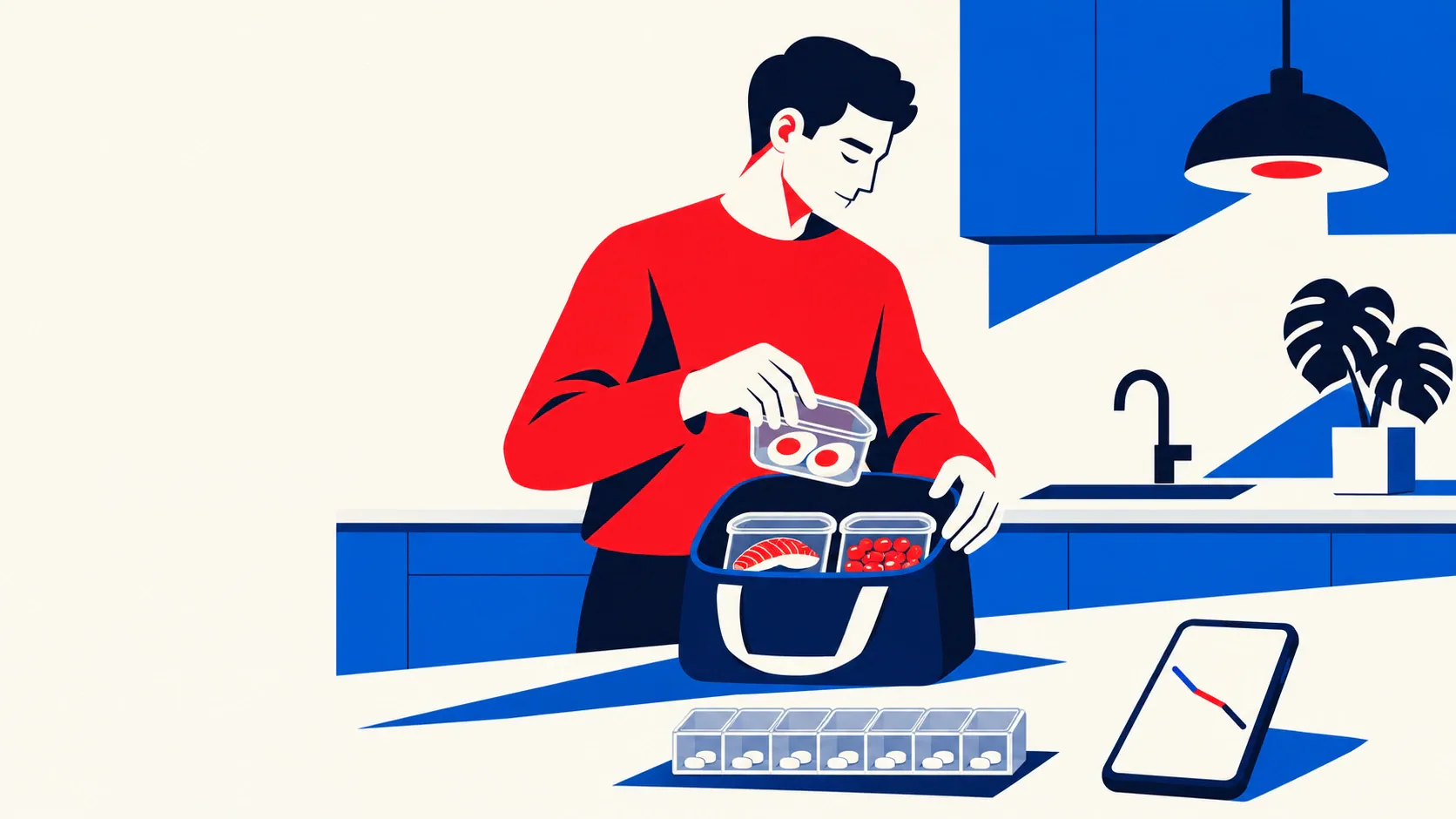
On Mounjaro after a sleeve, plan protein for each small meal, because nutrition guidance after bariatric surgery sets at least 60 g a day (Society for Endocrinology guideline, 2024). The guideline calls protein malnutrition a serious complication after surgery and says some people need a higher target.
The GLP‑1 protein calculator turns your weight into a daily protein target split by meal. To reach it in small portions, use the per-meal amounts and small-appetite foods in protein per meal on a GLP‑1.
People on semaglutide in BARI-STEP lost 21.1 kg on average, including 15.8 kg of fat mass and 5.5 kg of lean soft tissue. That puts 26% of the loss in lean soft tissue.
Surgery can make vitamins and minerals harder for the gut to absorb (NHS, recovering from weight loss surgery). So the NHS asks people to take supplements and have their levels checked for life.
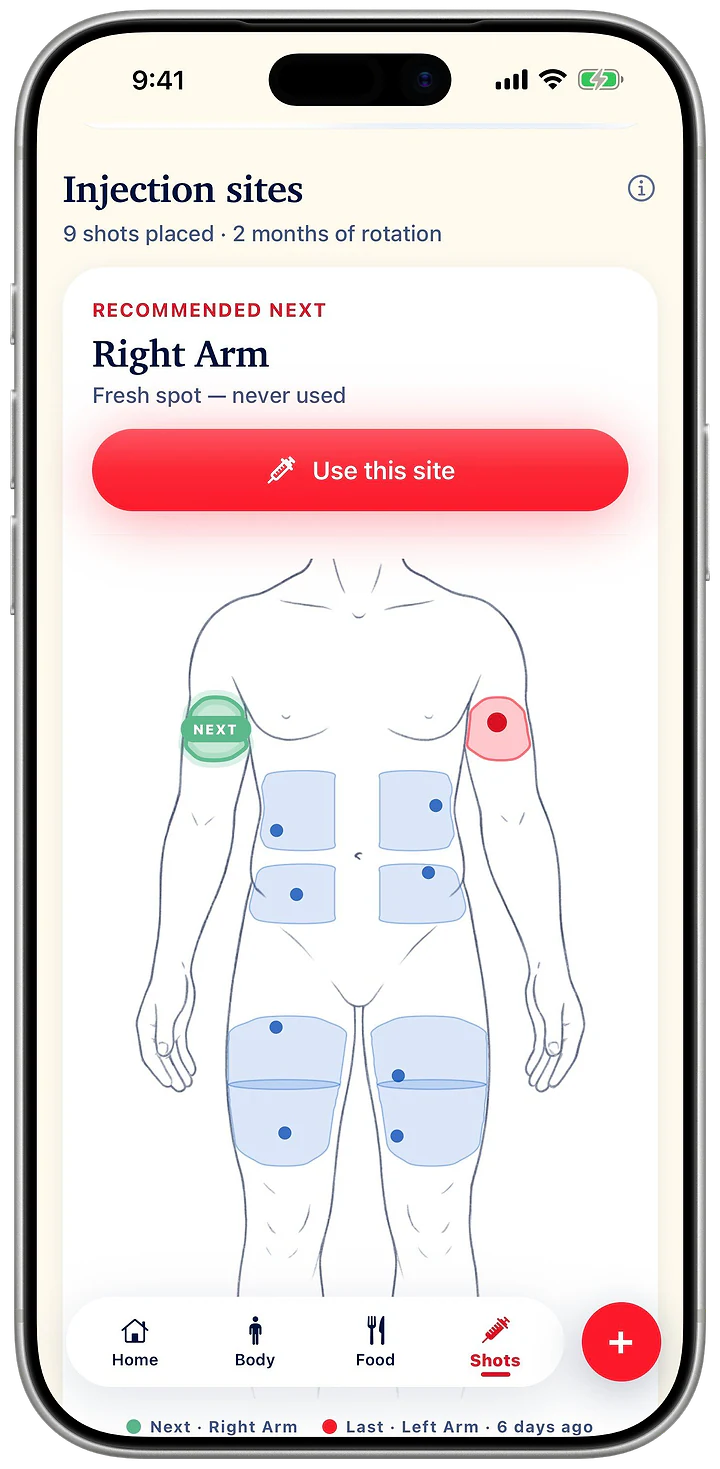
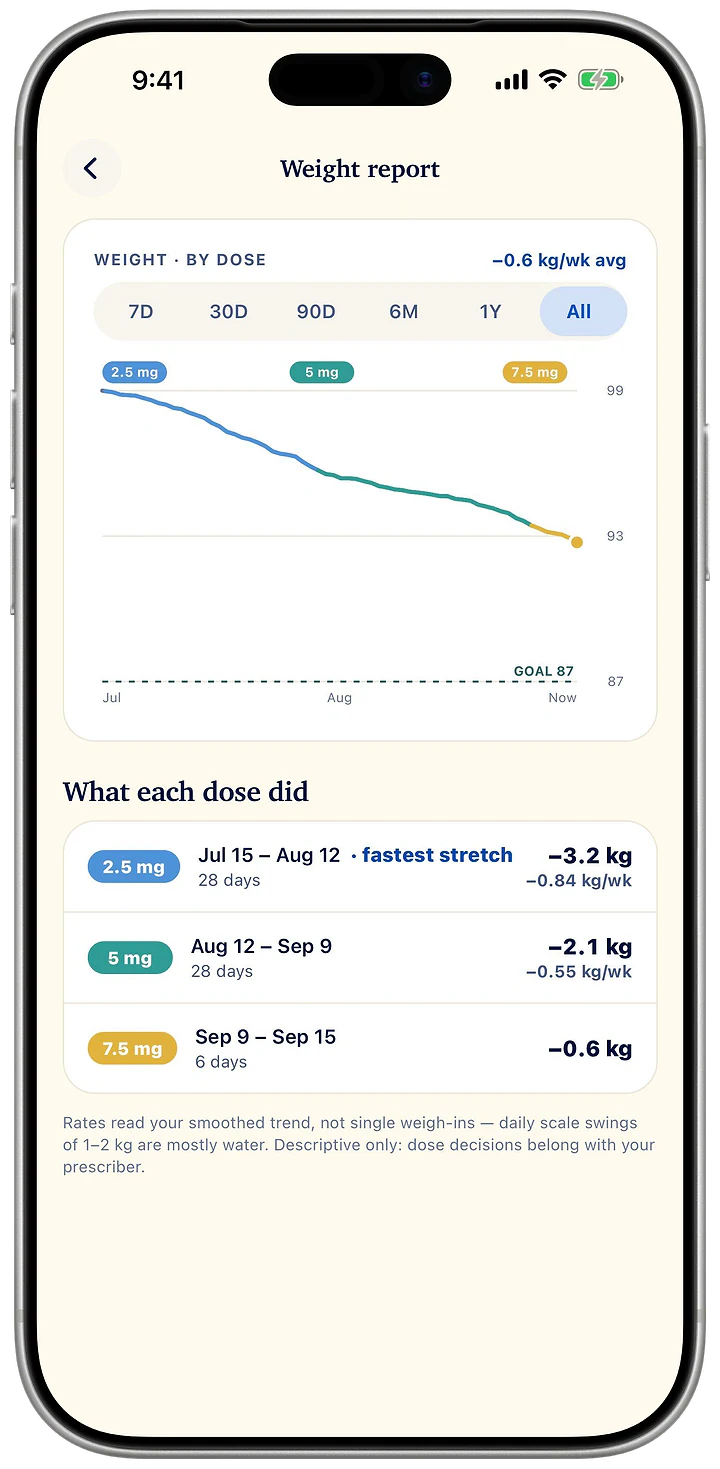
Whether each dose step is moving your weight shows up in the weight report colored by dose that Pensday draws from the shots and weigh-ins you log. You can also log food and protein at each small meal and the supplements your surgical team prescribed. You can log side effects such as nausea and see their patterns. Pensday Plus adds a 3D body scan with a fat and muscle split, and its photos are processed on the phone and never uploaded.
Can you get Mounjaro on the NHS after weight loss surgery?
NICE’s tirzepatide guidance (TA1026) does not mention previous bariatric surgery, so under TA1026 a past sleeve neither qualifies you for Mounjaro on the NHS nor rules you out. It recommends tirzepatide for adults with an initial BMI of at least 35 and at least one weight-related condition, alongside a reduced-calorie diet and more physical activity. The BMI threshold is usually 2.5 lower for people from South Asian, Chinese, other Asian, Middle Eastern, Black African or African-Caribbean backgrounds. TA1026 does not say whether a BMI from before your operation counts.
Under TA1026, if less than 5% of your starting weight has gone after 6 months on the highest dose you tolerate, the prescriber decides whether to continue tirzepatide. TA1026 applies to NHS prescribing, and private providers set their own rules.
Questions
Frequently asked questions
Can you take Mounjaro after a gastric band?
The US Mounjaro label does not mention any bariatric operation, bands included, and no randomized tirzepatide trial after surgery has reported results (TirBaS, Rush and GRABS records). An Australian liraglutide trial that included bands, 12 to 36 months after surgery, found 5.7 kg lost versus 1.4 kg gained on placebo at 12 months, across all operations. People with an adjustable gastric band are at low risk of post-bariatric hypoglycemia, says the Society for Endocrinology guideline.
Can you take Mounjaro after a mini gastric bypass?
Nothing in the US Mounjaro label rules it out, because it does not mention bariatric surgery. An Australian liraglutide trial included one anastomosis (mini) bypass patients 12 to 36 months after surgery, with a 7.1 kg difference from placebo at 12 months across all operations. The Society for Endocrinology guideline says a mini bypass is likely also linked to post-bariatric hypoglycemia.
Can you take the Wegovy pill after a gastric sleeve?
Wegovy’s US label gives no data on the Wegovy pill for people after a sleeve or bypass. For the tablet, it says "The absorption of semaglutide predominantly occurs in the stomach", with an absolute bioavailability of about 1% to 2% (Wegovy prescribing information, section 12.3). Wegovy injection skips the stomach, going under the skin of the abdomen, thigh or upper arm, with an absolute bioavailability of 89% (Wegovy prescribing information, sections 2.1 and 12.3).
Does Mounjaro work if you regained weight after a sleeve?
For tirzepatide (Mounjaro), a retrospective study of people regaining after a sleeve found 15.5% loss at 6 months, against 10.3% on semaglutide, the drug in Ozempic (Obesity Surgery, 2024). In BARI-STEP, 39 of 70 participants had regained after surgery, and their loss on semaglutide did not differ significantly from the 31 who had lost too little at first. Regain after you stop a GLP‑1 is a different situation, and weight regain after stopping Ozempic follows its own pattern.
Do you still need bariatric vitamins on Mounjaro?
Yes, tirzepatide (Mounjaro) does not replace them. After weight loss surgery the NHS asks you to take vitamin and mineral supplements for life (NHS, recovering from weight loss surgery). Follow-up includes blood tests of your vitamin and mineral levels, usually in a surgery clinic for at least 2 years and then at a yearly GP check-up.
Sources
- Semaglutide versus placebo in individuals with poor weight loss after bariatric surgery (BARI-STEP). Nature Medicine, 2026.
- Mounjaro (tirzepatide) injection, prescribing information, revised August 2026. Eli Lilly and Company, 2026.
- Zepbound (tirzepatide) injection, prescribing information, revised August 2026. Eli Lilly and Company, 2026.
- Semaglutide and tirzepatide for the management of weight recurrence after sleeve gastrectomy. Obesity Surgery, 2024.
- Wegovy (semaglutide) injection and tablets, prescribing information and Medication Guide, revised June 2026. Novo Nordisk, 2026.
- Tirzepatide for suboptimal weight loss after bariatric surgery (TirBaS), NCT07829198. ClinicalTrials.gov, 2026.
- Liraglutide 3.0 mg vs placebo in patients with poor weight loss following metabolic surgery (BARI-OPTIMISE). JAMA Surgery, 2023.
- Liraglutide and weight loss among suboptimal responders to metabolic bariatric surgery. JAMA Network Open, 2025.
- Liraglutide 3.0 mg for weight recurrence after Roux-en-Y gastric bypass. Surgery for Obesity and Related Diseases, 2025.
- Effects of semaglutide and tirzepatide on recurrent weight gain after bariatric surgery. Obesity Surgery, 2025.
- Tirzepatide for recurrent weight gain after bariatric procedures. Obesity Surgery, 2026.
- Sleeve gastrectomy with tirzepatide in maximizing weight loss, NCT06734273. ClinicalTrials.gov, 2026.
- GLP‑1 receptor agonists post-bariatric surgery (GRABS) pilot trial, NCT06162715. ClinicalTrials.gov, 2026.
- Mounjaro KwikPen, summary of product characteristics. Eli Lilly and Company, 2026.
- Wegovy FlexTouch, summary of product characteristics. Novo Nordisk, 2026.
- Society for Endocrinology guidelines for the diagnosis and management of post-bariatric hypoglycaemia. Endocrine Connections, 2024.
- Weight loss surgery, recovering. NHS, 2024.
- Tirzepatide for managing overweight and obesity (TA1026), recommendations. NICE, 2024.