
Drug comparisons
Zepbound vs Mounjaro, Same Tirzepatide With Different Uses and Prices
Zepbound vs Mounjaro is one drug, tirzepatide, from 2.5 to 15 mg. US Zepbound covers weight and sleep apnea, Mounjaro diabetes; the UK has only Mounjaro.
Medically reviewed by Farnia Bahari, PharmD
Published 10 min read
Zepbound vs Mounjaro is a choice between two brands of one medicine, Eli Lilly and Company’s tirzepatide, sold in the same six weekly doses from 2.5 mg to 15 mg (Zepbound label, section 3). In the US, Zepbound is licensed for weight loss and sleep apnea (Zepbound label, section 1), and Mounjaro for type 2 diabetes, with a heart-risk indication added in August 2026 (Mounjaro label, section 1). The UK has no Zepbound (emc), and Mounjaro is licensed there for both diabetes and weight (Mounjaro SmPC, section 4.1).
Key facts
- Both US labels list the same four presentations, single-dose pen, single-dose vial, multi-dose vial and four-dose KwikPen, each from 2.5 mg to 15 mg (Zepbound label, section 3; Mounjaro label, section 3).
- On 15 mg for 72 weeks, adults without diabetes lost an average of 20.9% and adults with type 2 diabetes 14.7%, which helps explain why Mounjaro’s diabetes-trial results look smaller (Zepbound label, section 14.1).
- In the US, Mounjaro added children aged 10 and older with type 2 diabetes in December 2025, a use Zepbound does not have (Mounjaro label, section 1).
- On November 8, 2026, LillyDirect self-pay prices were $299 to $449 a month for Zepbound KwikPens and single-dose vials refilled within 45 days, while Mounjaro single-dose pens started at $499 (LillyDirect Zepbound; LillyDirect Mounjaro).
- On November 8, 2026, the UK’s medicines compendium listed six tirzepatide products, all Mounjaro KwikPens, and no Zepbound (emc search for tirzepatide).
Is Zepbound the same as Mounjaro?
Yes, both contain tirzepatide, a once-weekly GIP and GLP‑1 receptor agonist made by Eli Lilly and Company (Zepbound label; Mounjaro label). Both US labels were revised in August 2026 and list the same strengths, 2.5 mg, 5 mg, 7.5 mg, 10 mg, 12.5 mg and 15 mg (Mounjaro label, section 3). The main difference is what each US label is licensed for (Zepbound label, section 1; Mounjaro label, section 1).
Both start at 2.5 mg once weekly and rise in 2.5 mg steps, each after at least 4 weeks on the current dose (Zepbound label, section 2.1; Mounjaro label, section 2.1). In the US, both labels allow a missed dose to go in within 4 days (96 hours) (Zepbound label, section 2.3; Mounjaro label, section 2.1). To get that deadline to the hour, enter your last shot in the missed dose guide.
What is the difference between Zepbound and Mounjaro?
In the US, the brands differ in licensed uses and self-pay price, as the labels and LillyDirect’s November 8, 2026 prices show (Zepbound label; Mounjaro label; LillyDirect Zepbound; LillyDirect Mounjaro).
| Detail | Zepbound | Mounjaro |
|---|---|---|
| Licensed uses | Weight reduction; moderate to severe obstructive sleep apnea with obesity | Type 2 diabetes; lowering heart risk in type 2 diabetes |
| Children | Not established | Type 2 diabetes from age 10 |
| Maintenance dose (mg) | 5, 10 or 15 for weight; 10 or 15 for sleep apnea | Up by 2.5 after at least 4 weeks if more blood sugar control is needed |
| Maximum dose (mg) | 15 | 15 for adults, 10 for children |
| Presentations | Single-dose pen, single-dose vial, multi-dose vial, KwikPen | The same four |
| LillyDirect self-pay per month, November 8, 2026 | $299 to $449 for a KwikPen or single-dose vial refilled within 45 days | From $499 for single-dose pens |
Zepbound’s label says "The 2.5 mg dosage is for treatment initiation and is not approved as a maintenance dosage" (Zepbound label, section 2.1). Mounjaro’s current label raises the dose "If additional glycemic control is needed" (Mounjaro label, section 2.1).
Sleep apnea is the use only Zepbound carries. In two 52-week trials (469 adults with obesity), the apnea-hypopnea index fell by 25.3 and 29.3 events per hour on Zepbound 10 or 15 mg, against 5.3 and 5.5 on placebo (Zepbound label, section 14.2).
Is Zepbound or Mounjaro better for weight loss?
Neither brand works better for weight, because the drug and the doses are the same, though in the US only Zepbound is licensed for weight reduction (Zepbound label; Mounjaro label). The numbers people compare come from trials that enrolled different people and measured weight in different ways.
The table sets the 15 mg results of SURMOUNT-1 (NEJM, 2022) and SURMOUNT-2 (The Lancet, 2023) beside Mounjaro’s SURPASS-1 trial (Zepbound label, section 14.1; Mounjaro label, section 14.2).
| Trial | Average weight change on 15 mg | Who took part |
|---|---|---|
| SURMOUNT-1 (Zepbound label) | 20.9% lost, against 3.1% on placebo | 2,539 adults without diabetes, 72 weeks |
| SURMOUNT-2 (Zepbound label) | 14.7% lost, against 3.2% on placebo | 938 adults with type 2 diabetes, 72 weeks |
| SURPASS-1 (Mounjaro label) | 7.8 kg lost, against 1.0 kg on placebo | 478 adults with type 2 diabetes, 40 weeks |
On 15 mg, adults with type 2 diabetes lost 6.2 percentage points less than adults without it (Zepbound label, section 14.1). On 10 mg the gap held, 19.5% in SURMOUNT-1 against 12.8% in SURMOUNT-2, and 5 mg, tested only in SURMOUNT-1, brought 15.0% (Zepbound label, section 14.1).
Mounjaro’s diabetes results come from five trials, SURPASS-1 to SURPASS-5, and its label reports weight in kilograms (Mounjaro label, section 14.1). Over 40 weeks in SURPASS-1, weight fell 6.3 kg, 7.0 kg and 7.8 kg on 5 mg, 10 mg and 15 mg, from average starting weights of 84.5 to 87.0 kg (Mounjaro label, section 14.2).
To compare your own progress, follow the trial timeline in Mounjaro weight loss by month, or enter your starting weight in the weight loss projector.
Does Zepbound cause more side effects than Mounjaro?
The labels cannot show that, because Zepbound’s higher printed rates come from weight trials and Mounjaro’s from diabetes trials, not from a head-to-head comparison (Zepbound label, section 6.1; Mounjaro label, section 6.1). In Zepbound’s weight trials, nausea was reported by 25%, 29% and 28% of people on 5 mg, 10 mg and 15 mg, against 8% on placebo (Zepbound label, section 6.1).
In Mounjaro’s diabetes trials, nausea was reported by 12%, 15% and 18% on the same three doses, against 4% on placebo (Mounjaro label, section 6.1). On 15 mg, vomiting was reported by 13% on Zepbound and 9% on Mounjaro, against 2% on placebo in both (Zepbound label, section 6.1; Mounjaro label, section 6.1). Diarrhea was reported by 23% on Zepbound 15 mg and 17% on Mounjaro 15 mg, against 8% and 9% on placebo (Zepbound label, section 6.1; Mounjaro label, section 6.1).
If nausea is the problem on either brand, start with what to eat with GLP‑1 nausea.
Do Zepbound and Mounjaro come in the same pens and vials?
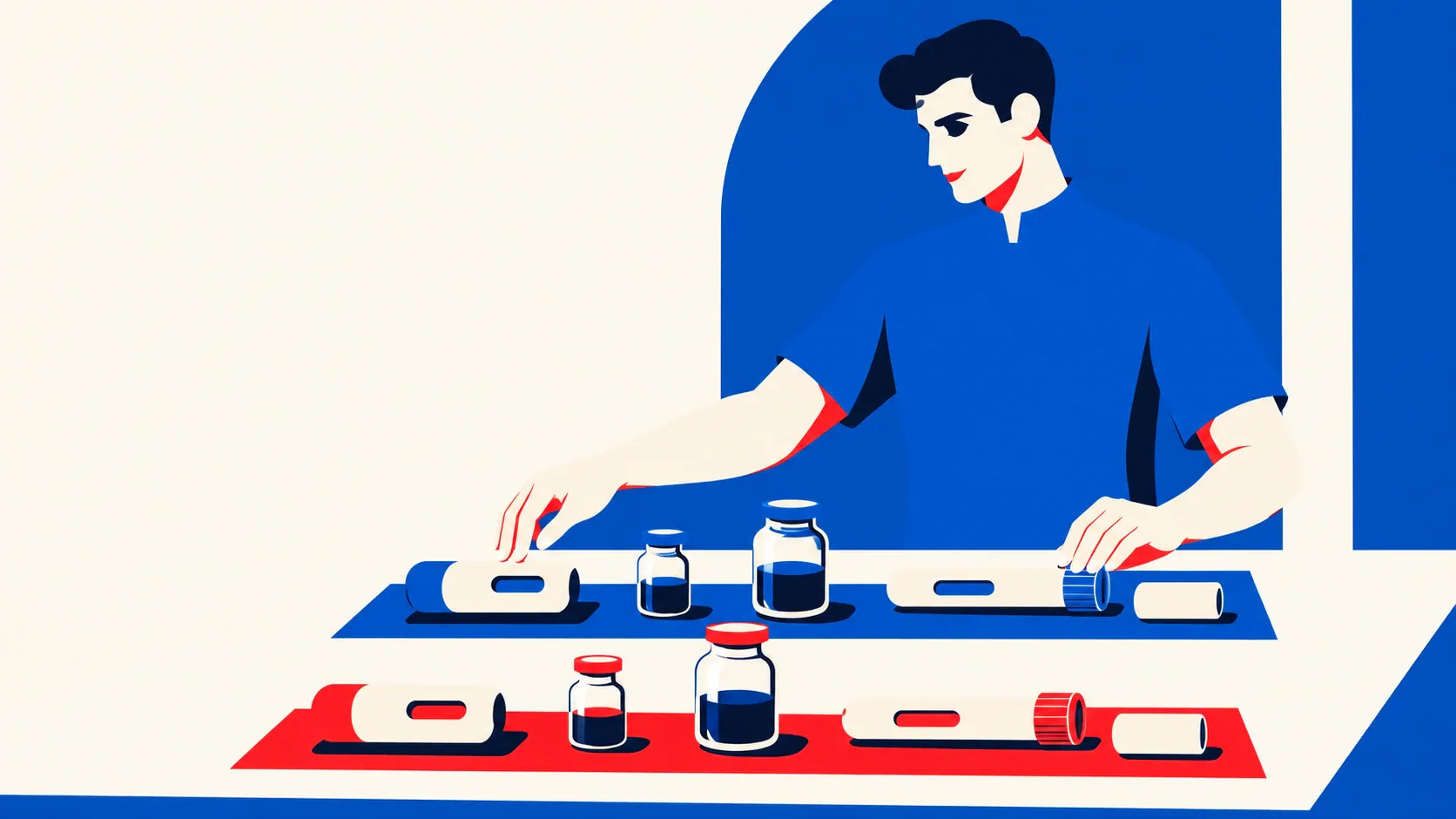
In the US, yes. Both labels list single-dose pens, single-dose vials, multi-dose vials and single-patient-use KwikPens, and the multi-dose vial and KwikPen each hold 4 doses (Zepbound label, section 3). Both labels date their KwikPen changes to January 2026, including the warning never to share a KwikPen between patients (Zepbound label; Mounjaro label).
A single-dose pen or vial holds 0.5 mL, and a multi-dose vial or KwikPen holds 2.4 mL, given as four 0.6 mL doses (Mounjaro label, section 3). The Mounjaro KwikPen "is not recommended for self-administration by pediatric patients" (Mounjaro label, section 2.2).
On November 8, 2026, LillyDirect sold Zepbound KwikPens and single-dose vials for self-pay, the vials as self-pay only, and listed the single-dose pen for insured patients (LillyDirect Zepbound). It offered Mounjaro for self-pay only as single-dose pens (LillyDirect Mounjaro).
Before your first dose from a new device, check what each pen click means for a KwikPen or how much liquid each Zepbound vial holds for a vial.
In the UK, Mounjaro comes only as a KwikPen holding 2.4 mL, and the SmPC lists packs of 1 or 3 pens (Mounjaro SmPC, section 6.5). The MHRA approved this four-dose pen, covering a month’s treatment, on January 25, 2024 (MHRA, four-dose KwikPen approval).
How much do Zepbound and Mounjaro cost?
In the US, Zepbound had the lower cash price at every dose on November 8, 2026, as long as it was refilled within 45 days (LillyDirect Zepbound). LillyDirect’s November 8, 2026 self-pay prices for Zepbound KwikPens and single-dose vials were $299 a month for 2.5 mg, $399 for 5 mg and $449 for 7.5 mg to 15 mg (LillyDirect Zepbound).
LillyDirect’s Mounjaro self-pay pens started at $499 a month at every dose on November 8, 2026, $200 above on-time Zepbound refills at 2.5 mg and $50 above at 15 mg (LillyDirect Mounjaro; LillyDirect Zepbound).
A Zepbound refill later than 45 days cost $499 for 7.5 mg and $699 for 10 mg, 12.5 mg or 15 mg on November 8, 2026, level with or above Mounjaro (LillyDirect Zepbound). LillyDirect counts a self-pay month as 28 days and one KwikPen (LillyDirect Zepbound).
Lilly’s list price for Mounjaro, the price it charges wholesalers, was $1,112.16 per fill of four pens on November 8, 2026 (Lilly, Mounjaro cost information). Lilly’s Zepbound page gave $499 to $1,086.37 per fill on November 8, 2026 (Lilly, Zepbound cost information).
Once you know your monthly price and how much you have lost, the cost per pound calculator shows what each pound has cost on either brand.
On August 14, 2025, Lilly said its pricing changes included "an agreement with the UK government to increase the list price of Mounjaro, while maintaining access for NHS patients" (Lilly statement). The statement gave no UK price.
Is Zepbound available in the UK?
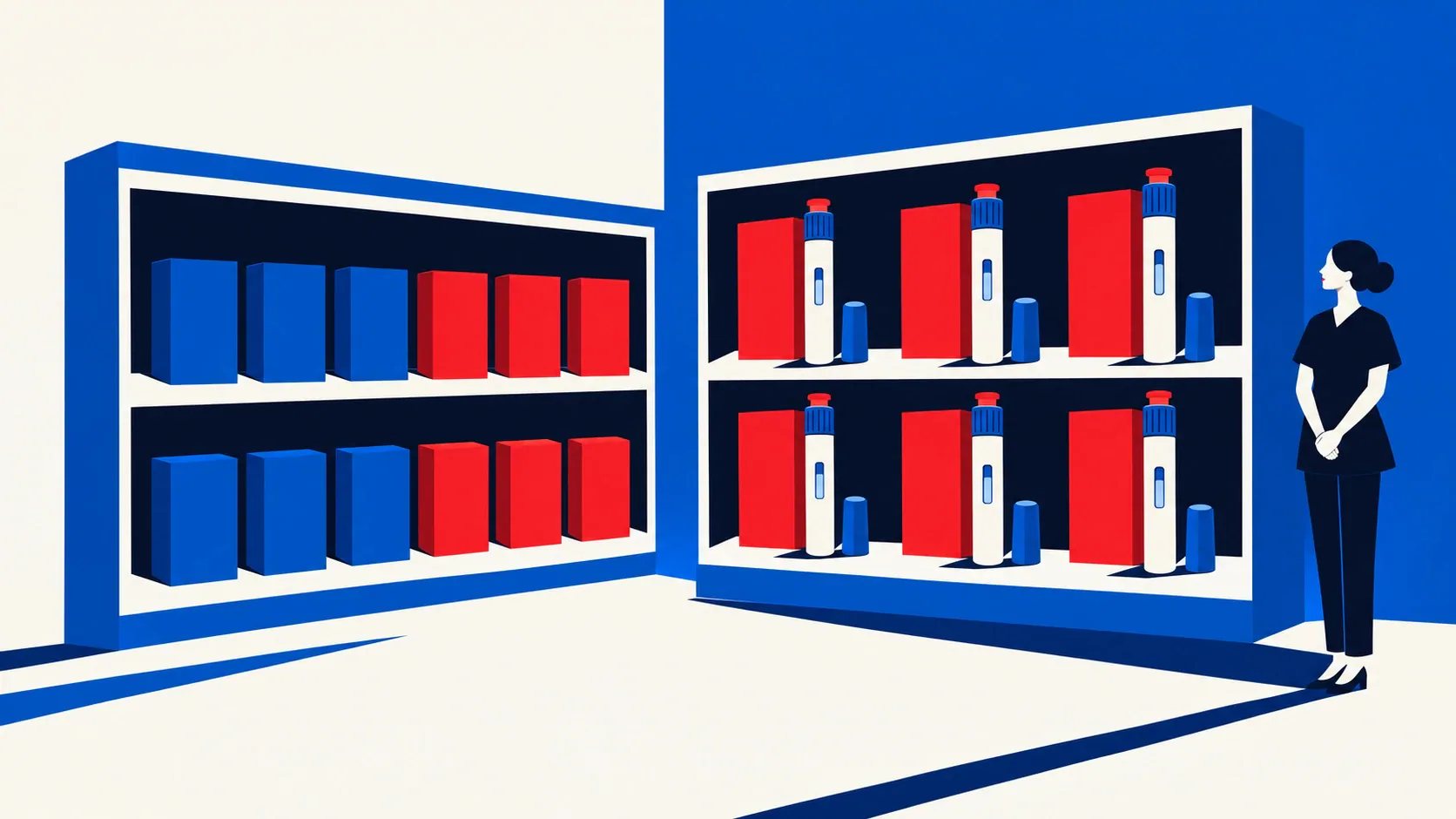
No. On November 8, 2026, the UK’s electronic medicines compendium listed tirzepatide only as Mounjaro KwikPens, from 2.5 mg to 15 mg, and no Zepbound (emc search for tirzepatide). Mounjaro is not a renamed Zepbound.
The MHRA authorized Mounjaro "for weight loss and weight management in adults aged 18 and over" on November 8, 2023 (MHRA, weight management authorization). The SmPC, revised on August 29, 2026, lists two uses, type 2 diabetes from age 10 and weight management in adults (Mounjaro SmPC, section 4.1). Weight management starts at a BMI of 30 kg/m2, or 27 to under 30 kg/m2 with a weight-related condition (Mounjaro SmPC, section 4.1).
In the UK, sleep apnoea appears in the SmPC only inside the list of weight-related conditions, "hypertension, dyslipidaemia, obstructive sleep apnoea, cardiovascular disease, prediabetes, or type 2 diabetes mellitus" (Mounjaro SmPC, section 4.1).
The UK SmPC starts at 2.5 mg once weekly and says "After 4 weeks, the dose should be increased to 5 mg once weekly" (Mounjaro SmPC, section 4.2). Further 2.5 mg steps follow after at least 4 weeks, up to 15 mg. If you hope to get it on the NHS, check the criteria in getting Mounjaro on the NHS.
Can you switch from Mounjaro to Zepbound?
Yes, with a US prescription for the brand licensed for your condition, Mounjaro for type 2 diabetes or Zepbound for weight or sleep apnea (Zepbound label, section 1; Mounjaro label, section 1). Neither label gives a conversion between the brands, and 10 mg of either brand is 10 mg of tirzepatide (Zepbound label, section 3). In the UK, there is no Zepbound to switch to.
Switching brands can also mean switching devices. The Zepbound label says "If the prescribed ZEPBOUND presentation changes, ensure patients and caregivers receive appropriate training," and points to the new Instructions for Use (Zepbound label, section 2.4). Both US labels keep the same 3-day (72-hour) minimum gap for moving your injection day (Mounjaro label, section 2.1). Check how long each step lasts in the Zepbound dose ladder.
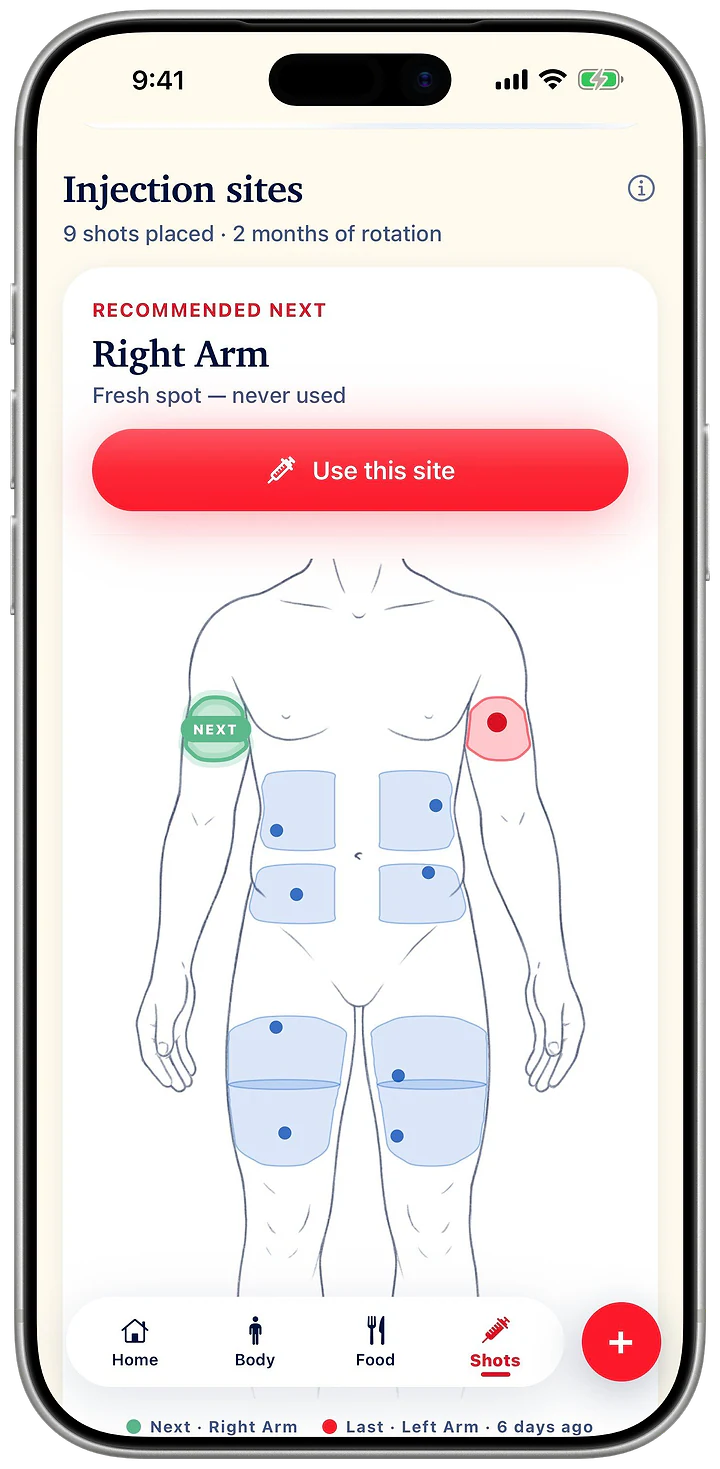
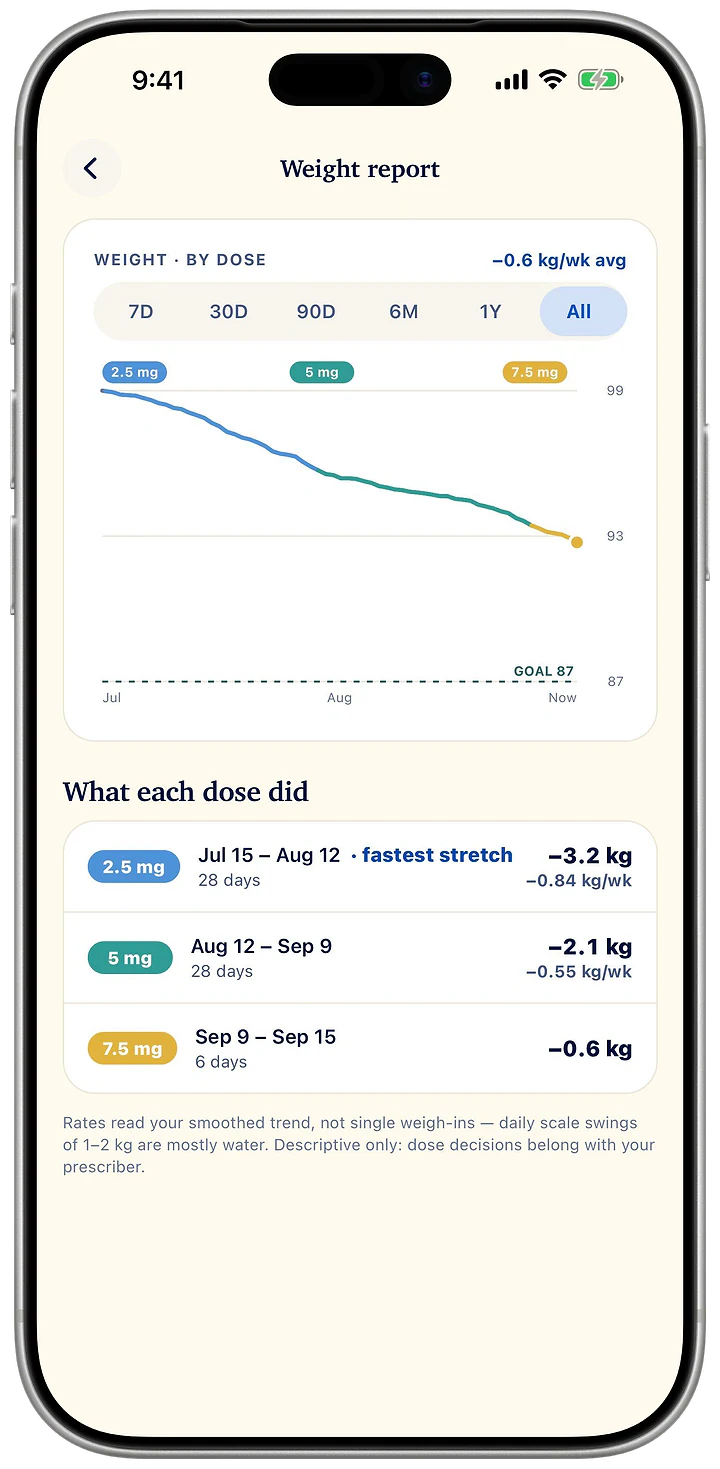
A change of brand does not have to break your record. In Pensday, Mounjaro and Zepbound both sit in the shot log at all six doses. The estimated medication-level curve models tirzepatide rather than the brand, so your earlier Mounjaro shots keep counting after your first Zepbound dose. Shot-day reminders and the weight report, colored by dose, carry on through the change.
Questions
Frequently asked questions
Can you take Zepbound and Mounjaro together?
No. Mounjaro is also tirzepatide, and the Zepbound label says "Coadministration with other tirzepatide-containing products or with any glucagon-like peptide-1 (GLP‑1) receptor agonist is not recommended" (Zepbound label, section 1).
Is Zepbound approved for type 2 diabetes?
No. Zepbound’s US uses are weight reduction and obstructive sleep apnea, although its SURMOUNT-2 trial enrolled 938 adults with obesity and type 2 diabetes (Zepbound label, sections 1 and 14.1).
Is Mounjaro approved for sleep apnea?
Not in the US, where sleep apnea is a Zepbound use at 10 mg or 15 mg once weekly (Zepbound label, section 2.2). In the UK, the Mounjaro SmPC counts obstructive sleep apnoea as a weight-related condition that makes adults with a BMI of 27 to under 30 kg/m2 eligible for weight management (Mounjaro SmPC, section 4.1).
Can children take Mounjaro or Zepbound?
Mounjaro is licensed for type 2 diabetes from age 10, at up to 10 mg once weekly (Mounjaro label, section 2.1). The Zepbound label says "The safety and effectiveness of ZEPBOUND have not been established in pediatric patients" (Zepbound label, section 8.4).
Is Mounjaro approved to lower heart attack risk?
Yes, since August 2026 Mounjaro’s US label covers lowering the risk of cardiovascular death, heart attack or stroke in adults with type 2 diabetes at high risk (Mounjaro label, section 1). SURPASS-CVOT followed 13,299 adults for a median 210.1 weeks and found Mounjaro non-inferior to dulaglutide 1.5 mg for those events, with a hazard ratio of 0.92 (Mounjaro label, section 14.6). Zepbound’s label lists no heart-risk use (Zepbound label, section 1).
Sources
- Zepbound (tirzepatide) injection, prescribing information, revised August 2026. Eli Lilly and Company, 2026.
- Mounjaro (tirzepatide) injection, prescribing information, revised August 2026. Eli Lilly and Company, 2026.
- Mounjaro KwikPen, Summary of Product Characteristics. Eli Lilly and Company Limited, 2026.
- Search results for tirzepatide. Electronic medicines compendium, 2026.
- MHRA authorises diabetes drug Mounjaro (tirzepatide) for weight management and weight loss. Medicines and Healthcare products Regulatory Agency, 2023.
- Four-dose Mounjaro KwikPen approved by MHRA for diabetes and weight management. Medicines and Healthcare products Regulatory Agency, 2024.
- Tirzepatide once weekly for the treatment of obesity (SURMOUNT-1). New England Journal of Medicine, 2022.
- Tirzepatide once weekly for the treatment of obesity in people with type 2 diabetes (SURMOUNT-2). The Lancet, 2023.
- Zepbound on LillyDirect. Eli Lilly and Company, 2026.
- Mounjaro on LillyDirect. Eli Lilly and Company, 2026.
- Mounjaro cost information. Eli Lilly and Company, 2026.
- Zepbound cost information. Eli Lilly and Company, 2026.
- Statement on America’s leading role in biopharmaceutical innovation. Eli Lilly and Company, 2025.