
Side effects
Ozempic and Blood Pressure Medication, Class by Class
Ozempic and blood pressure medication can be taken together. Low blood pressure hit 2.2% of Zepbound users on blood pressure pills vs 1.2% without them.
Medically reviewed by Farnia Bahari, PharmD
Published 11 min read
You can take Ozempic and blood pressure medication such as lisinopril together, and the Ozempic label names no blood pressure drug among its interactions (Ozempic label, section 7). The thing to watch is blood pressure falling too far, which happened to 2.2% of Zepbound (tirzepatide) users on blood pressure medicine against 1.2% of those on none (Zepbound label, section 6.1). The US Ozempic label, written for type 2 diabetes, gives no rate of its own (Ozempic label).
Key facts
- In the Wegovy weight-loss trials, low blood pressure was reported in 1.3% of adults against 0.4% on placebo, and fainting in 0.8% against 0.2% (Wegovy label, section 6.1).
- Low blood pressure hit 4% of people on Foundayo (orforglipron), a GLP‑1 tablet, who took blood pressure medicine, against 1% of those who did not (Foundayo label, section 6.1).
- In STEP 1, systolic blood pressure fell 6.2 mmHg on Wegovy 2.4 mg against 1.1 mmHg on placebo (Wegovy label, section 14).
- NICE says a fall of 20 mmHg or more systolic, or 10 mmHg or more diastolic, after at least 1 minute of standing leads a clinician to consider causes, including current medicines (NICE NG136).
- In STEP 1, people who lost 10% or more of their weight were more likely to have their doctor cut back or stop blood pressure medicine (Kosiborod, 2022).
- If you are vomiting or have severe diarrhea on ramipril, the NHS says to contact your doctor, who may advise stopping it until you are eating and drinking normally (NHS, ramipril).
Can you take Ozempic with blood pressure medication?
Yes. The two interactions the Ozempic label does list are insulin or insulin secretagogues, which raise the risk of low blood sugar, and oral medicines in general, because Ozempic slows how fast the stomach empties (Ozempic label, section 7). Mounjaro’s label, which covers tirzepatide, the medicine in Zepbound, has the same two entries and no blood pressure drug (Mounjaro label, section 7).
In studies of Wegovy tablets, the oral form of semaglutide, the label reports "No clinically significant differences in the pharmacokinetics" of lisinopril or the water pill furosemide (Wegovy label, section 12.3). For the injection, the Ozempic label says semaglutide "did not affect the absorption of orally administered medications to any clinically relevant degree" (Ozempic label, section 7.2). Zepbound’s label also lists oral medicines, saying tirzepatide "has the potential to impact the absorption of concomitantly administered oral medications" (Zepbound label, section 7.2).
Both kinds of medicine lower blood pressure, and the Wegovy label says low blood pressure was seen more often in people also taking blood pressure pills (Wegovy label, section 6.1). The Zepbound label adds that low blood pressure "also occurred in association with gastrointestinal adverse events and dehydration" (Zepbound label, section 6.1).
How much does Ozempic lower blood pressure?
Ozempic lowered systolic blood pressure, the top number, by 3.5 to 5.1 mmHg at 0.5 mg and 5.4 to 7.3 mmHg at 1 mg in its type 2 diabetes trials (Ozempic SmPC, section 5.1). The bottom number did not differ significantly from the comparison drugs in those trials (Ozempic SmPC, section 5.1).
In STEP 1, which enrolled 1,961 adults without diabetes for 68 weeks (Kosiborod, 2022), systolic pressure fell 6.2 mmHg on Wegovy 2.4 mg against 1.1 mmHg on placebo (Wegovy label, section 14). By week 68, 51.5% of people on semaglutide had readings below 130/80 mmHg, against 38.2% on placebo (Kosiborod, 2022).
In SURMOUNT-1, systolic pressure fell 6.6, 7.7 and 7.4 mmHg on Zepbound 5 mg, 10 mg and 15 mg over 72 weeks, against 1.0 mmHg on placebo (Zepbound label, section 14). In SURMOUNT-2, in adults with type 2 diabetes, it fell 5.6 mmHg on Zepbound 10 mg and 7.1 mmHg on 15 mg, against 1.2 mmHg on placebo (Zepbound label, section 14). Mounjaro lowered systolic pressure by 6 to 9 mmHg and diastolic by 3 to 4 mmHg in its placebo-controlled type 2 diabetes trials, against 2 mmHg each on placebo (Mounjaro SmPC, section 5.1).
In a SURMOUNT-1 substudy of tirzepatide, the medicine in Zepbound, 600 adults wore 24-hour blood pressure monitors, and 29.0% of them took at least 1 blood pressure medicine (de Lemos, 2024). At week 36, their 24-hour systolic pressure had fallen by 7.4, 10.6 and 8.0 mmHg more than placebo on tirzepatide 5 mg, 10 mg and 15 mg (de Lemos, 2024). The fall did not differ significantly with or without blood pressure meds (de Lemos, 2024).
How often does blood pressure drop too low on Wegovy, Zepbound or Mounjaro?
Low blood pressure was reported in 1.6% of people on Zepbound and 1.3% on Wegovy, against 0.1% and 0.4% on placebo (Zepbound label, section 6.1; Wegovy label, section 6.1). This table sets out what each label reports, using the Zepbound, Wegovy and Foundayo labels and the UK Mounjaro and Wegovy leaflets.
| Medicine | Low blood pressure, drug vs placebo or leaflet band | People also on blood pressure medicine |
|---|---|---|
| Zepbound (tirzepatide) | 1.6% vs 0.1% | 2.2%, against 1.2% of users not on it |
| Wegovy (semaglutide) | 1.3% vs 0.4%, with fainting 0.8% vs 0.2% | More often, with no figure given |
| Foundayo (orforglipron) | 2% vs 0.5% | 4%, against 1% of users not on it |
| Mounjaro, UK leaflet | Common, a leaflet band of up to 1 in 10 people | Not stated |
| Wegovy, UK leaflet | Uncommon, a leaflet band of up to 1 in 100 people | Not stated |
| Ozempic and Mounjaro, US labels | Not listed | Not listed |
The US Ozempic and Mounjaro labels, written for type 2 diabetes, have no entry for low blood pressure or fainting (Ozempic label; Mounjaro label). The UK Mounjaro SmPC does list hypotension-related events as common in its weight-management trials, and says 94% of them were mild to moderate (Mounjaro SmPC, section 4.8). The leaflet’s "common" band, up to 1 in 10 people, covers everyone treated with Mounjaro for weight management, not only people on Mounjaro and blood pressure tablets (Mounjaro leaflet).
Dizziness was reported more often than low blood pressure, in 4%, 5% and 4% of people on Zepbound 5 mg, 10 mg and 15 mg against 2% on placebo (Zepbound label, section 6.1). On Wegovy 2.4 mg it was 8% against 4% (Wegovy label, section 6.1). The UK Wegovy SmPC says "dizziness can be experienced mainly during the dose escalation period" (Wegovy SmPC, section 4.7), so watch the weeks after stepping up your Ozempic dose.
Some people on Wegovy feel dizzy mainly in the first 3 months, and the UK leaflet says not to drive or use machines until you feel better (Wegovy leaflet). If a dizzy spell on Zepbound comes in the same week as nausea, check the timing against when Zepbound side effects peak.
Which blood pressure tablets need the most care on Ozempic or Mounjaro?
ACE inhibitors, ARBs and diuretics need the most care, because their own labels link low blood pressure to fluid or salt loss (Zestril label; Cozaar label, section 5.2; hydrochlorothiazide label). This table pairs each type of tablet with the warning in its US label, using lisinopril, losartan, hydrochlorothiazide, amlodipine and metoprolol as the examples. Its last column draws on the NHS ramipril, losartan and indapamide pages and the GLP‑1 labels.
| Tablet type and examples | What its own label warns about | What this means on a GLP‑1 |
|---|---|---|
| ACE inhibitors, such as lisinopril and ramipril | Excessive low blood pressure with "severe volume and/or salt depletion of any etiology" | On a day of vomiting or severe diarrhea, the NHS ramipril page says to contact your doctor |
| ARBs, such as losartan | Symptomatic low blood pressure after starting treatment in volume- or salt-depleted patients | If you are vomiting or have diarrhea, the NHS losartan page says to talk to a pharmacist or doctor |
| Thiazide-type diuretics, such as hydrochlorothiazide and indapamide | Fluid or electrolyte imbalance, with low blood pressure and nausea and vomiting among the warning signs | The NHS indapamide page gives the same advice for vomiting or diarrhea |
| Calcium-channel blockers, such as amlodipine | "Symptomatic hypotension is possible", but acute low blood pressure is unlikely | Neither the Ozempic nor the Mounjaro label names it |
| Beta-blockers, such as metoprolol and bisoprolol | May hide warning signs of low blood sugar, such as a fast heartbeat | Matters if you also take insulin or a sulfonylurea, or are fasting or vomiting |
The lisinopril label counts high-dose diuretic therapy and severe fluid or salt loss of any cause among the risks for excessive low blood pressure (Zestril label).
What should you do with blood pressure tablets on a sick day?
If you are vomiting or have severe diarrhea on ramipril, an ACE inhibitor, the NHS says to contact your doctor (NHS, ramipril). The page adds: "They may advise you stop taking ramipril until you feel better and are eating and drinking normally" (NHS, ramipril).
For losartan, an ARB, and indapamide, a diuretic, the NHS warns that vomiting, diarrhea or a high temperature bring a risk of dehydration (NHS, losartan; NHS, indapamide). The losartan page’s advice is to "Talk to a pharmacist or doctor for advice, or follow the advice they’ve already given you" (NHS, losartan), and the indapamide page gives the same advice (NHS, indapamide).
Vomiting affected 24% of adults on Wegovy 2.4 mg against 6% on placebo (Wegovy label, section 6.1). The UK Mounjaro SmPC says stomach side effects "may lead to dehydration, which could lead to a deterioration in renal function including acute renal failure" (Mounjaro SmPC, section 4.4).
None of this means stopping a tablet on your own. The NHS ramipril page says "Talk to your doctor if you want to stop taking ramipril. Stopping ramipril may cause your blood pressure to rise" (NHS, ramipril).
When should you ask about lowering your blood pressure tablets?
Ask your prescriber or GP for a review if any of these five signs appears, including home readings under 90/60 mmHg or a weight loss of 10% or more (NHS, low blood pressure; Kosiborod, 2022). When a medicine is behind low blood pressure, a GP may suggest "changing medicines or altering your dose, if this is the cause" (NHS, low blood pressure). The signs come from the NHS, NICE, the Wegovy label and STEP 1:
- You keep feeling dizzy or lightheaded, especially when you stand up, which NICE says calls for a standing reading (NHS, low blood pressure; NICE NG136).
- You faint, which happened to 0.8% of adults on Wegovy against 0.2% on placebo (Wegovy label, section 6.1).
- Your home readings fall below 90/60 mmHg, the NHS line for low blood pressure (NHS, low blood pressure).
- You have lost 10% or more of your body weight, the group in STEP 1 more likely to have blood pressure medicine cut back or stopped (Kosiborod, 2022).
- You take an ACE inhibitor, ARB or diuretic and have a day of vomiting or diarrhea (NHS, ramipril; NHS, losartan; NHS, indapamide).
To see roughly when a 10% loss might come, the weight loss projector estimates your loss on semaglutide or tirzepatide from your starting weight.
The decision sits with whoever prescribes the tablet. In the UK, NICE tells clinicians to measure blood pressure lying down or seated and again after at least 1 minute of standing when someone has postural dizziness or falls (NICE NG136). A systolic fall of 20 mmHg or more, or a diastolic fall of 10 mmHg or more, leads them to consider causes "including reviewing their current medication" (NICE NG136). In someone with a significant drop on standing or symptoms of one, NICE bases the treatment target on the standing reading (NICE NG136).
For Foundayo users on blood pressure medicine, the UK leaflet says "low blood pressure can occur" and "Your doctor may need to change your dose of these medicines to reduce this risk" (Foundayo leaflet).
How do you track blood pressure and dizzy days on a GLP‑1?
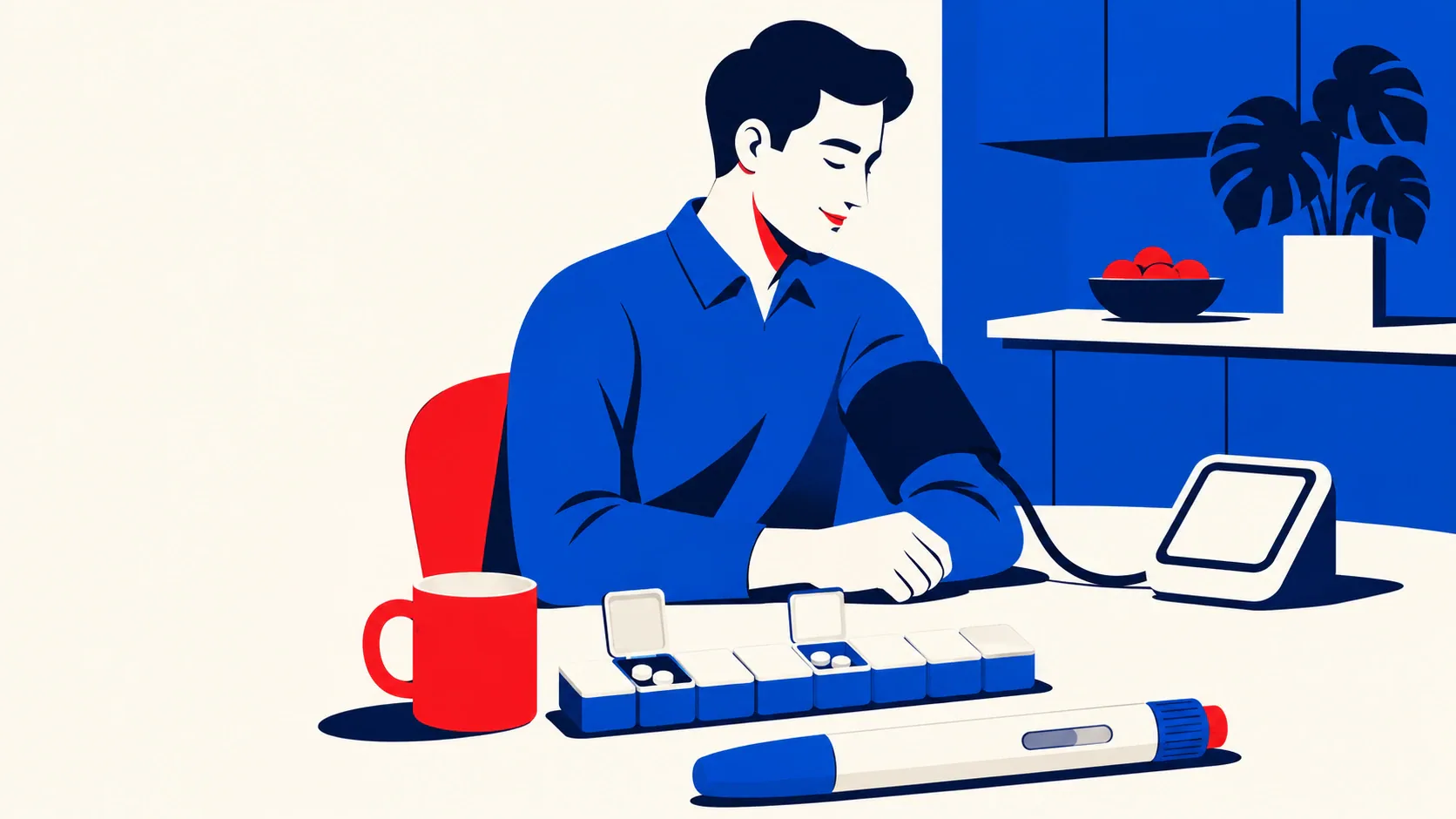
Track your blood pressure with a home monitor, the method NICE recommends for people with high blood pressure who check their own readings (NICE NG136). Write down each reading with the date, and note any dizzy spell and whether it came on as you stood up, since postural dizziness is what prompts the NICE standing test (NICE NG136).
For the symptoms themselves, the NHS self-help steps are to get up slowly, eat small, frequent meals and drink more water (NHS, low blood pressure). Small meals are also the first step in what to eat with nausea on a GLP‑1, and the water intake calculator works out a daily amount from your weight.
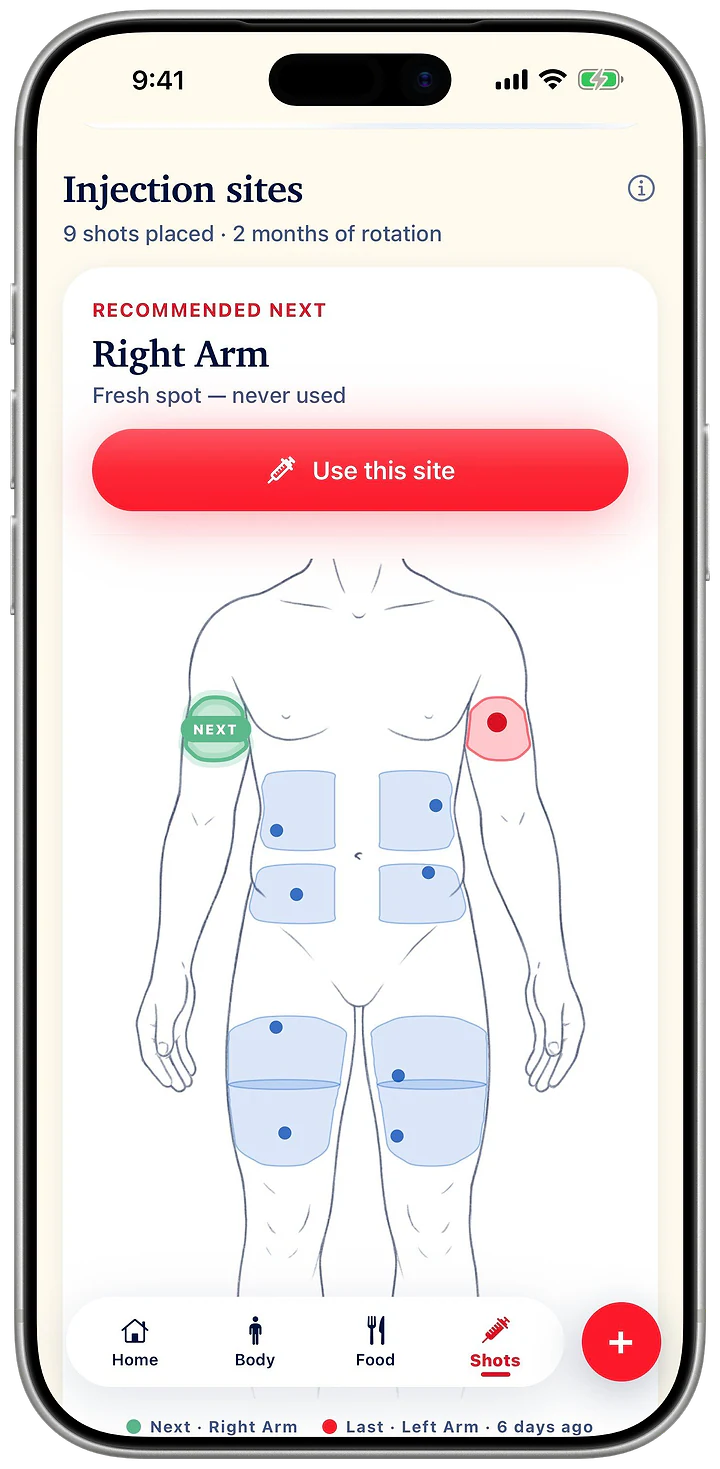
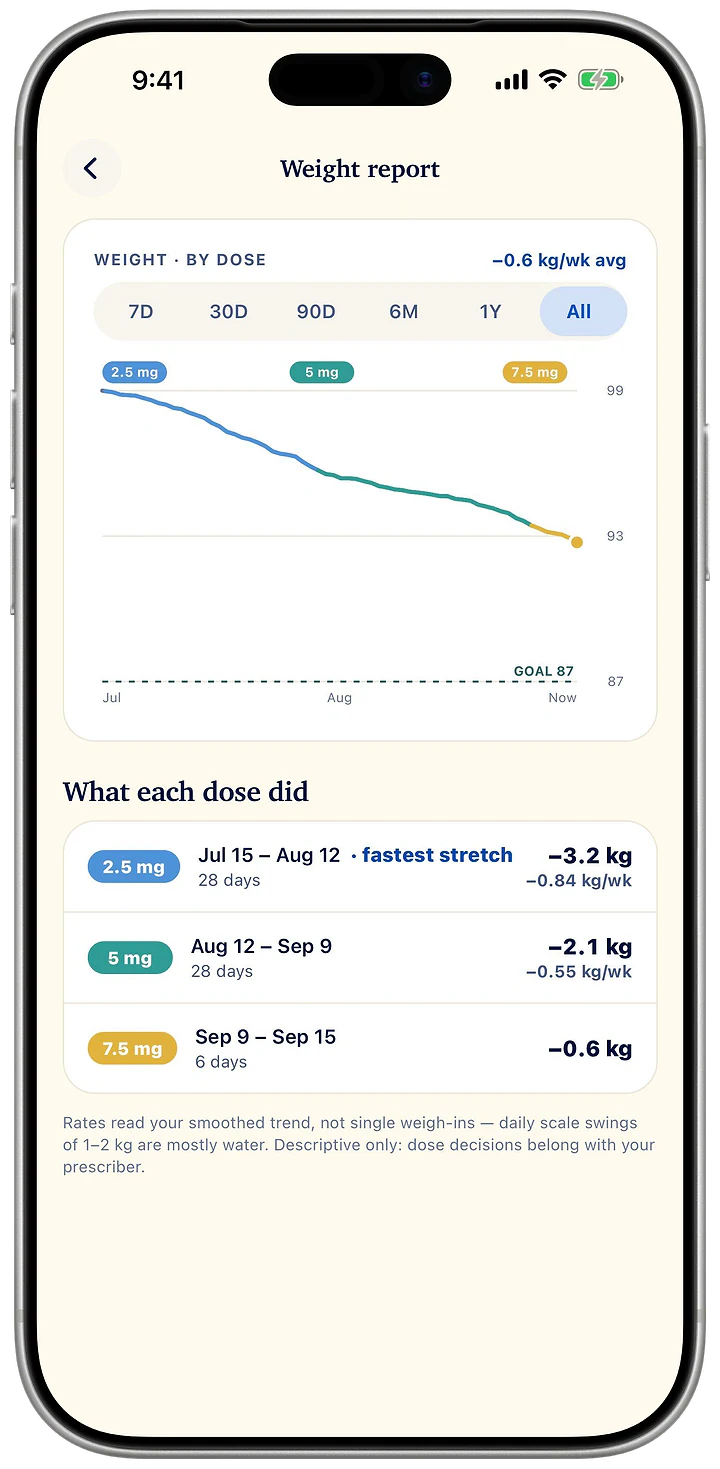
You can keep a home reading or a dizzy spell beside each shot in the Notes field of Pensday. The app does not log blood pressure, and dizziness is not one of its symptom types. The symptom log puts nausea, diarrhea and fatigue against your dose day, and water logging shows the days you drank little. The weight report, colored by dose, shows how much you have lost on each step, which you can check against 10% of your starting weight.
Questions
Frequently asked questions
Does Ozempic increase blood pressure?
No. At week 40, systolic blood pressure fell 5.3 mmHg on Ozempic 2 mg and 4.5 mmHg on 1 mg (Ozempic SmPC, section 5.1).
Can I take Ozempic if I already have low blood pressure?
Low blood pressure is not one of Ozempic’s contraindications, which cover a personal or family history of medullary thyroid carcinoma or MEN 2 and a serious hypersensitivity reaction to semaglutide (Ozempic label, section 4). The NHS counts a reading under 90/60 mmHg as low (NHS, low blood pressure). Tell your prescriber about low readings before you start, since low blood pressure was reported in 1.3% of adults on Wegovy, the same medicine, against 0.4% on placebo (Wegovy label, section 6.1).
Can I take Mounjaro and amlodipine together?
Yes, and the Mounjaro label names no blood pressure medicine among its interactions (Mounjaro label, section 7). The amlodipine label says "Symptomatic hypotension is possible", though acute low blood pressure is unlikely because the drug acts gradually (Norvasc label, section 5.1). The UK Mounjaro leaflet still lists low blood pressure as common in weight management, a band of up to 1 in 10 people (Mounjaro leaflet).
Does Wegovy make your blood pressure drop when you stand up?
It can. The UK Wegovy leaflet lists "feeling dizzy or lightheaded on standing or sitting up because of a drop in blood pressure" as uncommon, a band of up to 1 in 100 people (Wegovy leaflet). In the US label, orthostatic hypotension is counted within the 1.3% of adults with low blood pressure, against 0.4% on placebo (Wegovy label, section 6.1).
Will I be able to come off my blood pressure medicine on Wegovy?
Some people can, but your prescriber decides. In STEP 1 and STEP 4, more people on semaglutide than on placebo cut back or stopped blood pressure medicine, changes the authors say "were based on physician judgement" (Kosiborod, 2022).
Sources
- Ozempic (semaglutide) injection, prescribing information, revised June 2026. Novo Nordisk, 2026.
- Wegovy (semaglutide) injection and tablets, prescribing information, revised June 2026. Novo Nordisk, 2026.
- Zepbound (tirzepatide) injection, prescribing information, revised August 2026. Eli Lilly and Company, 2026.
- Mounjaro (tirzepatide) injection, prescribing information, revised August 2026. Eli Lilly and Company, 2026.
- Foundayo (orforglipron) tablets, prescribing information, revised July 2026. Eli Lilly and Company, 2026.
- Ozempic solution for injection in pre-filled pen, Summary of Product Characteristics. Novo Nordisk, 2026.
- Mounjaro KwikPen, Summary of Product Characteristics. Eli Lilly and Company, 2026.
- Mounjaro KwikPen, patient information leaflet. Eli Lilly and Company, 2026.
- Wegovy FlexTouch, Summary of Product Characteristics. Novo Nordisk, 2026.
- Wegovy FlexTouch, patient information leaflet. Novo Nordisk, 2026.
- Foundayo film-coated tablets, patient information leaflet. Eli Lilly and Company, 2026.
- Zestril (lisinopril) tablets, prescribing information. Upsher-Smith Laboratories, 2025.
- Cozaar (losartan potassium) tablets, prescribing information. Organon, 2026.
- Norvasc (amlodipine besylate) tablets, prescribing information. Viatris, 2025.
- Lopressor (metoprolol tartrate) tablets, prescribing information. Validus Pharmaceuticals, 2026.
- Hydrochlorothiazide tablets, prescribing information. PD-Rx Pharmaceuticals, 2026.
- Ramipril, how and when to take it. NHS, 2026.
- Losartan. NHS, 2026.
- Indapamide. NHS, 2026.
- Low blood pressure (hypotension). NHS, 2023.
- Hypertension in adults, diagnosis and management (NG136). NICE, 2026.
- Kosiborod MN et al. Semaglutide improves cardiometabolic risk factors in adults with overweight or obesity, STEP 1 and 4 exploratory analyses. Diabetes, Obesity and Metabolism, 2022.
- de Lemos JA et al. Tirzepatide reduces 24-hour ambulatory blood pressure in adults with body mass index of 27 or more, SURMOUNT-1 substudy. Hypertension, 2024.