
Side effects
Ozempic Injection Site Bruising, Lumps and Signs of Infection
A nicked blood vessel causes Ozempic injection site bruising, and it says nothing about your dose. Get help right away if your face or throat swells.
Medically reviewed by Farnia Bahari, PharmD
Published 6 min read
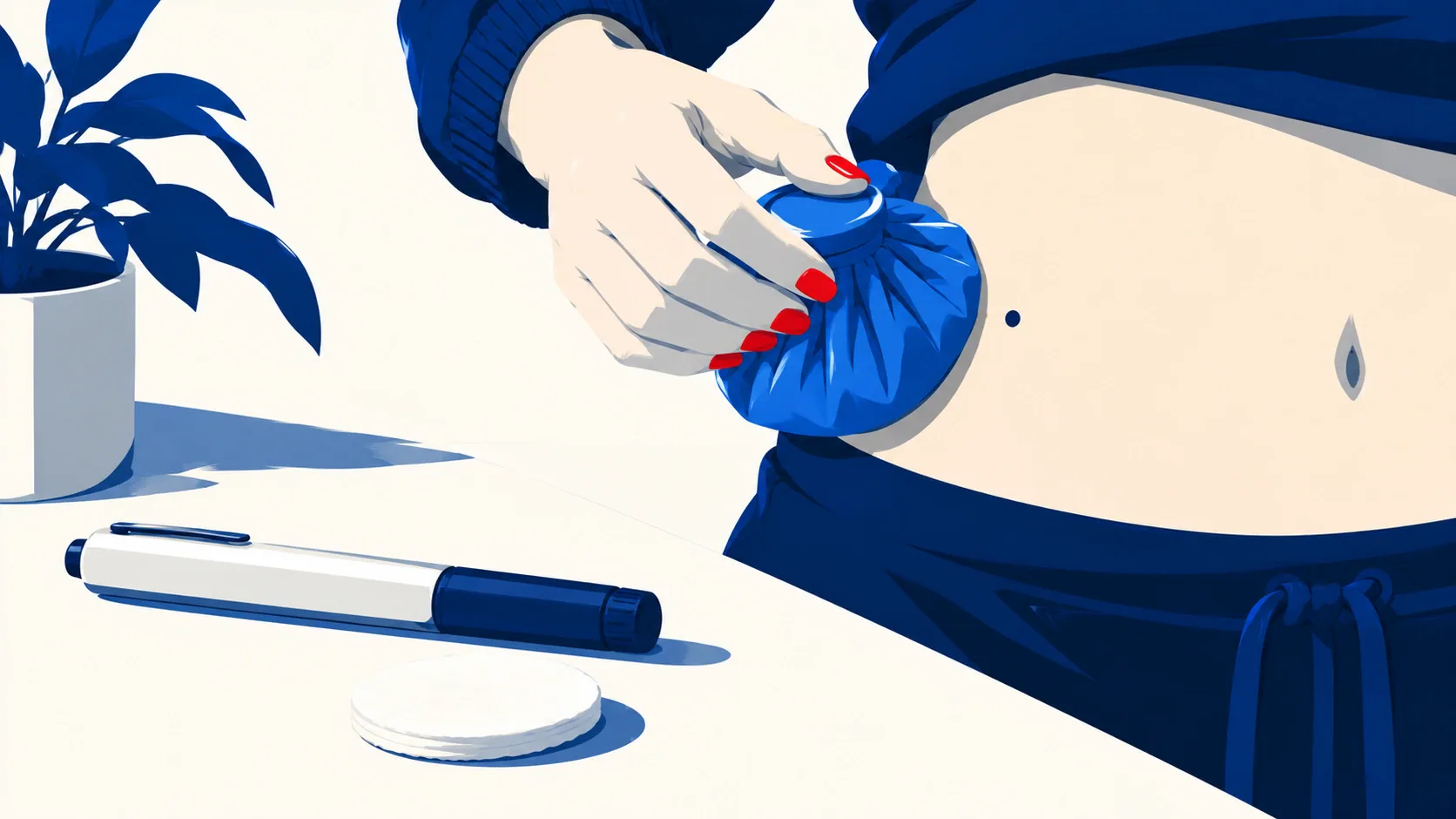
A bruise after an Ozempic shot means the needle nicked a small blood vessel, and it says nothing about your dose. Press lightly without rubbing (Ozempic instructions) and inject somewhere else until it fades. Get help right away for a swollen face or throat; call about hot, swollen, painful skin. Ozempic’s label puts injection site reactions at 0.2%, with no figure for bruising (section 6.1).
Key facts
- Each device has its own end-of-dose sign; on the Ozempic pen the counter reaches 0 and you hold the button for a count of 6 (Ozempic Instructions for Use).
- Zepbound is the one label that names bruising among its injection site reactions, which were reported in 6 to 8% of patients against 2% on placebo (Zepbound label).
- Eliquis makes bruising easier, and its Medication Guide warns that stopping it raises your risk of stroke, so talk to its prescriber first (Eliquis Medication Guide).
- Rotating lowers the risk of pitted, thickened or lumpy skin, and the Zepbound and Mounjaro instructions say not to inject where you find it (Zepbound Instructions for Use).
Does a bruise mean the dose did not go in?
No. A bruise is blood that leaked from a vessel the needle crossed, and whether the medicine went in is shown by the device. On the Ozempic pen, hold the dose button down until the counter shows 0, then count 6 seconds before you lift the needle out (Ozempic Instructions for Use). Pull it out sooner and you may see a stream of medicine from the tip, and the full dose will not be delivered.
On a Mounjaro KwikPen, a drop of medicine left on the needle tip is normal and "will not affect your dose" (Mounjaro KwikPen user manual). If the full-dose icon is missing from the dose window, put the needle back into your skin and finish the injection without dialing again. If you still think you missed part of the dose, do not start over or repeat the injection; the manual sends you to your doctor, pharmacist or nurse. A shot you skipped altogether follows each brand’s missed-dose window instead.
How each pen shows the dose is in
The sign and the hold time come from the Instructions for Use printed with the US Ozempic, Wegovy and Zepbound labels, and from the UK Wegovy FlexTouch leaflet.
| Device | End-of-dose sign | Hold (seconds) |
|---|---|---|
| Ozempic pen | Counter shows 0 | 6 |
| Wegovy FlexTouch | Counter shows 0 | 6, counted slowly |
| Wegovy single-dose pen | Yellow bar stops moving | Until the bar stops |
| Mounjaro or Zepbound single-dose pen | Second click, gray plunger in view | Up to 10 |
| Mounjaro or Zepbound KwikPen | Full-dose icon in the window | 5, counted slowly |
| Mounjaro or Zepbound vial | Plunger all the way down | At least 5 |
Why injections bruise and what helps
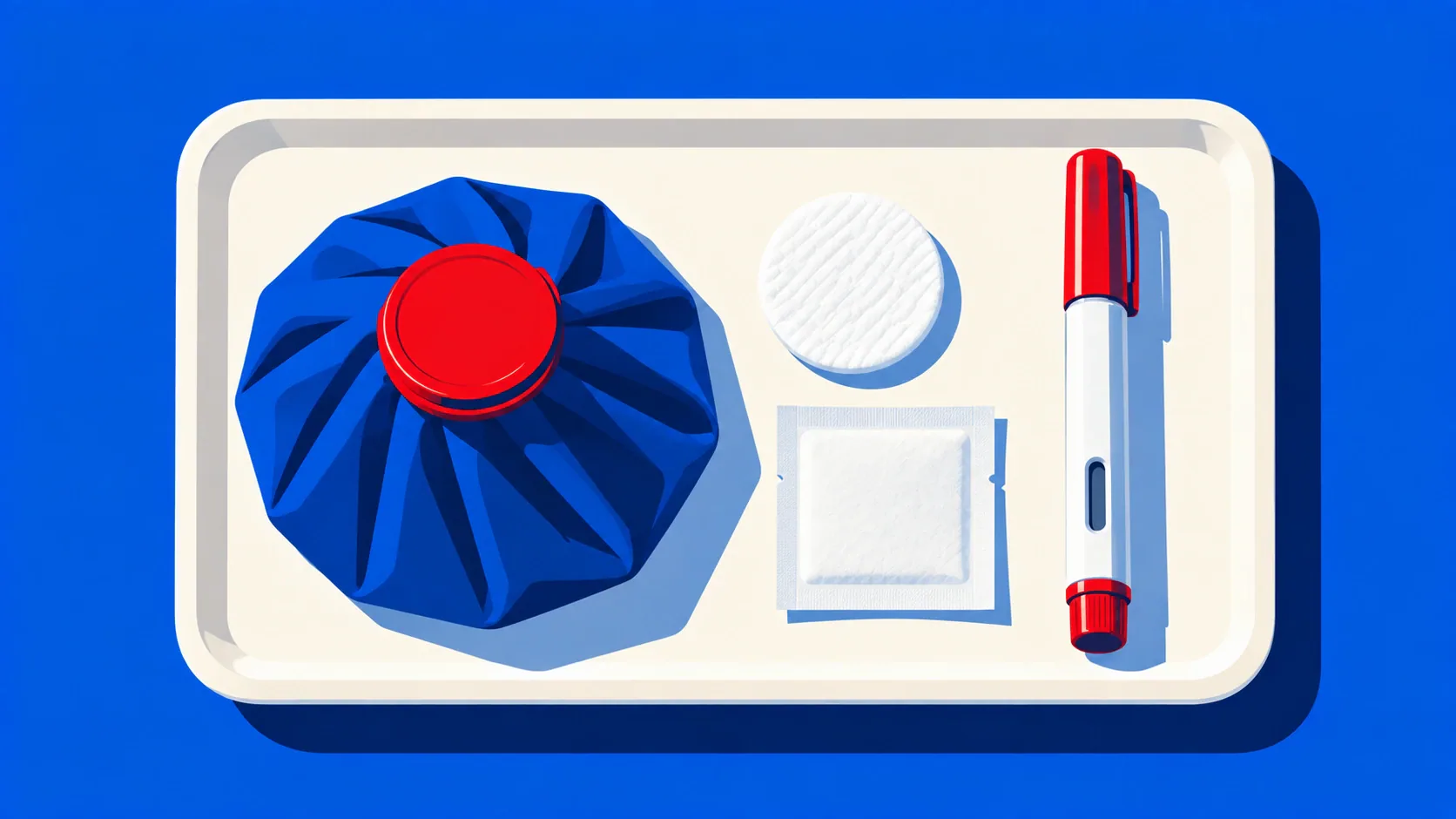
The fat under your skin carries small blood vessels you cannot see. When the needle passes through one, blood seeps into the tissue around it and shows as a blue or purple mark.
If blood appears, press lightly with a gauze pad or cotton ball and do not rub; the Ozempic, Wegovy and Zepbound instructions all give that step (Ozempic, Wegovy and Zepbound Instructions for Use). Bruised skin is on the list of skin each pen’s instructions tell you to skip, so give next week’s shot somewhere else.
Blood thinners
On a blood thinner such as Eliquis (apixaban), you "may bruise more easily" and bleeding may take longer than usual to stop, its Medication Guide says (Eliquis Medication Guide). Aspirin, clopidogrel, warfarin and long-term NSAID use are on its list of medicines that raise bleeding risk further.
Do not drop Eliquis because of injection bruises. The guide tells you not to stop it without talking to the healthcare provider who prescribes it, because stopping increases the chance of a stroke. Its call-right-away list includes unexpected bleeding or bruising, unusual bleeding from the gums and nosebleeds that happen often.
Bruise, lump or infection

A bruise shrinks and fades. A lump that builds up at one spot, skin that turns hot and swollen, or a swollen face each calls for a different step (Zepbound label; Hearn and Sherman; NHS).
| What you see | Possible cause | What to do |
|---|---|---|
| Blue or purple mark that fades over days | Bruise from a nicked vessel | Use another spot until it fades |
| Pitted, thickened or lumpy skin at one spot | Lipodystrophy or amyloidosis | Stop injecting there |
| Hard, itchy red lumps after every dose, new spots too | Reaction to the drug | Tell your prescriber before the next dose |
| Skin that is painful, hot and swollen | Infection (cellulitis) | Ask for an urgent appointment |
| Swollen face, lips, tongue or throat | Serious allergic reaction | Stop the drug; get help right away |
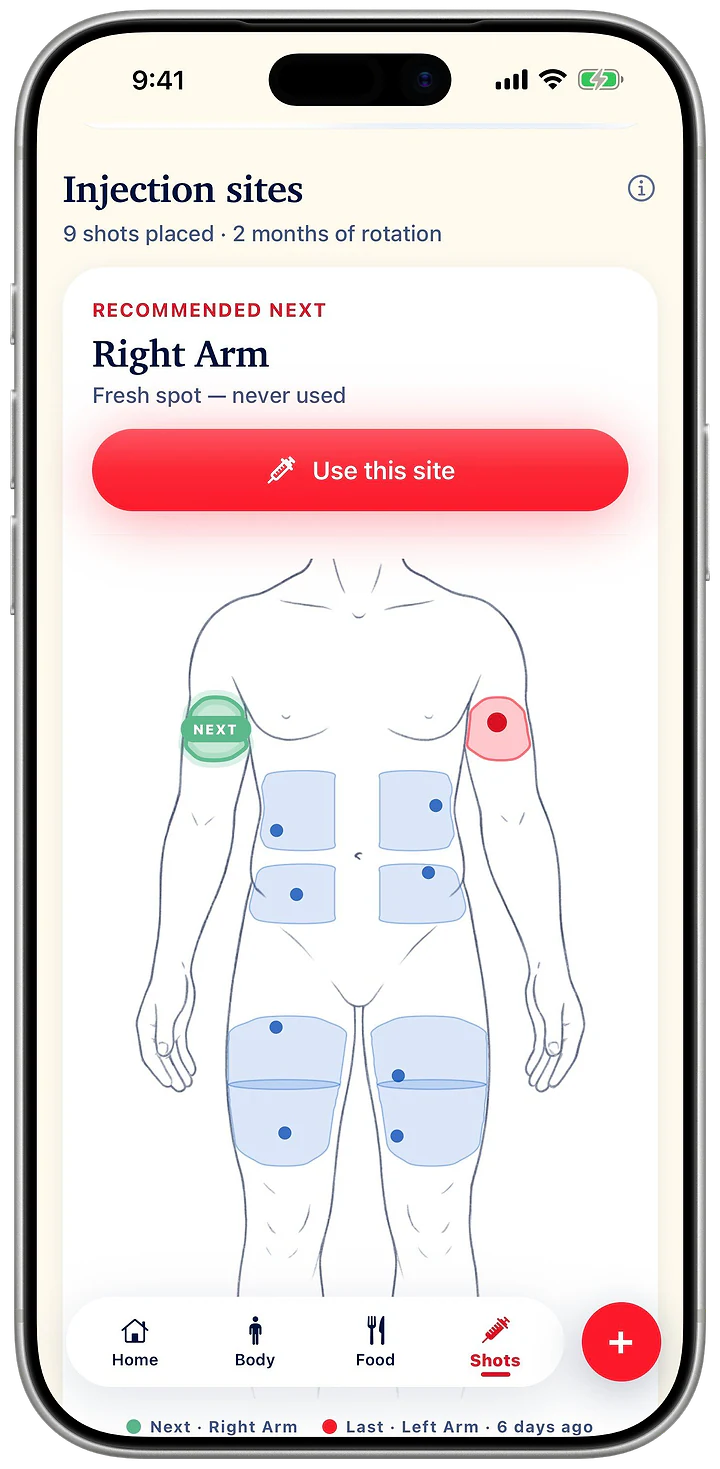
Mark a bruised zone in the GLP‑1 injection site rotation chart and it plans your next 8 weeks of shots around it, across four belly and four thigh zones. If marks keep coming back, log the site of every shot so you can see whether they cluster in one place.
Injection site lumps
Injecting one spot again and again can change the skin there. The Zepbound vial instructions ask you to rotate "to reduce your risk of getting lipodystrophy (pits in skin or thickened skin) and localized cutaneous amyloidosis (skin with lumps)" (Zepbound Instructions for Use). Both brands' vial instructions also say not to inject into skin that has pits, thickening or lumps.
In one published case, a 75-year-old man on semaglutide 1 mg got hard, itchy, raised red nodules within minutes of each weekly shot, although he rotated sites. They faded in 2 to 4 days, and within 24 hours once his dose went back to 0.5 mg (Hearn and Sherman, Diabetes Spectrum, 2021). After he switched to dulaglutide, another weekly GLP‑1, no nodules came back in 5 months.
The FDA’s adverse event system collects reports of suspected reactions, not a count of everyone treated, so its figures show what people report rather than how often a reaction happens. Skin and injection-site problems made up 32.6% of the reports for tirzepatide and 12.2% for semaglutide. Pain, bleeding, redness, bruising, lumps, itching and swelling were among the common complaints (Elgindi and Petronic-Rosic, Clinics in Dermatology, 2026).
Injection site reaction rates by GLP‑1
Only Zepbound’s label counts bruising as an injection site reaction, and each label draws on different trials. US figures come from section 6.1 of the Ozempic, Wegovy, Mounjaro and Zepbound labels. UK figures come from section 4.8 of each Summary of Product Characteristics (SmPC), the document UK prescribers work from, for Ozempic 0.5 mg and Mounjaro KwikPen.
| Medicine and trials | On the drug (%) | On placebo (%) |
|---|---|---|
| Ozempic, US diabetes trials | 0.2 | Not stated on the label |
| Ozempic 0.5 and 1 mg, UK | 0.6 and 0.5 | Not stated on the label |
| Wegovy, US weight trials | 1.4 | 1 |
| Mounjaro, US diabetes trials | 3.2 | 0.4 |
| Zepbound 5, 10 and 15 mg, US | 6, 8 and 8 | 2 |
| Tirzepatide, UK SURMOUNT-1 to 3 | 8.0 | 1.8 |
How a bruise changes color
A bruise’s color says little about its age. In 369 photographs of bruises up to 21 days old, the one firm finding was that a bruise with yellow in it was more than 18 hours old (Langlois and Gresham, Forensic Science International, 1991).
Questions
Frequently asked questions
Is a bruise after a Mounjaro injection normal?
Reactions at the injection site are a listed side effect of tirzepatide, the drug in Mounjaro. Across the phase 3 studies in the Mounjaro SmPC, the worst one each person had was mild in 91% and moderate in 9%, and none was serious (Mounjaro SmPC, section 4.8).
What does a Zepbound injection site reaction look like?
It can be bruising, redness, itching, pain or a rash where you injected. The Zepbound label’s footnote groups those terms together, in the same trial table as nausea and the other Zepbound side effects (Zepbound label, section 6.1).
Does Ozempic bruise less than Mounjaro?
Neither US label gives a bruising rate. Ozempic’s diabetes trials reported injection site reactions in 0.2% of patients and Mounjaro’s in 3.2% (Ozempic label; Mounjaro label). Both labels warn against setting one drug’s trial rates directly beside another’s.
Is a bruise a sign of an allergic reaction?
No. The Ozempic Medication Guide lists swelling of the face, lips, tongue or throat and trouble breathing or swallowing as signs of a serious allergic reaction. It adds a severe rash or itching, fainting or dizziness, and a very rapid heartbeat, and says to stop Ozempic and get medical help right away if any of these appear (Ozempic Medication Guide).
Sources
- Ozempic (semaglutide) injection, prescribing information, Medication Guide and Instructions for Use. Novo Nordisk, 2026.
- Wegovy (semaglutide) injection, prescribing information and Instructions for Use. Novo Nordisk, 2026.
- Mounjaro (tirzepatide) injection, prescribing information and Instructions for Use. Eli Lilly and Company, 2026.
- Zepbound (tirzepatide) injection, prescribing information, Medication Guide and Instructions for Use. Eli Lilly and Company, 2026.
- Ozempic 0.5 mg solution for injection in pre-filled pen, Summary of Product Characteristics. Novo Nordisk, 2026.
- Mounjaro KwikPen solution for injection in pre-filled pen, Summary of Product Characteristics. Eli Lilly and Company Limited, 2026.
- Mounjaro KwikPen user manual. Eli Lilly and Company Limited, 2025.
- Wegovy FlexTouch package leaflet. Novo Nordisk, 2026.
- Eliquis (apixaban) prescribing information and Medication Guide. Bristol-Myers Squibb and Pfizer, 2025.
- Cellulitis. NHS, 2024.
- Injection-Site Nodules Associated With Once-Weekly Subcutaneous Administration of Semaglutide. Diabetes Spectrum, 2021.
- Glucagon-like Peptide-1 Receptor Agonist-Associated Injection Site and Dermatologic Reactions. Clinics in Dermatology, 2026.
- The ageing of bruises: a review and study of the colour changes with time. Forensic Science International, 1991.