
Protein and nutrition
How Many Grams of Protein per Meal on Ozempic
The ISSN advises 20 to 40 g of protein at each of 3 or 4 meals when cutting calories. USDA data show which foods reach it on a small Ozempic appetite.
Medically reviewed by Farnia Bahari, PharmD
Published 6 min read
Aim for 20 to 40 g of protein at each meal on Ozempic, Wegovy, Mounjaro or Zepbound. That is the per-serving range in the International Society of Sports Nutrition’s position stand, which advises people cutting calories to eat three to four such meals (Jäger et al., 2017). At 100 g a day, four meals is 25 g each.
Key facts
- The ISSN also gives a serving as 0.25 g per kg of body weight, which is 20 g at 80 kg (80 × 0.25) (Jäger et al., 2017).
- Spread the servings evenly through the day, every 3 to 4 hours, the ISSN advises (Jäger et al., 2017).
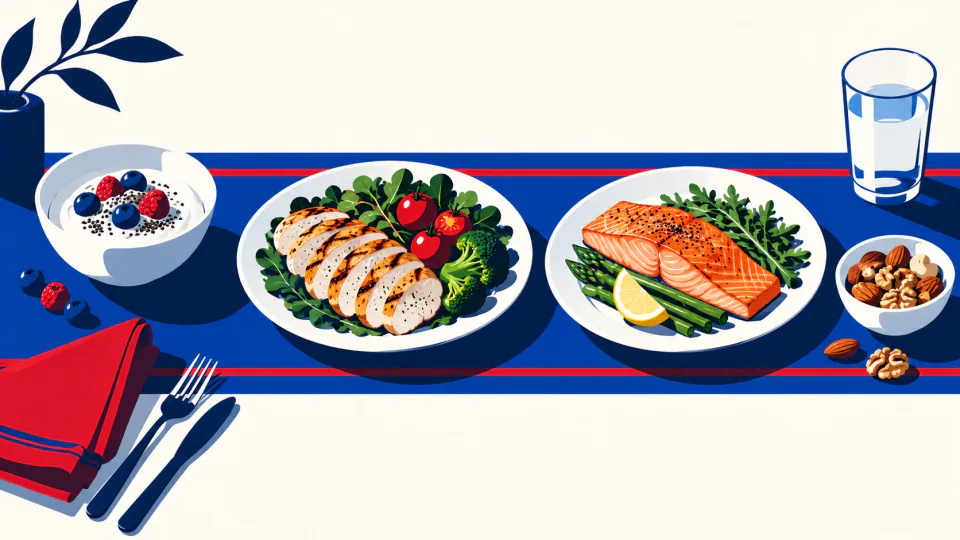
- For small appetites, a 2025 joint advisory favors lower-volume protein foods such as fish, eggs and Greek yogurt (Mozaffarian et al., 2025).
- Roasted chicken breast is 31% protein by weight, and plain nonfat Greek yogurt 10% (FoodData Central, chicken; yogurt).
Protein per meal by body weight
Each figure divides 1.2 to 1.6 g per kg a day by the number of meals, rounded to the nearest gram. That is the range a 2025 joint advisory cites for active weight loss (Mozaffarian et al., 2025).
| Body weight | 3 meals a day (g each) | 4 meals a day (g each) |
|---|---|---|
| 60 kg (132 lb) | 24–32 | 18–24 |
| 70 kg (154 lb) | 28–37 | 21–28 |
| 80 kg (176 lb) | 32–43 | 24–32 |
| 90 kg (198 lb) | 36–48 | 27–36 |
| 100 kg (220 lb) | 40–53 | 30–40 |
| 120 kg (265 lb) | 48–64 | 36–48 |
The GLP‑1 protein calculator does the same division for your own weight and meal count. Where a figure passes 40 g, add a meal or a snack and split the day four or five ways, since the ISSN range is per serving (Jäger et al., 2017).
For the 100 and 120 kg rows, the joint advisory notes that multiplying actual body weight can overestimate protein needs in obesity. It offers a flat 80 to 120 g a day instead (Mozaffarian et al., 2025), and 120 g over four meals is 30 g each.
Can’t eat enough protein on Ozempic?
Smaller meals and denser protein foods get more grams in, and the joint advisory gives separate advice for nausea and for early fullness (Mozaffarian et al., 2025).
When nausea is the problem
Smaller, more frequent meals with fewer fatty or high-fiber foods can ease nausea in the first days of treatment (Mozaffarian et al., 2025). For people caught in a cycle of not eating because of nausea, the advisory suggests breakfast and then small meals every 3 to 4 hours, with enough fluids (Mozaffarian et al., 2025).
If you cannot keep fluids down, contact your prescriber. The advisory warns that dehydration from severe nausea, vomiting or diarrhea can cause acute kidney injury (Mozaffarian et al., 2025).
When you fill up after a few bites
Eat the protein-rich food first in the meal, so stopping early still leaves you with most of the grams (Mozaffarian et al., 2025). The advisory suggests lower-volume, nutrient-dense protein foods: fish, eggs, Greek yogurt, cottage cheese, and nuts and seeds, including spreads such as peanut or almond butter. If changing what you eat is not enough, it suggests setting an alarm or another reminder to eat.
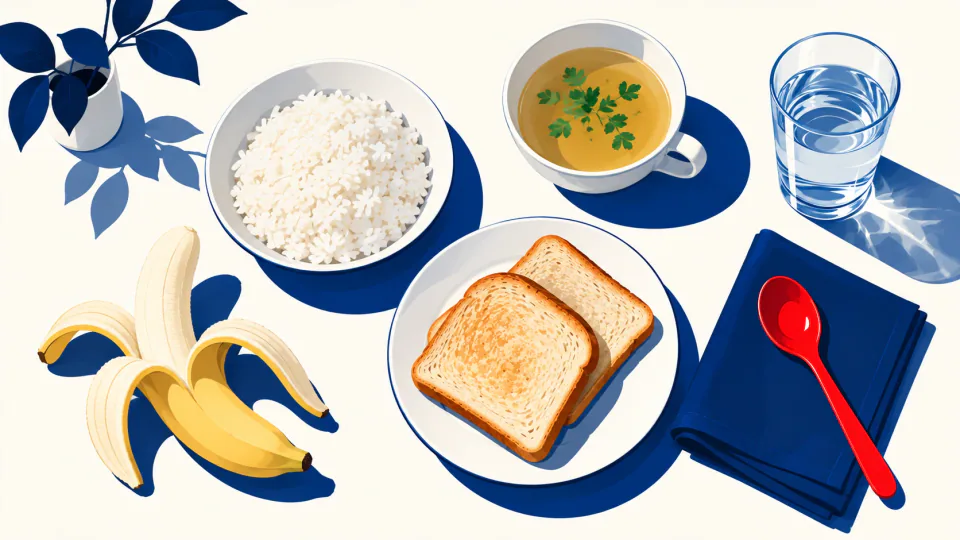
On days of diarrhea the advice changes to small, low-fat, bland meals. One large meal brings problems of its own, because food stays in the stomach longer on semaglutide, and the hours after overeating on Ozempic need their own plan.
High-protein foods for a small appetite
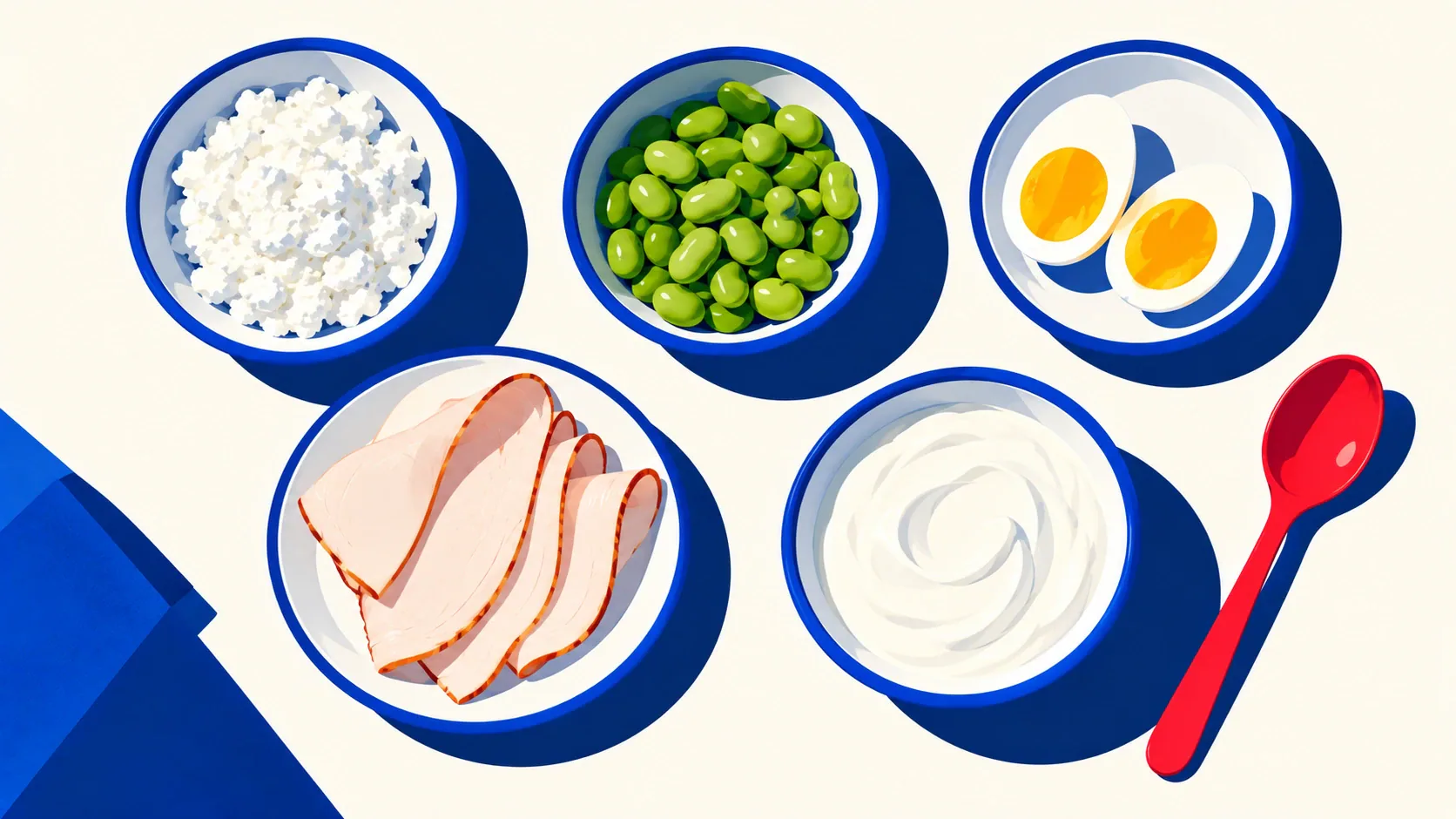
Protein per 100 g shows which foods carry the most protein for their weight. Each value is from USDA FoodData Central (SR Legacy), rounded to the nearest gram, and each food links its record.
| Food and portion | Protein per portion (g) | Protein per 100 g (g) |
|---|---|---|
| Chicken breast, roasted, no skin: half a breast (86 g) | 27 | 31 |
| Mozzarella, part-skim: 1 oz (28 g) | 7 | 24 |
| Salmon, Atlantic, farmed, cooked: 3 oz (85 g) | 19 | 22 |
| Tuna, light, canned in water, drained: 3 oz (85 g) | 17 | 19 |
| Tofu, firm: half a cup (126 g) | 22 | 17 |
| Eggs, whole: 2 large (100 g) | 13 | 13 |
| Edamame, frozen, prepared: 1 cup (155 g) | 18 | 12 |
| Cottage cheese, 2% milkfat: 4 oz (113 g) | 12 | 10 |
| Greek yogurt, plain, nonfat: 1 container (170 g) | 17 | 10 |
By weight, chicken breast carries three times the protein of Greek yogurt or cottage cheese (31 against 10 g per 100 g).
A day at about 100 g
This day uses the same USDA values and lands at about 100 g. That meets 1.2 g/kg for someone weighing about 83 kg (100 ÷ 1.2), or 1.6 g/kg at 62.5 kg (100 ÷ 1.6).
| Meal | Food and amount | Protein (g) |
|---|---|---|
| Breakfast | 2 large eggs and 170 g plain nonfat Greek yogurt | 30 |
| Lunch | 1 can (165 g) light tuna in water, drained | 32 |
| Snack | 113 g cottage cheese and 28 g part-skim mozzarella | 19 |
| Dinner | 85 g cooked Atlantic salmon | 19 |
| Total | Four eating occasions | 100 |
Breakfast and lunch sit inside the 20 to 40 g range; the snack and dinner fall just under it. Swapping the salmon for half a chicken breast (27 g) lifts the day to about 108 g.
Protein shakes on Ozempic
On days when hunger and interest in food are low, the joint advisory suggests protein drinks and smoothies made with fruit, vegetables and milk or yogurt (Mozaffarian et al., 2025). With cottage cheese and soups, they are "often more appealing" than red meat, cold cuts or hard cheese (Mozaffarian et al., 2025). Protein content varies by brand, so read the label; a shake with 20 to 40 g covers one serving in the ISSN range (Jäger et al., 2017). A lower-fat shake also fits the advisory’s advice to go easy on fatty foods early in treatment (Mozaffarian et al., 2025).
Where the 20 to 40 g figure comes from
The ISSN position stand gives a serving as 0.25 g of high-quality protein per kg of body weight, or as an absolute 20 to 40 g (Jäger et al., 2017). The two meet at 80 kg, where 0.25 g/kg is 20 g, the bottom of the absolute range; at lighter weights the per-kg figure comes out under 20 g. Its advice for people eating less is that "individuals attempting to restrict caloric intake should consume three to four whole meals consisting of 20–40 g of protein per meal" (Jäger et al., 2017).
For resistance training, a 2018 review by Schoenfeld and Aragon suggests 0.4 g/kg at each of at least four meals, for at least 1.6 g/kg a day (Schoenfeld and Aragon, 2018). For an 80 kg adult, that is 32 g a meal and 128 g a day.
In younger adults, 20 to 30 g around a resistance workout appears to be enough (Jäger et al., 2017). In one study the position stand cites, men with an average age of 71 needed 40 g of whey protein to reach the maximum response (Jäger et al., 2017). Older adults also have a higher daily protein range of their own.
Questions
Frequently asked questions
Is 30 g of protein per meal enough on Ozempic?
Yes, by the ISSN’s per-serving range of 20 to 40 g (Jäger et al., 2017). Four 30 g meals give 120 g a day, which is 1.6 g/kg at 75 kg and 1.2 g/kg at 100 kg.
Can a protein shake replace a meal on Zepbound?
For protein, a shake with 20 to 40 g on its label covers one ISSN serving (Jäger et al., 2017). A meal also brings vitamins and minerals, and the joint advisory warns that a large, rapid drop in calories can leave those short (Mozaffarian et al., 2025).
Do protein bars count toward a meal?
They can. The joint advisory says some people meet their protein targets with high-protein shakes, bars and other fortified products (Mozaffarian et al., 2025). A bar counts as a full ISSN serving only if its label shows at least 20 g (Jäger et al., 2017).
What if I can only manage one real meal a day?
Spread the rest over small snacks. The joint advisory says small, frequent meals may work when hunger and interest in food are low (Mozaffarian et al., 2025). The ISSN range is per serving, so a 20 g snack counts as one (Jäger et al., 2017).
Sources
- International Society of Sports Nutrition Position Stand: protein and exercise. Journal of the International Society of Sports Nutrition, 2017.
- Nutritional priorities to support GLP‑1 therapy for obesity: a joint advisory from the American College of Lifestyle Medicine, the American Society for Nutrition, the Obesity Medicine Association, and The Obesity Society. Obesity Pillars, 2025.
- How much protein can the body use in a single meal for muscle-building? Implications for daily protein distribution. Journal of the International Society of Sports Nutrition, 2018.
- Yogurt, Greek, plain, nonfat (FDC 170894). USDA FoodData Central, 2019.
- Cheese, cottage, lowfat, 2% milkfat (FDC 172182). USDA FoodData Central, 2019.
- Egg, whole, raw, fresh (FDC 171287). USDA FoodData Central, 2019.
- Cheese, mozzarella, part skim milk (FDC 170847). USDA FoodData Central, 2019.
- Edamame, frozen, prepared (FDC 168411). USDA FoodData Central, 2019.
- Tofu, raw, firm, prepared with calcium sulfate (FDC 172475). USDA FoodData Central, 2019.
- Fish, tuna, light, canned in water, drained solids (FDC 173709). USDA FoodData Central, 2019.
- Chicken, broilers or fryers, breast, meat only, cooked, roasted (FDC 171477). USDA FoodData Central, 2019.
- Fish, salmon, Atlantic, farmed, cooked, dry heat (FDC 175168). USDA FoodData Central, 2019.