
Side effects
Ozempic Blurred Vision and Eyesight Changes, From Blood Sugar to NAION
Ozempic blurred vision can follow blood sugar shifts or diabetic retinopathy. NAION, very rare (up to 1 in 10,000), needs same-day eye care.
Medically reviewed by Farnia Bahari, PharmD
Published 11 min read
Blurred vision on Ozempic (semaglutide) can come from blood sugar shifts or, with diabetes, retinopathy worsening as glucose falls, and very rarely from NAION, sudden painless vision loss typically in one eye. EU and UK regulators list NAION as very rare, up to 1 in 10,000 people on semaglutide (EMA, 6 June 2025), while no US label mentions it (Ozempic label). For sudden vision loss, EMA says to contact a doctor without delay and the MHRA says to go urgently to eye casualty or A&E (MHRA, 5 February 2026).

Key facts
- The MHRA added NAION to UK safety advice on 5 February 2026 (MHRA), and the UK Ozempic leaflet now lists it as very rare, up to 1 in 10,000 people (Ozempic patient leaflet).
- No US label for Ozempic, Wegovy, Rybelsus, Mounjaro or Zepbound mentions NAION (Ozempic label), though the FDA’s adverse event list for October to December 2024 says "FDA is evaluating the need for regulatory action" (FDA).
- In people who already had diabetic retinopathy, retinopathy complications reached 8.2% on Ozempic against 5.2% on placebo over 2 years (Ozempic label, section 5.3).
- In a 2000 study of people treated for very high blood sugar, not with a GLP‑1 drug, glucose-related blur peaked at a mean 10.3 days and cleared between 14 and 84 days (Okamoto 2000).
- Mounjaro and Zepbound carry a retinopathy warning revised in August 2026 but no NAION wording (Mounjaro label, section 5.7, Zepbound label, section 5.8).
- With diabetes, the US National Eye Institute advises a dilated eye exam at least once a year (National Eye Institute), and the NHS screens your eyes every 1 or 2 years from age 12 (NHS, diabetic retinopathy).
Why does Ozempic cause blurred vision?
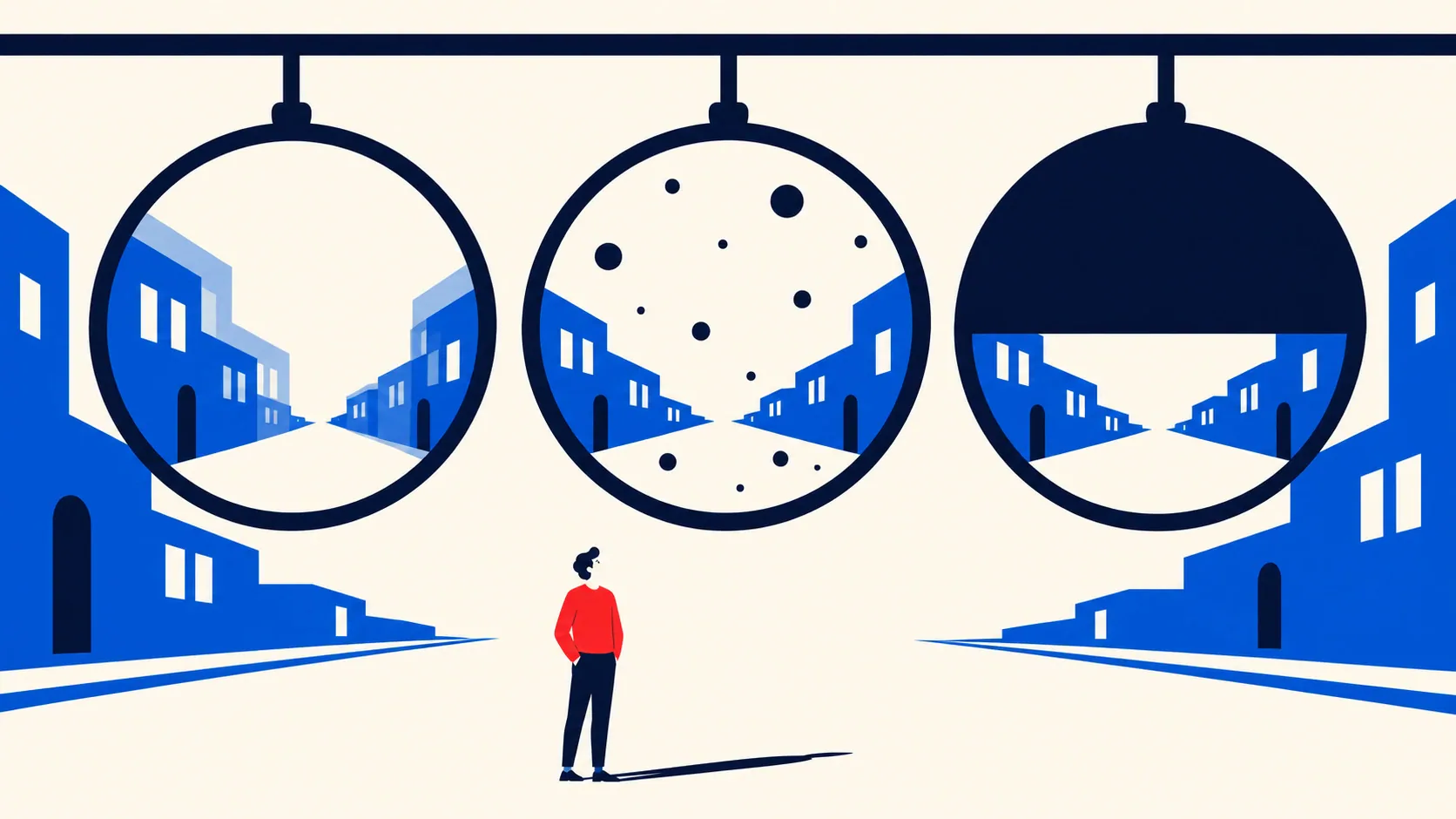
Ozempic (semaglutide) can blur vision and change your eyesight through a blood sugar shift, diabetic retinopathy worsening as glucose falls fast, or, very rarely, NAION (Ozempic label, MHRA). The US Ozempic label mentions blurred vision only once, as a sign of low blood sugar, not as a side effect (Ozempic label and Medication Guide). The UK label lists diabetic retinopathy complications as common, between 1 in 100 and 1 in 10 people, and NAION as very rare (Ozempic SmPC).
The table sets the causes side by side (NHS, high blood sugar, NHS, retinopathy, Medication Guide, MHRA).
| Cause | What it looks like | How fast to act |
|---|---|---|
| Blood sugar shifts | Blur as glucose falls fast, or with thirst and tiredness when it runs high | With diabetes, an urgent GP appointment or NHS 111 in the UK; tell your prescriber in the US |
| Diabetic retinopathy getting worse | Worsening eyesight, blurred vision, floaters or trouble seeing in the dark, often after no early symptoms | Urgent GP appointment or NHS 111 if eyesight suddenly worsens or blurs; tell your prescriber in the US |
| NAION | Sudden, painless loss or blurring of vision, typically in one eye | The same day, at eye casualty or A&E in the UK; a doctor without delay in the EU |
The NHS lists blurred vision with thirst, peeing a lot and tiredness among the common symptoms of high blood sugar (NHS, high blood sugar). Low blood sugar can blur vision too, and the Ozempic Medication Guide lists it with dizziness, sweating, hunger and shakiness, a risk that is higher with insulin or a sulfonylurea (Ozempic Medication Guide).
Diabetic retinopathy only applies if you have diabetes, and in the label’s trial the extra cases were in insulin-treated patients who already had it (EU Ozempic product information).
NAION (non-arteritic anterior ischemic optic neuropathy) is listed for semaglutide whether it is used for diabetes or obesity (EMA). The MHRA says it comes from reduced blood flow to the front of the optic nerve, and that type 2 diabetes, smoking, high blood pressure and high cholesterol all raise the risk (MHRA).
Is NAION a listed side effect of Ozempic and Wegovy?

Yes in the EU and UK, where Ozempic and Wegovy labels list NAION as a very rare eyesight side effect (EU product information, Wegovy SmPC), but no US label does (Ozempic label). This table dates each regulator’s position on NAION, the semaglutide eye side effect behind the headlines, as of 9 November 2026 (EMA, Danish Medicines Agency, MHRA).
| Regulator or label | Position on NAION | Date |
|---|---|---|
| EU, EMA (Ozempic, Rybelsus, Wegovy) | Very rare side effect, up to 1 in 10,000 people; stop semaglutide if confirmed | Review concluded 6 June 2025; product information updated 30 September 2025 |
| UK, MHRA (Ozempic, Rybelsus, Wegovy) | Very rare, up to 1 in 10,000; sudden vision loss goes urgently to eye casualty or A&E; stop semaglutide if confirmed | Drug Safety Update 5 February 2026; Ozempic SmPC July 2026; Wegovy SmPC September 2026 |
| US labels (Ozempic, Wegovy, Rybelsus and Ozempic tablets) | No NAION wording | Current versions dated January to June 2026 |
| US FDA adverse event list (GLP‑1 receptor agonists, tirzepatide included) | "FDA is evaluating the need for regulatory action" | October to December 2024 list; content current as of 31 March 2025 |
| Tirzepatide (Mounjaro, Zepbound) labels | No NAION wording; the MHRA is reviewing evidence on other GLP‑1 drugs | US labels August 2026; UK Mounjaro SmPC 29 August 2026 |
The UK Ozempic SmPC revised in July 2026 tells clinicians to refer sudden vision loss, including partial loss, urgently to an eye specialist (Ozempic SmPC).
No US label carries it, including the Wegovy label revised in June 2026, which also covers the Wegovy pill (Wegovy label), and the Rybelsus and Ozempic tablets label (tablets label).
EMA’s decision rests on several large epidemiological studies in type 2 diabetes (EMA), while the FDA lists NAION for GLP‑1 receptor agonists only as a potential signal under evaluation (FDA).
A 2026 consensus from the North American Neuro-Ophthalmology Society and the American Academy of Ophthalmology found a possible risk increase of approximately 2-fold, mainly with semaglutide, and said causality has not been established (AAO). The two societies "do not fully support the EMA’s recommendation to systematically discontinue GLP‑1 RA therapy" (American Academy of Ophthalmology).
How likely is vision loss from NAION on Ozempic?
Vision loss from NAION is very rare on semaglutide, at up to 1 in 10,000 people taking it (EMA). EMA puts the approximately two-fold rise seen in type 2 diabetes at about one additional case per 10,000 person-years, one person-year being one person on semaglutide for one year (EMA). These figures count NAION, not blindness, and the UK Ozempic leaflet describes NAION as a condition "which may cause loss of vision without any pain" (Ozempic patient leaflet).
A 2026 meta-analysis of five observational studies in type 2 diabetes found a hazard ratio of 2.17 and an absolute risk of 0.014%, about 1 extra case per 7,000 people treated a year (PLoS Medicine).
Higher headline figures come from a 2024 JAMA Ophthalmology study of 16,827 patients seen by neuro-ophthalmologists at one Boston eye hospital (Hathaway 2024). It found hazard ratios of 4.28 in type 2 diabetes and 7.64 in overweight or obesity, and the authors said causality needs further study (Hathaway). Those ratios do not describe everyone on the drug.
From semaglutide’s first UK authorization in 2018 to 1 August 2025, the Yellow Card scheme received three spontaneous reports suggestive of NAION (MHRA). NAION also happens without any GLP‑1 drug, at 11.4 to 82 cases per 100,000 person-years in people with type 2 diabetes in the studies the MHRA cites (MHRA).
The EU product information adds that "There is no identified time interval for when NAION may develop following treatment start" (EU product information).
What should you do if your vision changes on Ozempic?
If you notice sudden blindness or eyesight getting worse very quickly in one or both eyes on Ozempic, the MHRA’s advice is to "urgently attend eye casualty (if available in your area) or A&E" (MHRA). EMA’s advice is to contact a doctor without delay (EMA).
If you have diabetes and your eyesight suddenly gets worse or turns blurry, the NHS says to ask for an urgent GP appointment or contact NHS 111 (NHS). In the US, the Ozempic Medication Guide asks you to tell your healthcare provider about any change in vision (Medication Guide).
Tell the eye team that you take semaglutide, because the MHRA warns clinicians that privately prescribed semaglutide may not appear in your medical history (MHRA). Until your vision clears, the NHS says not to drive, ride a bike or use machinery (NHS, semaglutide).
EMA, the MHRA and the UK Ozempic SmPC say semaglutide should be stopped if NAION is confirmed (Ozempic SmPC). The US eye societies say instead that "Shared decision-making between each patient and their care team is warranted to decide whether to start, continue, or discontinue GLP‑1 RAs" (consensus statement).
Does Ozempic make diabetic retinopathy worse?
It can, mainly in people who already have diabetic retinopathy, and in SUSTAIN 6 the extra risk appeared early and persisted throughout the 2-year trial (EU product information). In that trial of people with type 2 diabetes and high cardiovascular risk, diabetic retinopathy complications occurred in 3.0% on Ozempic and 1.8% on placebo (Ozempic label).
The gap was larger in people with retinopathy at the start, 8.2% against 5.2%, than in those without it, 0.7% against 0.4% (Ozempic label). The US label links it to how fast glucose falls, saying "Rapid improvement in glucose control has been associated with a temporary worsening of diabetic retinopathy" (Ozempic label).
In Study 3, a weight-loss trial of adults with type 2 diabetes, diabetic retinopathy was reported by 4% on Wegovy injection and 2.7% on placebo (Wegovy label, section 5.8). In the UK, Ozempic 2 mg is not recommended if your retinopathy is uncontrolled or potentially unstable, because there is no experience with that dose there (Ozempic SmPC).
Eye checks matter because retinopathy usually has no symptoms at first, and the NHS invites people with diabetes aged 12 or over for screening every 1 or 2 years (NHS). The US National Eye Institute advises a dilated eye exam at least once a year (National Eye Institute). A 2025 European expert consensus adds that people with diabetes should be screened before starting a GLP‑1 drug (European expert consensus).
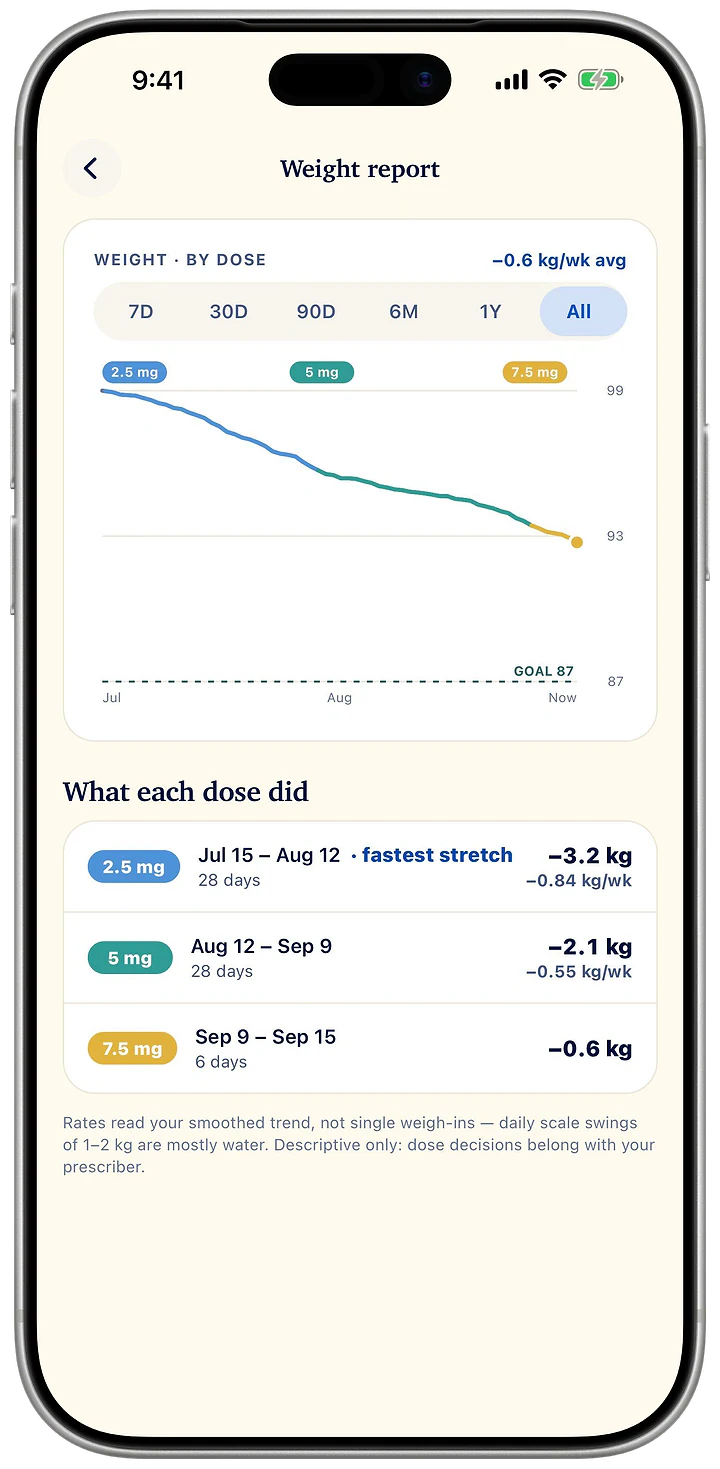
If your vision changed after a dose step, note the date against your dose history and read what to expect when your Ozempic dose goes up before your next increase.
Does blurred vision from Ozempic go away?
Whether you take Ozempic or Mounjaro, it depends on the cause, and no EU, UK or US label gives a recovery time for NAION (Ozempic SmPC). In a 2000 study of 28 eyes in people treated for very high blood sugar, not with a GLP‑1 drug, every patient’s focus shifted toward farsightedness (hyperopia) (Okamoto). The shift started a mean 3.4 days into treatment, peaked at a mean 10.3 days and was gone between 14 and 84 days, and it was bigger the faster glucose fell (Okamoto).
Retinopathy worsening on Ozempic or Mounjaro is called temporary in the labels (Ozempic label), but the NHS treats new blurring with diabetes as urgent, so it is checked rather than waited out (NHS).
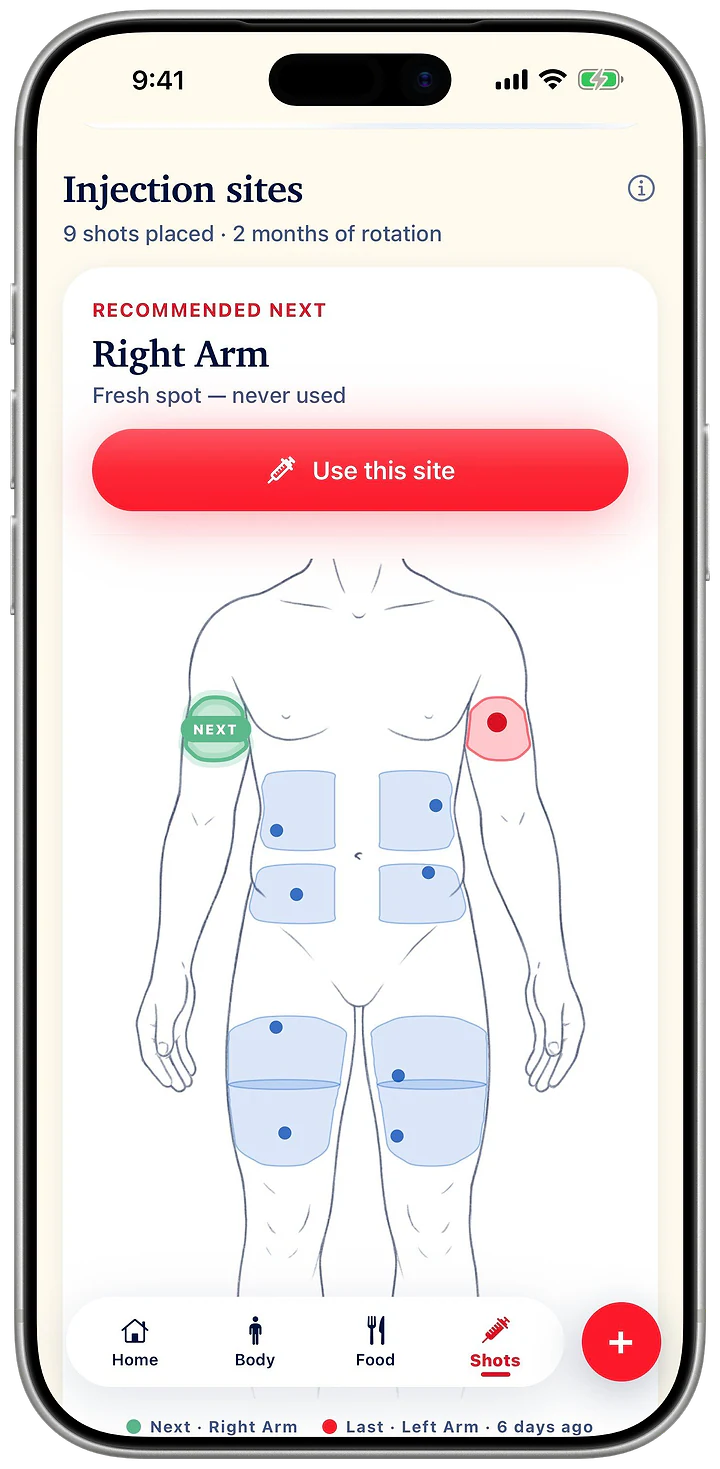
When you report a suspected side effect on a Yellow Card, the MHRA asks for the onset timing and treatment dates (MHRA). A note on a shot you log in Pensday gives you both, since every logged shot has a notes field, though the symptom log has no eye entry. Write which eye, the day it started and whether it comes and goes, and the dose history shows a preview of that note beside each shot’s date and dose, ready for an eye appointment.
Do Mounjaro and Zepbound affect eyesight the same way?
Mounjaro and Zepbound (tirzepatide) carry the same diabetic retinopathy warning as Ozempic, but no US or UK tirzepatide label mentions NAION (Mounjaro SmPC, Mounjaro label, section 5.7). In the US labels revised in August 2026, Zepbound’s warning reads "Temporary worsening of diabetic retinopathy has been reported with rapid improvement in glucose control" (Zepbound label, section 5.8), and Mounjaro’s says the same (Mounjaro label).
Tirzepatide is named on the FDA’s October to December 2024 list with the rest of the class (FDA), and the MHRA says it "is reviewing any evidence for an association with other GLP‑1 agonists" (MHRA).
The US Zepbound label lists blurred vision only as a sign of low blood sugar, not among its adverse reactions, and writes its vision warning for "patients with type 2 diabetes" (Zepbound label). You will not find blurring among the Zepbound side effects in the first week, so treat blurred vision on Mounjaro or Zepbound with the same speed of care as on Ozempic.
Questions
Frequently asked questions
Can Ozempic cause blurry vision in one eye?
Yes, and sudden, painless blurring in one eye is the typical picture of NAION, which may affect up to 1 in 10,000 people on semaglutide (MHRA). Diabetic retinopathy can also blur one or both eyes (NHS). For sudden loss or fast worsening in one or both eyes, the MHRA’s advice is to "urgently attend eye casualty (if available in your area) or A&E" (MHRA).
Can I drive if my vision is blurry on Ozempic?
Not until it clears. The NHS says that if you feel dizzy or have vision problems after taking semaglutide, do not drive, ride a bike or use machinery until these side effects have gone away (NHS, semaglutide).
Should I have an eye exam before starting Ozempic?
If you have diabetes, a 2025 European expert consensus says yes, particularly after more than 10 years of diabetes or with HbA1c above 10% (86 mmol/mol) (European expert consensus). The US Ozempic label asks for monitoring of anyone with a history of diabetic retinopathy (Ozempic label).
Does Wegovy affect eyesight if you don’t have diabetes?
Very rarely, since the UK Wegovy SmPC lists NAION as very rare whatever you take it for (Wegovy SmPC), though EMA’s estimate of one extra case per 10,000 person-years comes from type 2 diabetes (EMA). The US Wegovy vision warning is written for "people with type 2 diabetes", and blurred vision appears in that label only as a sign of low blood sugar (Wegovy label). So new blur is not one of the usual side effects in when Wegovy side effects start and gets the same speed of care as on Ozempic.
Sources
- PRAC concludes eye condition NAION is a very rare side effect of semaglutide medicines Ozempic, Rybelsus and Wegovy. European Medicines Agency, 2025.
- Ozempic, EU product information. European Medicines Agency, 2026.
- PRAC assesses that NAION could be a very rare side effect of Ozempic, Rybelsus and Wegovy. Danish Medicines Agency, 2025.
- Semaglutide (Wegovy, Ozempic and Rybelsus): risk of Non-arteritic Anterior Ischemic Optic Neuropathy (NAION). MHRA, 2026.
- Ozempic, Summary of Product Characteristics. Novo Nordisk, 2026.
- Ozempic, Package Leaflet. Novo Nordisk, 2026.
- Wegovy, Summary of Product Characteristics. Novo Nordisk, 2026.
- Mounjaro, Summary of Product Characteristics. Eli Lilly and Company, 2026.
- Potential Signals of Serious Risks from the FDA Adverse Event Monitoring System, October to December 2024. US Food and Drug Administration, 2025.
- Ozempic (semaglutide) injection, prescribing information and Medication Guide. Novo Nordisk, 2026.
- Wegovy (semaglutide) injection and tablets, prescribing information. Novo Nordisk, 2026.
- Rybelsus and Ozempic (semaglutide) tablets, prescribing information. Novo Nordisk, 2026.
- Mounjaro (tirzepatide) injection, prescribing information. Eli Lilly and Company, 2026.
- Zepbound (tirzepatide) injection, prescribing information. Eli Lilly and Company, 2026.
- Diabetic retinopathy. NHS, 2025.
- High blood sugar (hyperglycaemia). NHS, 2026.
- Semaglutide. NHS, 2026.
- Diabetic retinopathy. National Eye Institute, 2025.
- Refractive changes in diabetic patients during intensive glycaemic control. British Journal of Ophthalmology, 2000.
- Risk of nonarteritic anterior ischemic optic neuropathy in patients prescribed semaglutide. JAMA Ophthalmology, 2024.
- Semaglutide-associated risk of nonarteritic anterior ischemic optic neuropathy in patients with type 2 diabetes. PLoS Medicine, 2026.
- GLP‑1 receptor agonists and the risk of non-arteritic anterior ischemic optic neuropathy, a consensus statement. Ophthalmology, 2026.
- Consensus statement shows a possible small association between GLP‑1 RA drugs and NAION. American Academy of Ophthalmology, 2026.
- Addressing the risk of ocular complications of GLP‑1RAs, a multi-disciplinary expert consensus. Diabetes, Obesity and Metabolism, 2025.